The Energy Beneath the AI Statement: Reading Musk's Trillion-Dollar Solar Claim Against the Subpoena Fight and the Sudan Vote
Three of the day's most-discussed stories — a trillion-dollar solar arithmetic from Elon Musk, a federal court reining in immigration subpoenas aimed at Minnesota, and a parliamentary vote in London over Britain's role in El Fasher — sit on the same fault line: who pays, who decides, and whose arithmetic counts.
On the afternoon of 23 June 2026, three very different American — and Anglo-American — conversations converged. In Minnesota, a federal judge ruled that immigration-enforcement subpoenas issued to state officials could not stand because their principal purpose was to coerce the state into helping federal officers detain and remove people. In London, parliamentarians were being asked, on the record, whether the United Kingdom had "failed to act" on what campaigners and several United Arab Emirates–linked MPs were calling a genocide in and around El Fasher, the capital of Sudans North Darfur. And on the social platform X, the worlds richest man replied to a thread about the solar-power cost of feeding artificial-intelligence compute by suggesting, in a one-line comment that quickly went viral, that the answer was closer to a trillion dollars than to the billions that most grid-modellers cite. Each of those stories is being read, today, as a discrete item. They are not discrete. The connective tissue is arithmetic — who gets to define the scale of a problem, who gets audited on that definition, and what happens to the people inside the gap.
The pattern that links the days developments is not a conspiracy; it is a politics of scale. When a number becomes an order of magnitude larger than the number the public has been trained to expect, the conversation shifts from the technical to the structural: who pays, who is allowed to object, and which institutions are competent to measure the bill. Each of the three stories below is a snapshot of that shift. The Minnesota ruling is about an institution (the federal bench) declining to let one arm of government redefine what cooperation means. The El Fasher vote is about a parliament being asked to ratify, after the fact, a category of harm ("genocide") that most governments have been careful not to use. Musks reply is about a private citizen — also the operator of the largest privately controlled AI infrastructure in the West — choosing to float a new denominator, in public, without a peer-reviewed paper behind it. The arithmetic of power is the story.
A federal judge pushes back on the coercion frame
The Minnesota ruling, reported by The Epoch Times on 23 June 2026 at 14:34 UTC, turns on a deceptively narrow question: can the federal government use civil subpoenas as a lever to compel state officers to participate in immigration enforcement? The judge answered no. The reasoning, as summarised in the report, was that the principal purpose of the subpoenas was coercive — that is, to convert state employees into de facto federal deportation officers — and that this exceeded the legal bounds of administrative process. The decision matters well beyond Minnesota. It is a federal-court check on a federal-agency posture that has, for the better part of two years, treated state and local cooperation as the bottleneck in interior enforcement and has tried various legal levers to widen that bottleneck.
The deeper story is institutional. Immigration enforcement in the United States is, by constitutional design, a layered system: federal authority over removal is broad, but the operational footprint depends on state and local cooperation, on the willingness of county jails to honour detainers, on the willingness of state courts to share records, on the willingness of state-licenced notaries to authenticate federal paperwork. When a federal administration believes that the bottleneck is political rather than technical, the temptation is to recharacterise voluntary cooperation as mandatory cooperation. The Minnesota ruling says, in effect, that you cannot recharacterise your way around the constitutional structure. It does not end the fight — the federal government will appeal, will retool the subpoenas, will search for a narrower formulation that survives review — but it does change the temperature. For state officials who have been pressured to participate under threat of subpoena, the ruling is a permission slip to refuse.
A parliamentary vote on El Fasher, and the cost of the word "genocide"
In London, on the same day, MPs were presented with a motion framed in unusually direct language: that the United Kingdom had "failed to act" on what the motion described as genocide in El Fasher, and that this failure was, in part, attributable to pressure from United Arab Emirates–linked parliamentarians. The framing was reported by Middle East Eye at 14:20 UTC. The vote itself is less important than the precedent it sets: a Westminster parliament being asked, on the floor of the House, to attach the word "genocide" — a term of art under the 1948 Convention — to a specific, ongoing campaign in a third country, and to attribute at least partial responsibility to a Gulf state that is also a British security and investment partner.
The structural point is about the cost of the word. Governments are reluctant to use "genocide" outside of formal legal determinations because the term triggers obligations — to prosecute, to prevent, to punish — and because it is geopolitically radioactive. The El Fasher motion is therefore a stress test: can a national legislature pre-empt the legal process, name the category, and assign the blame, without waiting for an international court? The UAE angle sharpens the test. Britain sells arms to the UAE, hosts UAE capital in its sovereign-wealth and property markets, and counts on Abu Dhabi for cooperation on a range of regional files. To name the UAE in the same sentence as "genocide" is to spend political capital. The motion's supporters argue that the cost of silence is higher. The motion's opponents argue that procedural shortcuts in the naming of genocide are themselves corrosive to the institutions that are meant to do the naming. The vote will not end the argument. It will, however, put both positions on the parliamentary record.
Musk, antimatter, and the trillion-dollar denominator
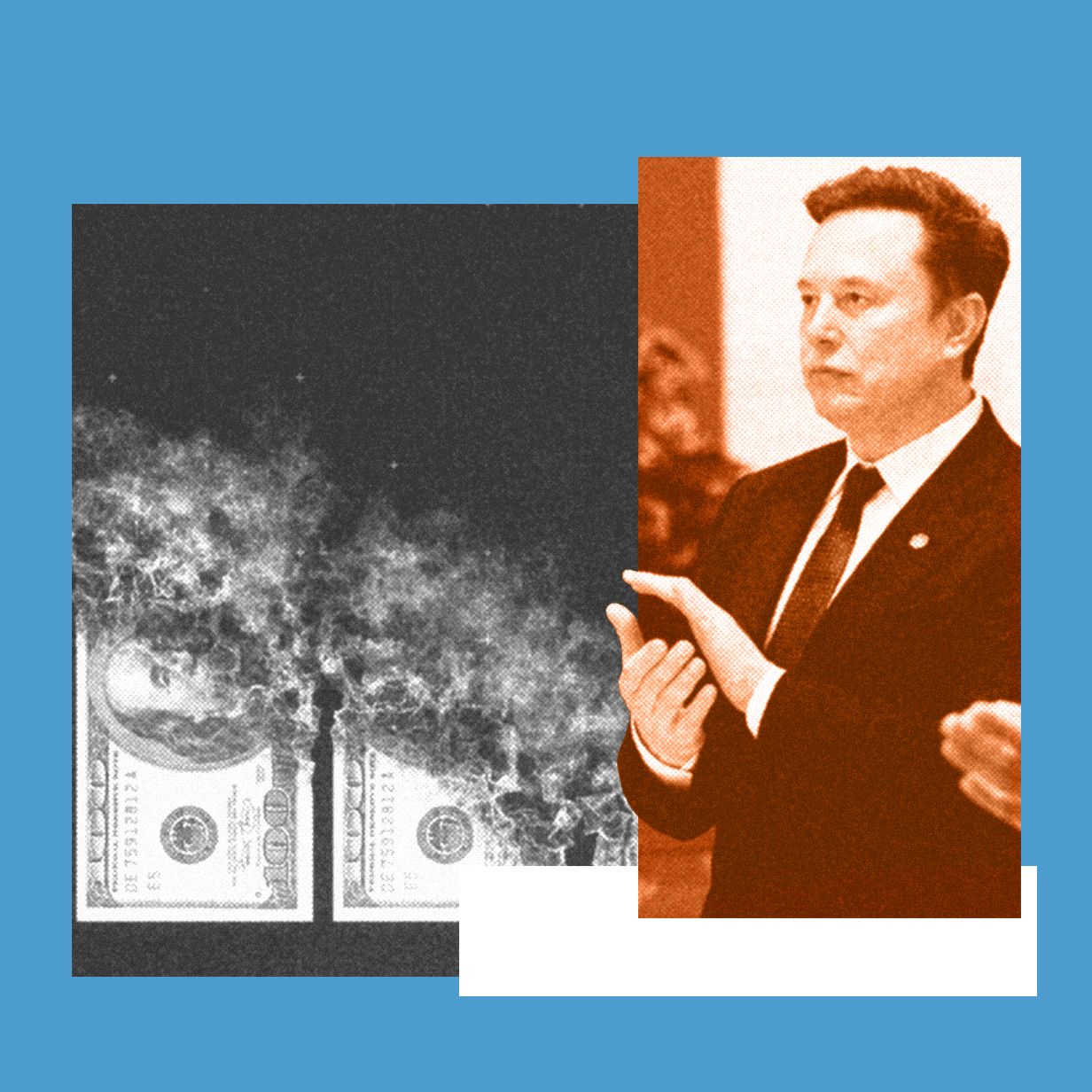
The third story of the day is, on its face, the most frivolous. At 02:31 UTC on 23 June 2026, a reply by Elon Musk on X, captured by the financial-research account Unusual Whales, observed that the solar-power requirement of long-term AI data-centre ambitions is closer to a trillion dollars than to the modest figures bandied in most policy debates. The comment was made in the context of a thread on the energy cost of frontier AI training and inference, and it linked to a longer Unusual Whales piece on antimatter and interstellar travel. The link is loose; the headline is the line.
The reason the comment matters is the denominator. The conventional conversation about AI energy use runs in the low-tens-of-billions: a few new gas turbines, a couple of new nuclear PPAs, an upgrade to a regional grid. Musk's frame moves the conversation to the trillion-dollar scale — the cost of a multi-decade build-out of generation, transmission, and storage sufficient to feed hyperscale compute. The two scales are not just quantitatively different; they are politically different. A tens-of-billions conversation is a utility-regulation conversation. A trillions conversation is a national-industrial-policy conversation: it implicates the siting of new generation corridors, the trade-offs between AI compute and other large electric loads (electrification of transport, residential heat, industrial hydrogen), and the question of whether the bill will be paid by ratepayers, by taxpayers, by the AI operators themselves, or by the citizens of whatever jurisdiction ends up hosting the build-out. By floating the higher number, Musk is not just commenting; he is reframing the budget. That is what a denominator does.
Why these three belong in the same frame
Read together, the three stories are about who gets to set the terms. The Minnesota judge sets the terms on coercion by ruling that the federal government cannot, through civil process, conscript state officers. The El Fasher motion sets the terms on naming by asking parliament to attach a specific, legally loaded word to an ongoing campaign. The Musk reply sets the terms on cost by moving the conversation about AI energy from billions to trillions. None of the three actors is the largest player in their respective systems — the federal bench is one of three branches, Westminster is one of many legislatures with views on Sudan, Musk is one of several AI operators — but each is, today, the actor setting the denominator.
That is what makes the day worth reading as a single story. The arithmetic of a problem determines the politics of the problem. Change the scale of the bill, and you change the coalition that has to pay it. Change the legal category of the harm, and you change the obligations that follow. Change the institutional interpretation of cooperation, and you change the de facto reach of federal power. In each case, the move is upstream of the policy debate: it is the move that determines what the policy debate is about.
The counter-read, and where the evidence thins
The counter-read is straightforward, and it should be stated. The Minnesota ruling could be read as a narrow procedural decision about a specific set of subpoenas, not as a constitutional rebalancing. The El Fasher motion could be read as a parliamentary gesture that will not change the British posture on Sudan, the UAE relationship, or the supply of legal language to the genocide convention. The Musk comment could be read as a one-line provocation by a public figure who has form for figures that do not survive contact with engineering review. Each of those readings is plausible. Each is also incomplete. The ruling is narrow on its face but broad in its effect on state-level cooperation; the motion is symbolic on its face but consequential in the precedent it sets for naming; the comment is a provocation on its face but is, today, the most-circulated reframe of the AI-energy denominator in the public sphere. The dominant reading — that these are upstream moves that will shape the downstream debate — holds, but it is not the only reading, and the sources do not yet let us resolve which reading will prove more durable.
What remains genuinely uncertain is whether the three moves will compose. A single federal ruling, a single parliamentary motion, a single viral post are not, on their own, a structural shift. They are inputs to one. Whether the inputs compound into a new equilibrium — a new balance of state and federal power, a new willingness to use the genocide category in real time, a new honesty about the AI-energy bill — depends on actors and institutions that are not in these three stories. The arithmetic of the day is legible. The arithmetic of the year is not.
Desk note: Monexus read these three stories as a single thread on the politics of scale rather than as discrete items, in line with the publication's long-read convention of grouping same-day developments that share a structural fault line. Wire coverage was used for the underlying facts; the framing is this publication's.