Israeli gunfire in Nabatieh kills civilians clearing roads as south Lebanon ceasefire strain deepens
A Hezbollah statement and Lebanese civil defence accounts say Israeli forces opened fire on residents and rescue workers in Nabatieh al-Fawqa on 23 June 2026, exposing the fragility of the November truce.
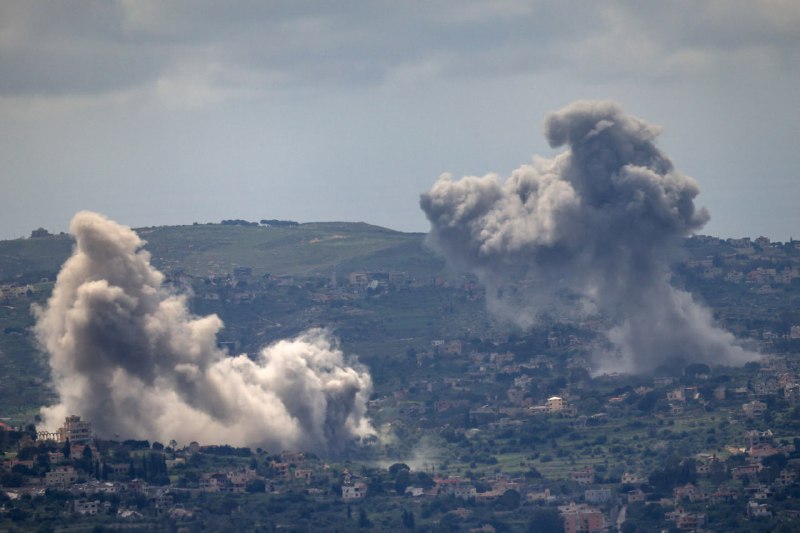
At 11:30 local time on 23 June 2026, residents of the Al-Deir neighbourhood in Nabatieh al-Fawqa — a hilltop town in south Lebanon's Nabatieh Governorate — say they came under direct machine-gun fire from Israeli troops positioned between residential buildings. Within minutes, Lebanese civil defence teams attempting to retrieve the bodies of the dead and reopen blocked streets were themselves shot at, according to a statement issued by Hezbollah and carried by the Beirut-based outlet Al-Alam Arabic. By the early afternoon, the civil defence directorate for south Lebanon had revised the toll to two killed and one wounded, with emergency crews still working at the scene.
The episode, small in casualty terms but heavy in political signal, lands roughly seven months into the ceasefire that paused open hostilities between Israel and Hezbollah in late November 2025, and on the same morning that a UN Special Coordinator was due in Beirut to review the truce's implementation. It also lands at a moment when Israel's air force and ground forces have been conducting near-daily strikes inside Lebanese territory under a stated rationale of degrading what the Israeli military calls Hezbollah "reconstruction efforts" — a category the Lebanese government and the Iran-backed movement itself reject as a pretext. The pattern matters because each individual incident is being read, in real time, as a test of how much pressure the truce architecture can absorb before it collapses.
What the wire and the regional outlets say
The initial accounts converged within an hour. Hezbollah's media office, which retains a monopoly on military communication for the group, said the fire came "from between residential homes" and was directed at "a group of civilians in the Al-Deir neighbourhood of Nabatieh al-Fawqa" at 11:30 a.m. local time. Al-Alam Arabic, a Hezbollah-affiliated satellite channel broadcast from Beirut and widely followed across the Arab world, added the operative detail: that the civilians under fire were "working to open the roads and retrieve the bodies of martyrs." Within forty minutes, Lebanon's Civil Defence directorate for the south had updated the toll to two dead and one wounded, a figure that has not yet been independently corroborated by UN Interim Force in Lebanon (UNIFIL) spokesperson statements or by the Lebanese Army, both of which were contacted by regional press in the immediate aftermath.
Israeli military spokespeople had not, as of the early afternoon of 23 June 2026, issued a public statement on the Nabatieh incident. The Israeli framing of the broader south-Lebanon file — articulated repeatedly by the IDF Spokesperson's Unit and by the Coordinator of Government Activities in the Territories (COGAT) since the November truce — is that the Lebanese state has failed to disarm Hezbollah south of the Litani River as required, and that Israeli fire is therefore a defensive response to identified threats. The Israeli accounts do not deny specific incidents so much as subsume them under that larger operational claim. Lebanese accounts, by contrast, deny that any armed element was present in the Al-Deir area on Tuesday morning and characterise the shooting as deliberate fire on civilians and rescue workers.
The asymmetry of the two framings — Israeli: armed presence justifies fire; Lebanese: unarmed civilians were shot — is not new to this war cycle, but it is sharpened by the existence of a formal ceasefire that is supposed to have ended exactly this kind of encounter.
The ceasefire in plain language
The November 2025 arrangement, brokered under United States and French auspices and announced from the White House and the Élysée on the same evening, rested on three pillars that its drafters stated plainly. First, a cessation of hostilities across the Israel-Lebanon border, including an end to rocket, drone, and anti-tank fire from Lebanese territory into Israel. Second, a phased Israeli withdrawal from positions occupied in the ground operation that began in late September 2025, with a 60-day window for completion under UN monitoring. Third, deployment of the Lebanese Armed Forces to the area south of the Litani River, with the United States and France providing a coordination mechanism for residual disputes.
What the November deal did not settle — and what each Tuesday incident tests — is the threshold at which Israeli unilateral action is considered a defensive response to a verified threat versus a violation of Lebanese sovereignty that the truce was designed to prevent. The Israeli side, in briefings to UNIFIL and in COGAT statements, has used the phrase "right to self-defence" to cover what it describes as precision strikes on identified Hezbollah technicians and infrastructure. The Lebanese side, and the broader set of states that backed the truce (France, Saudi Arabia, Qatar, the United States), have held that unilateral Israeli action inside Lebanese territory is permitted only under narrowly defined conditions, and that those conditions were not met on Tuesday in Nabatieh.
This is the structural point that the daily wire reports do not always make explicit: the truce is a coordination regime, not a sovereignty regime. It assumes the parties will continue to disagree about the underlying balance of power, and it tries to channel that disagreement through a complaints mechanism rather than through fire. Each reported incident is therefore a signal about whether the channel still functions.
The local shape of a regional contest
Nabatieh Governorate sits at the geographic hinge of the larger contest. It is a Shia-majority province that has been a Hezbollah stronghold since the 1980s, that the Israeli military has struck repeatedly since 8 October 2023, and that the Lebanese state — even when the Lebanese Armed Forces deploy there in force — does not fully administer. The Al-Deir neighbourhood of Nabatieh al-Fawqa is a residential area on the eastern edge of the city, with mixed commercial frontage. Tuesday's incident is therefore being read locally not as a stray event but as the latest in a series of strikes and shootings that have continued throughout the ceasefire period.
A separate but related question is who can claim to represent the civilians caught in this geometry. The Lebanese civil defence directorate, the casualty-counting body of the Lebanese state, gave the toll. The Hezbollah media office gave the operational account. Local mayoral authorities in Nabatieh al-Fawqa issued a parallel statement characterising the dead as municipal workers. The convergent count — two killed, one wounded — comes from sources that do not normally agree, which gives the figure more credibility than the political environment would suggest, even as it leaves open the question of whether those killed were carrying any function that the Israeli side would recognise as armed.
A plausible alternative read of the facts is also worth naming. The Israeli military has, in previous weeks, alleged that Hezbollah has been re-establishing observation points and storing short-range rockets in or near residential buildings in south Lebanon, partly to deter Israeli withdrawal and partly to present the IDF with a tactical dilemma. If that claim is correct — and the Israeli side has, in at least three previous instances since January 2026, presented coordinates and time-stamped imagery to UNIFIL as evidence — then the framing of Tuesday's incident as defensive action is at least intelligible, even if the choice of a populated area and the killing of municipal workers remains a separate question under the law of armed conflict. The strongest Lebanese counter is that no such evidence was presented in the Nabatieh case before the fire was opened, and that the operative practice of "shoot first, justify later" is itself the violation.
What the larger pattern suggests
The structural frame is familiar to anyone who has watched ceasefire regimes in the Middle East age. An initial period of relative quiet, in which both sides want the deal to hold; a middle period of contested incidents, in which each side probes the threshold; and a final period in which the contested incidents acquire a momentum of their own, and the original political logic of the truce is overtaken by the operational logic of the conflict it was meant to manage. Tuesday's Nabatieh incident sits inside that middle period.
The regional stakes are real. A failure of the south-Lebanon track would have immediate second-order effects on the Israel-Hamas track in Gaza, where a separate and more fragile ceasefire is being negotiated, and on the US-Iran nuclear file, where the E3 and Washington are still attempting to lock in the diplomatic perimeter agreed last autumn. It would also expose Lebanon to a renewed cycle of displacement in a country that has not finished absorbing the roughly 1.3 million people who were displaced during the September 2024 to November 2025 phase of the war, and that is hosting, on top of that, a Syrian refugee population that has been pressured to return without adequate guarantees of safety in parts of Syria.
What remains uncertain
Three things are not yet clear on the afternoon of 23 June 2026. First, whether the Israeli military will issue a public statement acknowledging or addressing the incident, and whether that statement will cite any specific Hezbollah presence in the area — a statement of that kind would shift the framing considerably. Second, whether UNIFIL's force commander will record the incident as a violation of the truce mechanism or as a self-defence claim that the mechanism is designed to absorb, a categorisation that determines whether it goes to the Implementation Committee. Third, whether the Lebanese government's Higher Defence Council, which has been convened twice in the last month over similar incidents, will this time move from verbal condemnation to a formal complaint through the UN Security Council, a step that the caretaker Prime Minister's office has so far been reluctant to take for fear of collapsing the broader diplomatic track.
The sources available at the time of writing do not specify the identities of the two people killed, the exact unit of the Israeli military involved, or the specific coordinates from which the fire was opened. Those details typically emerge in the 48 to 72 hours after an incident of this kind, via a mix of UNIFIL investigation, Lebanese military forensics, and Israeli statement. Monexus will update the record as those details become available and as the Israeli and Lebanese official positions on the incident are formally lodged.
Desk note: Monexus leads on Hezbollah and Lebanese civil defence accounts of the incident because the Israeli military had not issued a public statement at the time of writing; we will amend if the IDF Spokesperson publishes a specific account with coordinates, which would change the evidentiary footing of this piece. Wire services had not yet picked up the casualty count from Nabatieh al-Fawqa when this article was filed.
Wire provenance
This editorial synthesis draws on the following public wire/social posts:
- https://t.me/thecradlemedia
- https://t.me/alalamarabic
- https://t.me/alalamarabic
- https://en.wikipedia.org/wiki/2024%E2%80%932025_Lebanon_war
- https://en.wikipedia.org/wiki/Nabatiyeh
- https://en.wikipedia.org/wiki/United_Nations_Interim_Force_in_Lebanon
- https://en.wikipedia.org/wiki/Litani_River
- https://en.wikipedia.org/wiki/Coordinator_of_Government_Activities_in_the_Territories
- https://t.me/thecradlemedia
- https://t.me/alalamarabic
- https://t.me/alalamarabic
- https://en.wikipedia.org/wiki/2024%E2%80%932025_Lebanon_war
- https://en.wikipedia.org/wiki/Nabatiyeh
- https://en.wikipedia.org/wiki/United_Nations_Interim_Force_in_Lebanon
- https://en.wikipedia.org/wiki/Litani_River
- https://en.wikipedia.org/wiki/Coordinator_of_Government_Activities_in_the_Territories