Netanyahu pushes for Israeli defense self-sufficiency while operations against Iran and its proxies remain 'not over'
On 23 June 2026 the Israeli prime minister declared ongoing strikes on Iran and its regional proxies unfinished while simultaneously pressing for an independent Israeli weapons industry to reduce reliance on Washington.
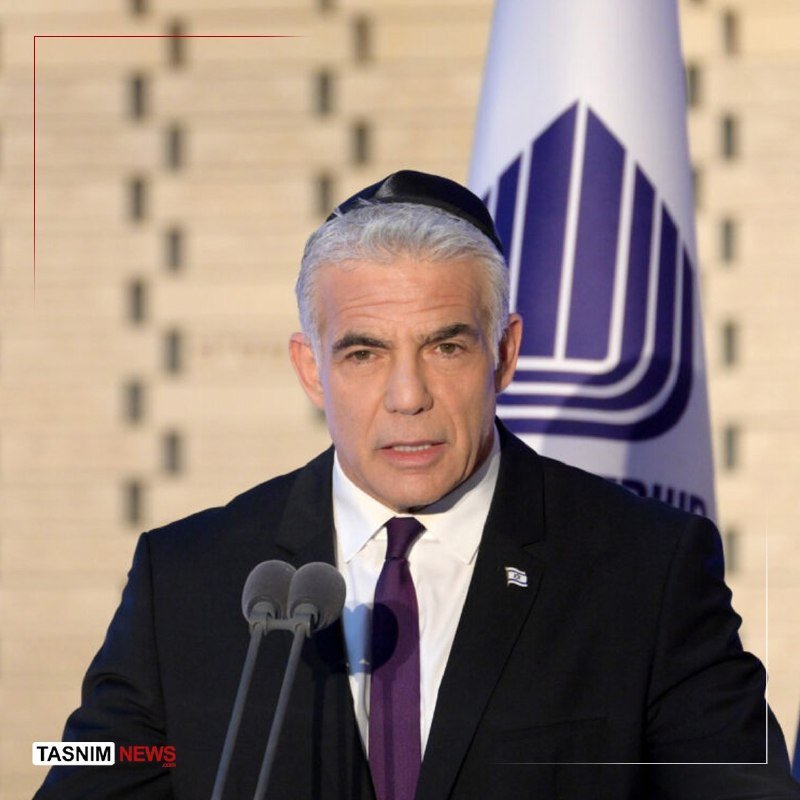
On 23 June 2026, at 10:38 UTC, Israeli prime minister Benjamin Netanyahu declared from Jerusalem that Israel had struck Iran and its regional proxies and that the operation "is not over yet," according to a Telegram post by the Gazaalanpa channel carrying his remarks. Roughly half an hour earlier, at 10:08 UTC, the Iranian state-aligned Tasnim news agency relayed a second Netanyahu statement, in which he thanked Washington for years of support but said Israel "needs to free ourselves from this dependence and build our own independent weapons system." A third post, from the ClashReport channel at 09:34 UTC, captured the same self-sufficiency message in nearly identical language.
The twin statements — operational escalation wrapped in industrial-policy rhetoric — set the frame for the day: an Israeli government openly signalling that it intends to keep striking deeper into a multi-front theatre while reducing, in the prime minister's own words, the structural dependency that has defined its arsenal for decades. The structural tension between those two messages is the story.
What Netanyahu actually said, and to whom
The shorter operational line is unambiguous. "We struck Iran and its proxies in the region, and this operation is not over yet," Netanyahu told an Israeli audience on 23 June 2026, per Gazaalanpa's 10:38 UTC Telegram post. The phrasing — "Iran and its proxies" rather than a single front — signals that the Israeli campaign is being described by its own promoter as a theatre-wide operation rather than a series of discrete retaliatory exchanges. Tasnim's choice to relay the remarks at 10:08 UTC is itself notable: Iranian state media rarely amplifies Israeli leaders without an editorial counterweight, suggesting the message was judged politically useful in Tehran as well as in Jerusalem.
The industrial-policy line, by contrast, was aimed inward. In the Tasnim-carried 10:08 UTC statement, Netanyahu said: "I deeply appreciate the support we have received from our American friends, but we need to free ourselves from this dependence and build our own independent weapons system." ClashReport, an independent war-monitoring channel, repeated the language at 09:34 UTC, including the phrase "defense self-sufficiency" as the explicit goal. Read together, the three posts are best understood as a coordinated message: Israel will keep operating against Iran-aligned forces, and it intends to do so on a manufacturing base that is more Israeli and less American than the present one.
The structural read: a hedging premium on Washington
Coverage routinely frames Israeli weapons development as a story about budgets, jets, and missile defence. The more useful read is financial. Every Israeli platform that depends on a US supply chain — combat aircraft, certain missile classes, specific munitions, and the resupply pipeline that follows a high-tempo strike campaign — carries an implicit American veto. The United States can slow deliveries, condition resupply on political behaviour, or decline to authorise sensitive subsystems. Israeli planners have lived with that exposure since at least the 1950s.
Netanyahu's 23 June remarks, as relayed by Tasnim and ClashReport, describe that exposure as a problem to be engineered away. "Independent weapons system" in this context does not mean a fully domestic industrial base overnight; it means a multi-year procurement and co-production strategy that gradually substitutes Israeli and allied-non-US supply for US supply in critical categories. The political effect of the language is to lower the cost of any future divergence from Washington by signalling in advance that Israel is moving toward self-sufficiency as a deliberate policy.
The counter-narrative is straightforward and should be taken seriously. Israeli defence industries are deep — Rafael, Elbit, Israel Aerospace Industries — and have a long record of indigenous development. But the most strategically significant platforms in the Israeli order of battle, including long-range strike and aerial-refuelling capability, have historically depended on US-origin components and political cover. Closing that gap in any meaningful horizon would take a decade and tens of billions of dollars in capital, even on optimistic assumptions. The shorter-term read of "we need to free ourselves from this dependence" is therefore less a procurement schedule than a public commitment to start.
Why the timing matters
Two strands converge on 23 June 2026. First, the prime minister's repeated references to strikes on Iran and proxies — language kept deliberately vague on which proxy, which target, which date — keeps the operational tempo in the news without committing to a specific escalation narrative. Second, the self-sufficiency language lands while the US political calendar around Israeli military assistance is contested domestically. Announcing an Israeli plan to diversify supply is, among other things, a way of pricing in the possibility of future American political constraint.
For Tehran and its regional partners, the message is mixed. The repeated "not over yet" framing tells Iranian-aligned forces that further Israeli action is expected; the self-sufficiency framing tells them that Israeli planning assumes a long horizon. For Gulf states observing from the periphery, the policy logic is legible: a more self-sufficient Israeli arsenal, if achieved, would be less conditional on US political cycles and therefore less susceptible to episodic American restraint.
Stakes, and what remains genuinely uncertain
The plainest forward read is that Israel is preparing for an extended multi-front posture with a more indigenous supply chain, while explicitly retaining the American relationship as a strategic asset rather than a structural dependency. The harder questions are empirical. The three source posts on 23 June 2026 do not specify which Iranian assets or which proxies were struck most recently, do not name specific weapons systems now targeted for domestic production, and do not quantify any timeline or budget. They also do not record any official Iranian government response to the prime minister's specific remarks — only the Tasnim relay of his words.
What this publication can confirm from the available material is narrower than the headline suggests. Netanyahu used the phrase "not over yet" about strikes on Iran and its proxies on 23 June 2026. He used the words "free ourselves from this dependence" and "defense self-sufficiency" on the same day, in remarks circulated by Tasnim at 10:08 UTC and ClashReport at 09:34 UTC. Beyond those reported statements, the operational specifics, the industrial-policy specifics, and the diplomatic response from Washington and Tehran remain open. The story is real and the direction is clear; the details will take time.
This article used three Telegram channel posts from 23 June 2026 as primary inputs. Where Israeli government press releases or US administration readouts become available, this publication will fold them into a follow-up wire.
Wire provenance
This editorial synthesis draws on the following public wire/social posts:
- https://t.me/gazaalanpa
- https://t.me/tasnimplus
- https://t.me/ClashReport
Follow the event.
These dated source records provide context. They do not retrospectively verify this archive article.
Separate what the nuclear watchdog reported from what it could not determine after the June 2025 strikes.