Norway's Holland Runs Riot: How a 3-1 Win Over Senegal Cracks Open the Group
Erling Holland scored twice and assisted another as Norway dismantled Senegal 3-1, turning a tight Group F opener into a statement win that says as much about Scandinavian depth as it does about African unpredictability.
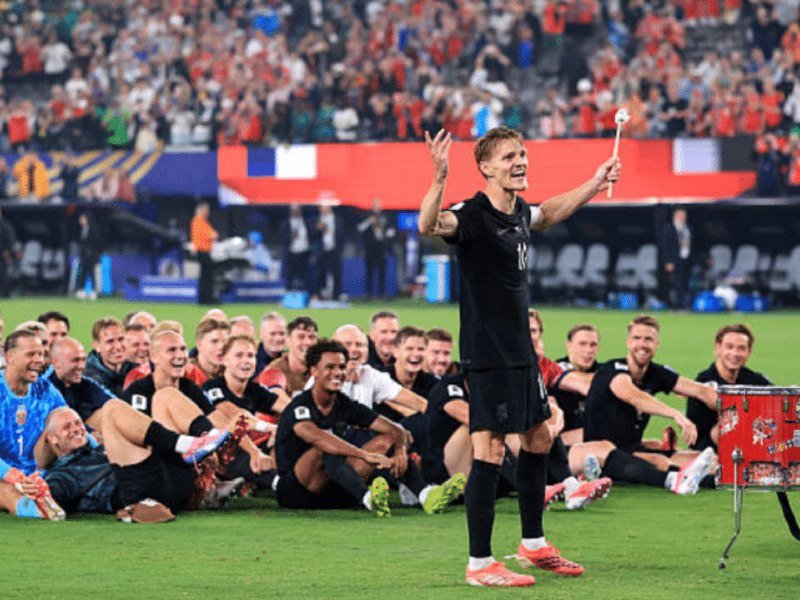
Norway 3, Senegal 1, and the headline writes itself: Erling Holland at the double. The striker struck in the 43rd and 58th minutes and added the assist on a second-half goal that effectively settled a Group F fixture that had, for 47 minutes, looked dangerously competitive. The win, completed deep into the second half in front of a near-neutral crowd, hands the Scandinavian side control of their group-stage destiny and underlines a question the rest of the field will have to answer honestly: who, in this tournament, can actually live with them for ninety minutes?
This is a Norwegian team that has spent a decade talking about its golden generation and is finally, in a hostile environment, producing the kind of result the marketing brochures promised. Holland's brace, the kind of predatory finishing that has become his trademark at club level, gives Ståle Solbakken's side a focal point the rest of the bracket does not have an obvious answer for. It also gives the wider Scandinavian project — Norway plus Sweden plus Denmark, all in the draw — a kind of permission structure. The Nordic game no longer needs to apologise for producing technically complete footballers.
What the ninety minutes actually said
For 47 minutes, this was a different game. Senegal, the African champions of a generation, were organised, physical and patient. They absorbed pressure without conceding clear chances, they pressed in pairs, they looked comfortable in a low block. Norway's opener in the 43rd minute — Holland finishing a move that had been building for ten minutes — felt like a small injustice against the run of play. Senegal's response, three minutes into the second half through Saar, was a reminder that this is not a side built to lie down. For about ten minutes, the scoreboard read 2-1 in Norway's favour and the bench was nervous.
Then Holland scored his second, in the 58th, on a run that started from the left half-space and ended with a low finish the Senegalese goalkeeper got a hand to but could not keep out. From that point, the game was over in everything but the formalities. The third Norwegian goal, in the closing stages, came off a Holland assist and was, in the end, a footnote. Senegalese legs went; Norwegian bodies kept pressing. The substitutes Solbakken introduced looked like players who knew the system. That is a coaching point, not just a talent point.
Why the result matters beyond the bracket
Group football at a World Cup is a small-sample business, and one result does not a tournament make. But this one carries weight for two reasons. First, it establishes Norway as a side that can absorb a moment of opposition pressure and still produce two goals in eleven minutes. That is the profile of a team that can win knockout football, not just qualify for it. Second, it tells the rest of Group F — and the seeded teams Norway may meet later — that the Scandinavian side has the one thing you cannot coach into a forward: the instinctive calm of a striker who expects to score.
For Senegal, the read is less comfortable. The Lions of Teranga have lost one of the great generation of African footballers — Sadio Mané's retirement left a hole that has been half-filled but not closed — and they came into this tournament as the African standard-bearers. Losing to a European side that is, frankly, not among the traditional European heavyweights is not the result that resets the narrative. It will not damage African football, which is deeper and more competitive than any one result suggests. It does, however, sharpen the question of whether the next wave of Senegalese talent can match the infrastructure of the last.
The structural read
Two things are worth saying plainly. The first is that this kind of result — a European side with a clear focal striker beating an African side that is well-coached and well-organised — happens because the goal-scoring premium in modern football has become extreme. Holland's movement off the ball created two of the three goals; the assist on the third was a product of the same instinct. Senegal defended for forty-three minutes and were punished by a single moment of separation. Modern tournament football, played at this pace, increasingly rewards the side that can generate that one moment.
The second is that the Norwegian federation's long bet on technical development — a decade of investment in coaching education, in small-sided games, in giving young players the kind of tactical framework that used to be the preserve of the Spanish and the Dutch — is now paying competitive dividends. The result is not a fluke. It is the product of a system.
What the next week actually looks like
Norway will now expect to progress from the group. The real questions begin in the round of sixteen, where the seeded opponents are likely to be stiffer and the margins thinner. For Senegal, the next match is the one that defines the tournament — a win keeps them alive, a loss sends them home, and a draw leaves them dependent on results elsewhere. The African game has the depth to absorb this kind of result. Norwegian football, for the first time in a generation, does not have to.
This publication framed the result on the field, not the noise around it. The wire line in the first hours focused on Holland's name; the structural story is the Scandinavian system that produced him.
Wire provenance
This editorial synthesis draws on the following public wire/social posts:
- https://t.me/tasnimnews_en/
- https://t.me/tasnimnews_en/
- https://t.me/tasnimnews_en/
- https://t.me/tasnimnews_en/
- https://t.me/tasnimnews_en/