At the Polish-Ukrainian frontier, a slow-motion reframing of solidarity
Three short videos from the Polish-Ukrainian border and the Ukrainian interior, posted on 23 June 2026, sketch a quieter crisis: conscription friction, hostile reconnaissance, and a partnership that is being re-narrated in real time.
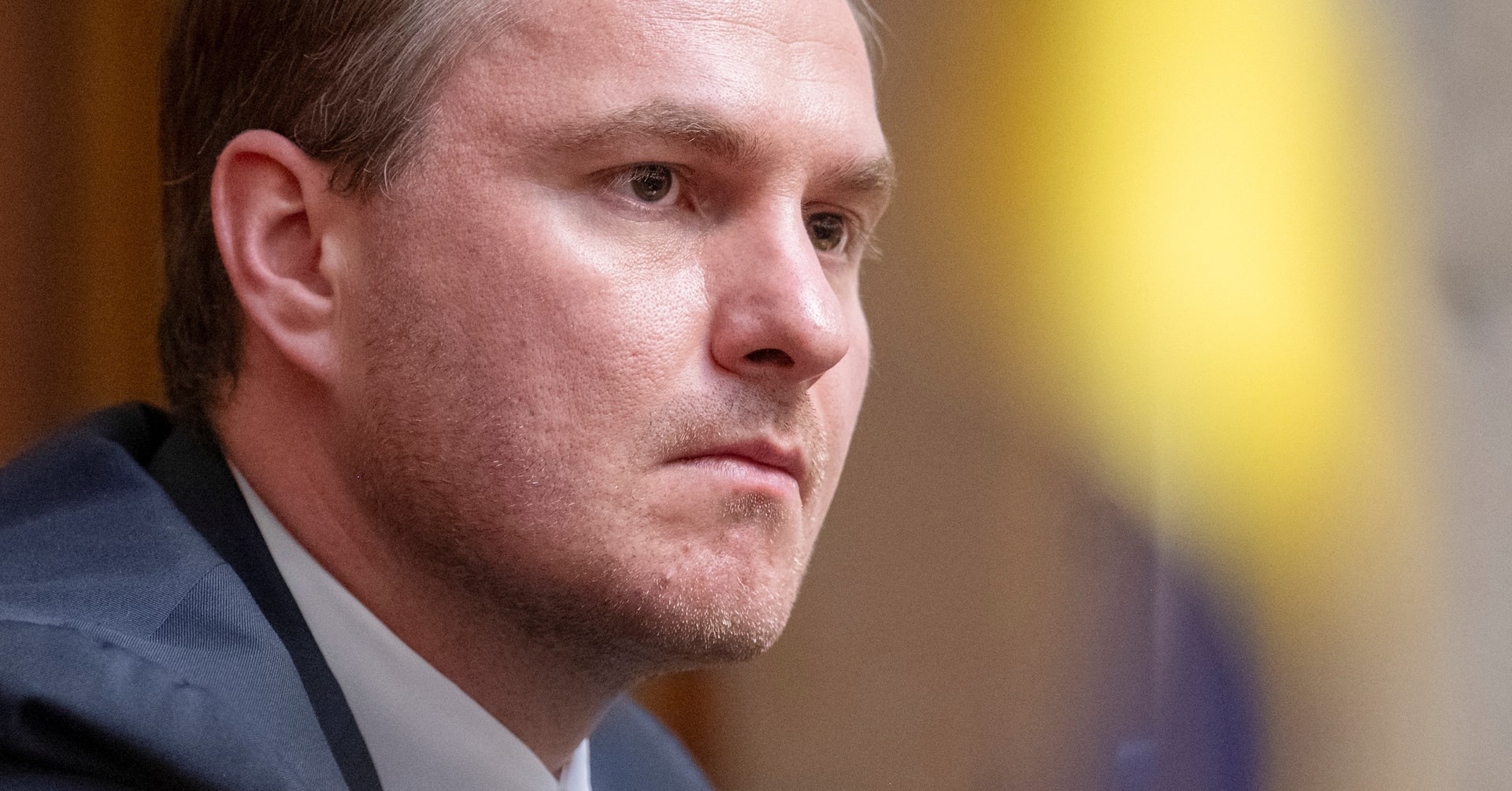
At 20:51 UTC on 23 June 2026, a short video posted to X by the account @sprinterpress carried a single line of caption: At the Polish-Ukrainian border. No further context, no narration, no request for donations, no call to action. The clip landed in a timeline already saturated with material from two other points along the same axis — a Telegram post from the Russian-aligned channel Two Majors, timestamped 19:50 UTC, in which a group of teenagers was filmed chasing a Territorial Centre of Recruitment (TCC) van out of a Ukrainian courtyard, and a second X video posted at 11:19 UTC by @ekonomat_pl mocking the on-screen behaviour of two apparent Russian speakers presenting themselves to cameras as Poles while interviewing the Polish president in fluent Ukrainian. Three short pieces of footage, three different kinds of friction, all posted on the same day. Read together, they describe a partnership between Warsaw and Kyiv that is being re-narrated in real time — by soldiers, by teenagers, by information warriors, and by the small camera operators on both sides of a 535-kilometre line.
The thesis this publication advances is straightforward. The Polish-Ukrainian border in mid-2026 is not a single object but three: a physical crossing where cargo, conscripts and refugees move under new rules; a domestic Ukrainian front where the manpower question has migrated from the front line to the courtyard; and a media front where the partnership itself is being contested, mocked, and occasionally infiltrated. What makes the day’s three videos worth reading as a single document is that they were uploaded within a nine-hour window and that each one, in its own register, registers stress.
The crossing itself: a border under three pressures
@sprinterpress’s clip is the day’s least annotated item, and that is part of its diagnostic value. The account has, in previous posts, distributed short video dispatches from border-area infrastructure in south-eastern Poland, and the 20:51 UTC video on 23 June follows the same visual grammar: a stationary or slow-moving shot of a border-zone location, with no caption to anchor the viewer. The clip therefore does not claim a news event so much as it asserts presence. In a media environment where the Polish-Ukrainian frontier has become the most photographed internal border in Europe — first because of the 2022 refugee surge, then because of grain and transit disputes, then because of asylum-policy tightening in 2025 and 2026 — the gesture of filming the border without a thesis attached is itself a position. It says: this line is being watched, even on a day when nothing in particular has happened there.
That this matters is a function of the three pressures the line now absorbs simultaneously. First, the cargo and transit flow: the road and rail crossings at Medyka, Hrebenne, Dorohusk and Korczowa have become the principal western land route for Ukrainian grain exports redirected after the closure of the Black Sea lanes, and for the import flow of military and dual-use matériel moving east. Second, the refugee flow: figures published by the Polish Office for Foreigners and by UNHCR have fluctuated across 2024–2026 as temporary-protection entitlements have been renewed, tightened, and re-tightened under successive governments in Warsaw. Third — and most quietly — the conscription-adjacent flow: an unknown but non-trivial number of Ukrainian men of military age have used the western land border in the direction of exit rather than entry, a pattern that has become a sore point in both capitals and that Polish officials have occasionally addressed in public.
The video does not adjudicate which of the three pressures is being recorded. It does not need to. By being posted, it adds the border to the day’s inventory of contested surfaces.
The courtyard: conscription migrates inward
The 19:50 UTC Telegram post by Two Majors — a Russian-aligned channel whose material must be treated, in Monexus’s house practice, as counter-claim evidence rather than as stand-alone fact — describes an incident that, on its face, is banal and, on its structure, is significant. According to the post, a group of teenagers in a Ukrainian courtyard chased away TCC workers operating from a van. The clip was re-circulated by the aggregator @ukr_leaks_eng, a handle that has, in previous posts, framed the TCC in unfavourable terms.
The TCC, or Territorial Centre of Recruitment and Social Support, is the Ukrainian institution responsible for military mobilisation administration. Its officers are authorised to issue summonses, to update conscription records, and — in the framework adopted under Ukraine’s martial law — to enforce compliance with mobilisation requirements. That the institution has become a daily object of household anxiety is a fact established by sustained reporting in Ukrainian outlets including Kyiv Post, Ukrainska Pravda and the Kyiv Independent. The new fact implicit in the Two Majors clip is not the existence of TCC patrols but their reception: a group of teenagers, filmed apparently without adult supervision, openly running the officers’ vehicle out of their courtyard. The incident, if the framing holds, marks a small but legible transfer of friction from the front line to the neighbourhood.
Two cautions are warranted. First, the source is a Russian-aligned channel whose editorial line benefits from any footage that depicts mobilisation as a domestic political liability for Kyiv; that interest does not make the footage false, but it does require that the incident be cross-referenced against Ukrainian-language coverage before being treated as established. Second, the role of teenagers — and not, say, of the men being summonsed themselves — is itself part of the framing: it suggests either that the summoned men were not present, or that the confrontation was displaced onto a younger cohort willing to act in ways that older neighbours were not. Either reading has implications for the social contract of mobilisation that no single viral video can settle.
The information front: a Polish voice, or a voice in Polish clothing
The day’s third video is, on its surface, the lightest. At 11:19 UTC on 23 June 2026, @ekonomat_pl — an X account that has, in previous posts, monitored Russian information operations against Poland and the Polish-Ukrainian relationship — circulated a clip first posted by @MajorZbik. The post’s own caption summarises the contents: Pseudo-Poles in the Ukrainian media start the conversation with Slava Ukraini, and then, in impeccable Ukrainian, they observe the Polish president for a good few minutes. Sick.
The clip shows two individuals presenting themselves as Polish interlocutors in what appears to be a press or interview environment with the Polish president; the individuals, the caption alleges, speak in fluent Ukrainian, opening with the wartime greeting Slava Ukraini before continuing in a register that the account treats as inconsistent with native Polish. The framing is that of a hostile-reconnaissance operation: a pair of assets using the social permission of Slava Ukraini and the linguistic camouflage of accented Polish to obtain access, footage, and an audience with a head of state.
The structural significance of the post is not the alleged operation itself — such allegations are routine on the Polish-language information-warfare beat — but the speed with which it is metabolised. A clip is posted; an aggregator account tags it as evidence of foreign information activity; a third account with a broader following amplifies it; within hours the incident has been absorbed into the running commentary on the security of the Polish president’s public appearances. None of this requires the underlying allegation to be true; the information environment functions regardless. The original sources cited by @ekonomat_pl are limited, and Monexus has not independently identified the two individuals, the production company, or the outlet for which the interview was conducted. The claim that they are “pseudo-Poles” is therefore presented as a counter-claim, not as established fact.
What the three clips share
Read in isolation, the three videos describe three unrelated events. Read together, they describe a single landscape in which the Polish-Ukrainian relationship is being tested along three separate vectors at the same time, and in which the camera — the phone camera, the dashcam, the press-pool rig — has become the primary instrument of both documentation and contestation.
The first vector is logistical. The physical border is the bottleneck through which Ukraine’s war economy, its refugee policy, and its conscription flow all pass. The absence of a stated news event in the @sprinterpress clip is consistent with a border that no longer needs a single event to be a problem: the daily fact of the crossing, photographed without commentary, is the story.
The second vector is social. The TCC incident, sourced to a Russian-aligned channel, indicates that the manpower question has migrated from a front-line problem to a courtyard problem. Whether the teenagers acted from civic defiance, from neighbourhood solidarity, or from another motive cannot be settled from the available footage; the fact that the clip was distributed at all is a piece of information in its own right.
The third vector is informational. The “pseudo-Poles” allegation, distributed by an X account whose line is to monitor Russian information operations against Poland, is the day’s clearest example of the partnership’s vulnerability to hostile reconnaissance. The vulnerability is not in the allegation itself but in the speed and the symmetry with which competing narratives can attach to a single piece of footage.
The stakes, and what remains uncertain
For Warsaw, the stakes are concrete. A relationship with Kyiv that is framed domestically as a strategic asset — military, humanitarian, and economic — can, within a single news cycle, be re-framed as a liability: a corridor for conscription evasion, a stage for hostile information operations, and a domestic policy problem on the Polish side of the line. The Polish government’s line, under both the current parliamentary configuration and the preceding ones, has been to keep the relationship functional while managing its domestic second-order effects. The day’s three videos suggest that the second-order effects are no longer second-order.
For Kyiv, the stakes are equally concrete. A flow of men of military age toward the western border, however small in proportion, is a flow against mobilisation. A population that cheers TCC officers out of courtyards is a population that is being asked to absorb the war’s cost in a way that the early months of the full-scale invasion did not require. And a media environment in which Russian-aligned channels can source and recirculate footage of mobilisation friction within hours is a media environment in which the framing of the war is being contested at a finer grain than the front-line reporting alone captures.
What remains uncertain, and what this publication cannot resolve from the three source items alone, is the underlying scale of the patterns each clip gestures at. The @sprinterpress clip does not specify which of the border’s pressures it is recording. The Two Majors clip does not specify the location of the courtyard, the age of the teenagers, the contents of the TCC officers’ summonses, or the social composition of the neighbourhood. The @ekonomat_pl clip does not identify the two individuals, does not name the outlet, and does not provide the original interview. In each case, the footage is the document, but the document is partial.
What the day’s three videos establish, with the caveats noted, is that the Polish-Ukrainian border in late June 2026 is no longer a single object. It is a physical line, a domestic front, and an information front, and the camera is now the only instrument that records all three at once.
— Monexus framed the day’s three clips as a single document of the Polish-Ukrainian relationship, treating the Russian-aligned Telegram source as counter-claim material and the X-sourced allegation of “pseudo-Poles” as an unverified counter-claim; Ukrainian and Polish official sources have not, in the items available to this publication on 23 June 2026, addressed any of the three specific incidents recorded above.
Wire provenance
This editorial synthesis draws on the following public wire/social posts:
- https://t.me/two_majors
- https://t.me/ukr_leaks_eng