Putin's Istanbul Revival: Moscow Floats a 2022 Framework as the War Enters Its Fifth Summer
On 23 June 2026, Vladimir Putin publicly revived the 2022 Istanbul framework as the basis for talks with Kyiv, a move that recasts the diplomatic stage while Russian forces continue to press forward on the ground.
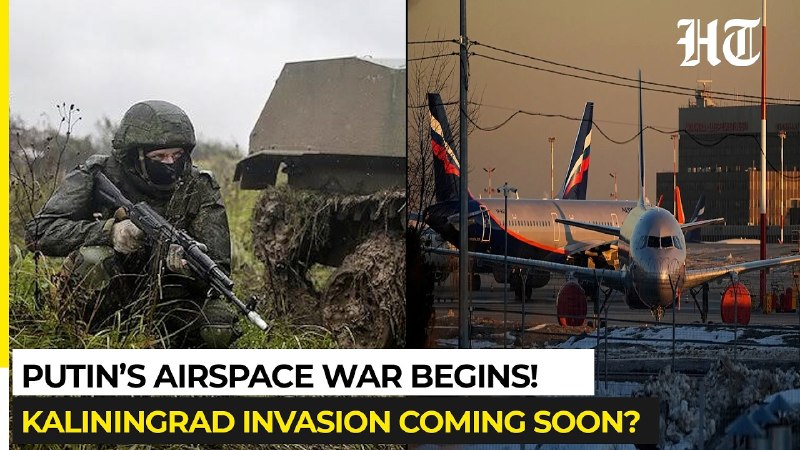
On Tuesday, 23 June 2026, Russian President Vladimir Putin told domestic audiences that Moscow is ready to negotiate with Kyiv on the basis of the 2022 Istanbul agreements — a draft framework negotiated in the early weeks of the full-scale invasion that Kyiv publicly abandoned weeks later under pressure from Western capitals and the Bucha revelations. The remarks, distributed at 15:34 UTC by Iranian state-linked Fars News, restated at 15:32 UTC by Russian state wire TASS via the X account @sprinterpress, and amplified at 15:01 UTC by Iranian outlet Tasnim, amount to the most explicit Russian re-anchoring of a diplomatic off-ramp in months. TASS quoted Putin as saying that Russia is ready for peace negotiations with Ukraine based on the Istanbul agreements, language consistent across the three wires within a 33-minute window.
The revival matters less for what it offers than for what it shifts. Moscow is not introducing a new proposal; it is repurposing a discarded one. That is a tactical choice, and the timing — the war's 1,520th day, with no confirmed summer counter-offensive from Kyiv and growing political fatigue in several Western capitals — is the message. By anchoring any future talks to a document Kyiv signed under duress in March 2022, Moscow resets the reference point of the diplomatic conversation without committing to a single concession it has not already claimed on the ground.
What Putin actually said — and what the wires carried
Three state-adjacent wires carried the substance of the remarks within the same news cycle on 23 June. Fars News International's English channel framed the statement as Putin asserting Russia's readiness to negotiate on the basis of the Istanbul agreements, citing Ukrainian attacks on civilian facilities as the immediate trigger. The Russian state wire TASS, quoted by @sprinterpress on X, used identical diplomatic language: readiness for peace negotiations on the basis of the Istanbul agreements. Tasnim, an Iranian outlet that frequently translates Russian positioning for Farsi-speaking audiences, ran the same headline frame. The convergence is not coincidental — these are state-aligned channels operating as diplomatic amplifiers, not independent verifications.
The framing cue — "attacks on children" — surfaced in a separate Zvezda News wire at 14:44 UTC. The Russian Ministry of Defence television channel carried a related Putin line: that attacks on children only stimulate Russian fighters to move forward, and that Kyiv is seeking to create the impression of a "strong position." The two messages — diplomatic openness and battlefield resolve — are intended to operate in tandem. Read together, they amount to a posture: Russia will negotiate, on its own archived terms, while continuing to fight, and it will frame the choice as Kyiv's to make.
The Istanbul agreements themselves, drafted in late March 2022 in the weeks after Russia's full-scale invasion began, envisaged a Ukrainian neutrality commitment, limits on the size of the Ukrainian armed forces, Russian-language protections, and a multi-year process of "de-Nazification" verbiage that Kyiv and its Western backers later treated as non-starters. Kyiv's negotiating team initialled the draft on 29 March 2022 in Istanbul; the delegation withdrew from the process after the Bucha revelations in early April. The document has never formally been repudiated by Moscow, and its resurrection now is the substantive content of Putin's 23 June message.
Why the timing is the strategy
Putin's pitch arrives at a moment when three pressure gradients are visibly converging on Kyiv. First, the battlefield: Ukraine has not launched a confirmed large-scale summer offensive of the kind it mounted in 2023, and Russian forces continue to press along multiple axes in Donetsk. Second, the diplomatic air: the Trump administration's earlier push for a rapid settlement, which produced brief Geneva and Istanbul-track contacts in 2025, has not delivered a framework, and the window of that pressure is narrowing. Third, the political arithmetic: a clutch of European publics is showing measurable fatigue with the scale and duration of military and financial support, even as governments in Warsaw, Berlin, and the Nordic capitals have publicly reaffirmed long-term commitments.
Into that confluence, Moscow offers a familiar frame dressed in 2026 clothing. The 2022 Istanbul draft was the high-water mark of the early post-invasion peace effort — the closest the two sides came to a written basis for a settlement that was not a Russian diktat. By holding that document aloft again, Moscow is signalling that anything more demanding than Istanbul would be a Russian concession, and anything less would be a Ukrainian capitulation. It is, in effect, an offer to return to the pre-Bucha status quo ante, with whatever additional facts on the ground Russia has consolidated since then taken as given.
That is a position, not an offer. The diplomatic value of reviving a framework Kyiv already rejected under less adverse conditions is primarily performative: it places the diplomatic ball in Kyiv's court, obliges Kyiv to either re-engage with a document it has disowned or refuse and accept the framing of intransigence. Western observers should expect Moscow to spend the coming weeks amplifying this framing through state media and friendly outlets in the Global South — Tehran-aligned channels have already demonstrated willingness to carry the line verbatim within minutes of the original Russian dispatch.
The counter-frame: what Kyiv and its backers will say
Kyiv's expected response, judging from the pattern of the past four years, will rest on three pillars. The first is legitimacy: the Istanbul draft was negotiated under the shadow of active invasion, with Russian forces positioned around Kyiv, and cannot be treated as a free bargain. The second is the security environment: any framework that constrains Ukrainian armed forces or forecloses NATO membership leaves Ukraine exposed to a renewed invasion without the deterrent effect of alliance membership — the precise outcome Kyiv argues the war has been fought to prevent. The third is accountability: the document's silence on reparations, on the fate of deported children, and on war crimes adjudication would amount to a settlement without justice, a price Ukrainian civil society has signalled it will not accept.
Western allied positions will likely reinforce all three. Poland, the NATO frontline state most directly exposed to the war's spillover, has consistently framed the conflict in sovereign-equality terms and will be reluctant to endorse any framework that legitimises territorial change by force. The Baltic states and the United Kingdom have been even more categorical. Germany's position, more conditional in 2025, has hardened visibly through the spring of 2026. Even actors inside the previous Trump-administration orbit who pushed for early settlement have not publicly endorsed the 2022 Istanbul draft as the operative basis — the gap between "talk to Russia" and "talk on these terms" is the diplomatic space Kyiv will try to occupy.
The plausible counter-narrative to Moscow's framing — and the one Western capitals will most likely amplify — is that reviving a 2022 draft in 2026 is not diplomacy but archival warfare: an attempt to lock in the political gains of the past four years by anchoring them to a document Kyiv initialled under conditions that no longer obtain and cannot be reproduced. Under that reading, the move is structurally similar to negotiating from a dictated script — the form of dialogue without its substance.
Stakes: what happens if the framework sticks, and what happens if it doesn't
If the Istanbul revival gains traction, the most immediate loser is the post-Bucha European consensus on the legal and political status of the invasion. A settlement anchored to the 2022 draft would imply, however reluctantly, that the legal continuity of Ukrainian sovereignty can be negotiated at the level of pre-war neutrality rather than reasserted through post-war restoration. The long-term effect would be to convert the war's outcome from a precedent against territorial revision into a precedent for it — a calculation that would register acutely in Tbilisi, in Chișinău, and in every capital watching the Baltic-Black Sea corridor.
If the revival does not stick — the likelier outcome on the current evidence — the diplomatic cost falls primarily on Moscow, which has now publicly reaffirmed a ceiling on its demands. Kyiv gains diplomatic breathing room: it can refuse Istanbul without closing the door to talks, because the Russian ceiling is now on the record. Western backers gain time to coordinate a longer-horizon support package without having to weigh it against an imminent Russian diplomatic breakthrough. The military stalemate, however, remains in place, and neither trajectory resolves the underlying question of how a war of this duration and destructiveness ends on terms any of the principals have publicly accepted.
What the wires do not specify — and what will determine whether this moment is a turning point or a press-cycle event — is whether any channel, public or private, exists between Moscow and Kyiv that could carry the framework into actual negotiation. The three wires that carried Putin's remarks on 23 June are state-aligned and signal Russian intent; they are not a substitute for contact. Until that contact exists, the Istanbul revival is best read as a diplomatic positioning exercise, not the opening move of a settlement. Monexus framed this story as a Russian diplomatic move within the existing war, not as a breakthrough; the underlying conflict — invaded and invader — remains the editorial frame.
Wire provenance
This editorial synthesis draws on the following public wire/social posts:
- https://t.me/FarsNewsInt
- https://t.me/JahanTasnim
- https://t.me/zvezdanews
Follow the event.
These dated source records provide context. They do not retrospectively verify this archive article.
A dated voting record is evidence of one decision. Use the original UN record before turning it into an alignment label.
Visual explainer · historical vote of 2022-03-02 →