Putin's 'peace' overture lands in a different war than the one Russia is fighting
A televised statement on 23 June 2026 frames Russia as ready to negotiate — but the terms on offer, anchored to Istanbul and Anchorage, sit a long way from the front line Kyiv is defending.
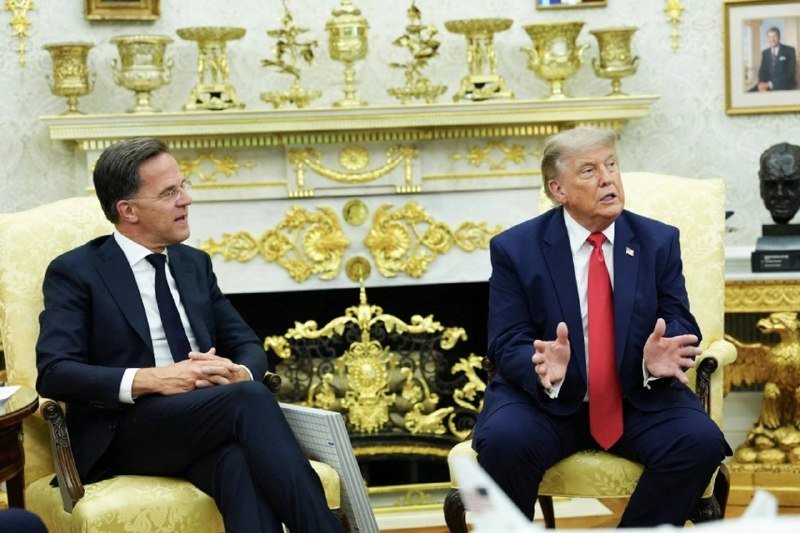
On 23 June 2026, with the war past its fourth winter and no negotiated end in sight, Russian President Vladimir Putin went on state television to say the obvious: Russia, he claimed, is ready to talk. According to the open-source channel OSINTLive and the Telegram aggregator War Translated, Putin framed Moscow as a willing negotiator, citing as the basis for any new round the agreements sketched out in Anchorage and the more elaborate drafts of Istanbul. The Russian-aligned channel Two Majors carried a parallel TASS-sourced line, with the caveat that the offer was conditioned on "the agreements reached in Istanbul" being honoured — a phrase that, in Russian diplomatic grammar, has carried very specific territorial weight since 2022.
The statement lands at a moment when both sides are publicly talking about talking, but from positions that are still some distance apart. The frame matters more than the headline. "Ready to negotiate" is a posture, not a proposal; in this war it is a posture the Kremlin has cycled through before, usually when the diplomatic weather is changing in ways Moscow wants to shape rather than merely respond to. What is genuinely new on 23 June is the deliberate anchoring of any future talks to the Istanbul and Anchorage texts, and the implicit suggestion that the operational situation on the ground is secondary to the diplomatic language used to describe a settlement.
What Putin actually said — and what he didn't
The line repeated across the aggregator feeds is that Russia is "ready for peace negotiations with Ukraine" on the basis of the Anchorage and Istanbul agreements, the latter of which remains a heavily disputed framework in Western and Ukrainian capitals. Two Majors' report, citing TASS, was explicit that the offer was contingent on the Istanbul documents being taken as the starting point. The Insider Paper wire, picked up by the channel at 16:16 UTC, framed the statement in capital letters as a "BREAKING" development, an editorial choice that tells you something about which audience the line is being written for.
What is conspicuously absent from the reporting is any new Russian concession, any acknowledgement of the war's full scale after four winters, or any operational mechanism — ceasefire, withdrawal, verification — that would convert the statement from a posture into a process. The Anchorage framework, in particular, has been read in Moscow and in Washington as a maximalist ceiling rather than a starting point: it codifies the broad strokes of a settlement in which Ukrainian sovereignty is preserved on paper while the territorial and security architecture of the country is effectively constrained. The Istanbul drafts, last seen in their publicly leaked form in spring 2022, included language on neutrality, demilitarisation, and limits on the size of the Ukrainian armed forces that no government in Kyiv has been in a position to accept since the full-scale invasion began.
The counter-read from Kyiv, Washington and Brussels
The reaction that matters most is the one that has not yet happened, and may not happen in the shape Putin's framing invites. Ukrainian negotiators, across multiple iterations of talks, have insisted that any settlement has to begin from the line of contact rather than from a pre-written framework. Western capitals have made similar noises in public while, behind closed doors, accepting that some version of territorial sequencing is going to be part of any end-state. The risk for Kyiv is that a Russian "readiness" announcement, timed for a particular news cycle, gets treated in some Western commentary as a movement of the ball — when the only thing that has moved is the framing of the offer, not the offer itself.
This is the asymmetric part of the information war. When the Kremlin speaks, it does so in a sentence that travels: peace, readiness, talks. When Kyiv responds, it tends to respond in a paragraph: conditional on withdrawal, conditional on security guarantees, conditional on a restoration of the 1991 borders or an enforceable substitute. Both positions are rational; the problem is that the broadcast sentence is easier to repeat, and easier for an exhausted Western audience to absorb as a movement in the right direction. The Russian media ecosystem around the 23 June statement — TASS, Two Majors, War Translated's neutral aggregator line — is built to amplify that asymmetry.
What "Istanbul" and "Anchorage" actually mean as words
Words do work in negotiations that they do not do in ordinary speech, and the two place-names Putin attached to the offer are doing heavy lifting. "Istanbul" is shorthand for the March–April 2022 draft understandings, negotiated in the early weeks of the invasion when the Russian position on the ground was different and Ukraine's negotiating leverage was correspondingly narrower. The publicly known elements included Ukrainian neutrality, caps on the size of the armed forces, restrictions on the presence of foreign troops, and a multilateral security architecture that did not place NATO membership on the table. Each of those elements has been overtaken by events — by the subsequent Bucha revelations, by the Ukrainian counter-offensives, by the country's EU candidacy, by the long argument about what the front line even is.
"Anchorage" is a different kind of anchor. It is the framework associated with the 2025 Trump-administration engagement with Moscow — a structure that prioritised bilateral US-Russia understanding over Ukrainian agency. In that frame, the Ukrainian position is something the two larger powers agree on, rather than something Kyiv negotiates directly. The reference to Anchorage in Putin's 23 June statement is therefore not a neutral historical nod. It is a coded argument that the most legitimate channel for any deal is the one that runs through Washington, and that the European and Ukrainian channels are at best secondary, at worst obstacles.
Stakes, sequencing and the next ten days
What the 23 June statement sets up is a sequencing argument, not a negotiating one. The Kremlin is, in effect, asking Western publics and Western governments to treat the diplomatic calendar as the binding constraint — to push for a round of talks on the Anchorage/Istanbul basis before the military calendar imposes another set of facts on the ground. If the diplomatic window can be opened, Moscow gains time, gets sanctions relief discussions onto the table, and changes the conversation from withdrawal and reparation to architecture and guarantees. If the window stays shut, the statement is a free option — useful for the domestic audience, useful for the Global South narrative of Western rejectionism, and reversible at any point.
For Ukraine, the calculation is the inverse. The longer the war continues, the more expensive a settlement becomes in territorial terms, but also the more the front line, the sanctions regime, and the integration with European defence production consolidate as facts. Kyiv's interest is in keeping the negotiating frame tied to the operational situation rather than to the place-names of past drafts. The next ten days will tell whether Western capitals treat the 23 June statement as a movement, as a posture, or as a tactical signal that the Kremlin is preparing the diplomatic ground for a winter it expects to be harder than the last one.
How Monexus framed this: the wire and aggregator feeds carried the statement as a near-monoline; this article reads it as a posture anchored to two specific frameworks, and treats the asymmetry between a Russian broadcast sentence and the Ukrainian paragraph as the story worth telling.
Wire provenance
This editorial synthesis draws on the following public wire/social posts:
- https://twitter.com/wartranslated/status/206946845002870
- https://t.me/wartranslated
- https://t.me/insiderpaper
- https://t.me/two_majors
- https://t.me/osintlive
Follow the event.
These dated source records provide context. They do not retrospectively verify this archive article.
A dated voting record is evidence of one decision. Use the original UN record before turning it into an alignment label.
Visual explainer · historical vote of 2022-03-02 →