The Senate says no to war with Iran — or does it?
A Senate vote to require approval for further strikes on Iran, the president's own boasts of dominance over Tehran, and a softer line on Iranian footballers — the contradictions in Washington's Iran posture are now public record.
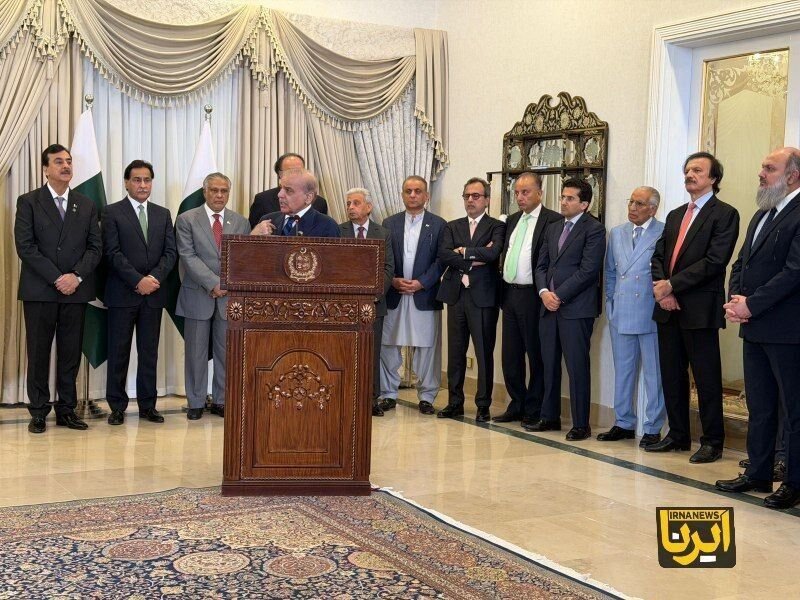
On 23 June 2026, the United States Senate voted to require congressional approval before any further US military operations against Iran can proceed, according to a 19:48 UTC wire from the Open Source Intel channel. Hours earlier, the same channel had carried remarks in which the US president claimed US forces had effectively stripped Iran of its missile capability, could fly over Tehran at will, and were leaving the country "without any nuclear capacity" under a deal Tehran had "agreed to."
The dissonance is the story. Washington is simultaneously boasting of total dominance over Iran, easing visa rules for Iranian footballers travelling to the United States, and being told by its own legislature that it cannot keep fighting without a fresh mandate. Three different Iran policies are running in parallel, and the contradiction is now on the public record.
What the Senate actually did — and what it didn't
The motion, as reported on 23 June 2026, does not yet constitute binding law. It is a War Powers-style signal vote: a chamber of Congress asserting that the executive branch must come back to Capitol Hill before escalating further. Whether the text reaches the House, whether the House passes it in identical form, and whether the president signs it or vetoes it, are all open questions. The sources available do not specify the vote margin, the bill number, or its House status.
What it does do is change the political weather. A president who describes flying over Tehran as a routine exercise now has to do so, in any future escalation, while a Senate majority is on record saying it had not consented. That is a different posture from the air-strike campaign of recent weeks, in which the White House appears to have acted on the basis of existing authorisations and its own strategic reading of Iran's posture.
The president's Iran, as the president described it
The Open Source Intel feed at 19:17–19:18 UTC on 23 June 2026 carried a series of statements from the US president. They are worth reading in sequence, because they sketch a version of the conflict that is hard to reconcile with the Senate's mood.
The president said: "We are leaving Iran with no missile capability." He said: "We can fly over Tehran just at will, and nobody could do anything to us." He said: "We are leaving them without any nuclear capacity, and they have agreed to that. We are getting along quite well." He said: "We're trying to work out a deal that's fair." And he said, of the previous administration: "Obama gave Iran $1.7 billion in green cash. He gave them hundreds of billions of dollars and thought they could bribe them into peace. No, the only thing they understand is" — the wire cuts off, but the implication is that force, not money, is what the president credits with moving Tehran.
Two pictures sit inside these statements. The first is triumphal: Iran disarmed, US air power unchallenged, a compliant negotiating partner. The second is transactional: a deal is still being worked out, the two sides are "getting along quite well," and the US is actively pursuing a "fair" agreement rather than pressing for unconditional surrender. The Senate vote speaks to a third picture — that there is no settled policy, that the legislature does not accept the war is over, and that the president is speaking in advance of where the policy actually is.
The footballs that landed in the middle of it
The same day's wire also carried a piece of news that looks trivial next to the war talk, but is not. The Department of Homeland Security is easing travel restrictions on Iran's World Cup team, allowing players to enter the United States two days before a match, up from same-day arrival. Routine sports diplomacy, until you read it against the bellicose language. A government that is "leaving Iran with no missile capability" is also smoothing the path for the country's national football team to play on its soil, in a tournament it is hosting.
This is a small, telling detail. It tells you that the administration is already operating the bilateral relationship in two registers at once — one addressed to a domestic political base that wants victory, the other addressed to the day-to-day business of two governments that have to keep functioning even at the height of a crisis.
What the contradictions tell us
Three things are true at once. The administration is publicly committed to a maximalist version of victory over Iran. The Senate, or at least a majority of it, is signalling that it is not prepared to authorise the next round. And the state machinery is still doing the small courtesies that only make sense if there is going to be a working relationship on the other side of the crisis.
The dominant Washington framing will read the Senate vote as a restraint on a presidency run amok. The alternate read — and the one that the Open Source Intel's own transcript of presidential remarks supports — is that the executive is further ahead in negotiating with Tehran than the legislature is willing to acknowledge, and that the Senate is voting on a war that is effectively winding down. Each reading has evidence behind it. Neither is the whole story.
Stakes
If the Senate position holds, the White House enters any further escalation carrying a documented refusal of consent. Future strikes, if they come, will be politically radioactive in a way that the last round of strikes was not. If the executive position holds, the Senate motion becomes a piece of paper that the White House can choose to ignore. The Iranian side, watching both, will be pricing the probability that any future American escalation will be reversed within a single news cycle — which is a calculation that makes deterrence more, not less, complicated.
What remains genuinely uncertain, and what the available reporting does not resolve, is the actual state of US-Iran negotiations. The president's remarks describe a deal that is "being worked out" and an Iran that has "agreed" to lose its nuclear capacity. The Senate vote describes a country the United States is still preparing to keep fighting. The two cannot both be the whole truth, and the sources available do not let this publication adjudicate which is closer. That is the most important fact on the record tonight.
How Monexus framed this: the wire carried the Senate vote and the presidential remarks as parallel items, not as a single story. This publication treats them as a single story, because the contradiction between them is the news.
Wire provenance
This editorial synthesis draws on the following public wire/social posts:
- https://t.me/s/osintlive
- https://t.me/s/osintlive
- https://t.me/s/osintlive
- https://t.me/s/osintlive
- https://t.me/s/osintlive
- https://t.me/s/osintlive
- https://t.me/s/osintlive
Follow the event.
These dated source records provide context. They do not retrospectively verify this archive article.
Separate what the nuclear watchdog reported from what it could not determine after the June 2025 strikes.