Senate Pulls the Brake on Trump’s Iran War — and Asks Who’s Driving
A Senate vote to halt operations against Iran without fresh authorisation lands in the middle of an active conflict — and exposes the constitutional fault line the Trump administration has been driving over.
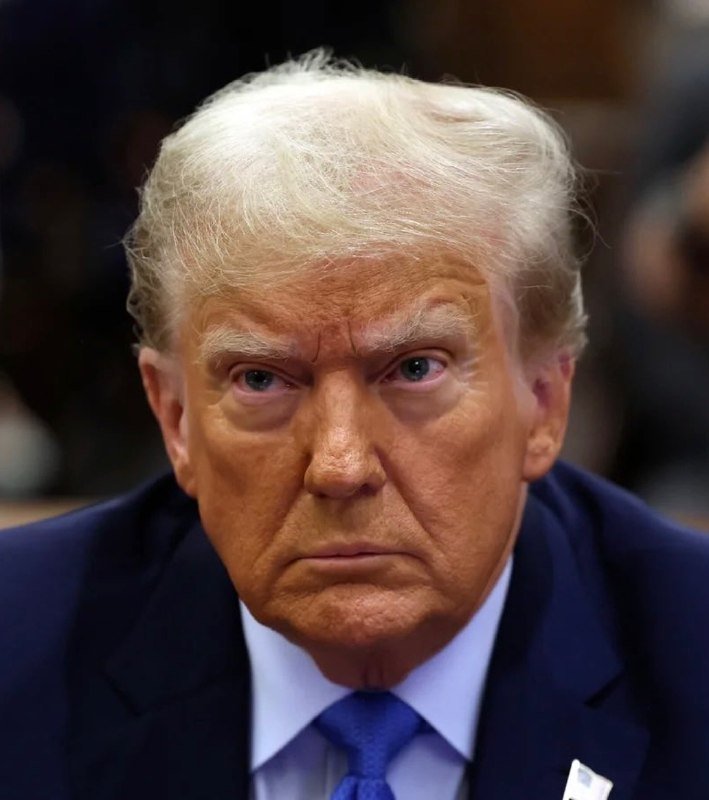
At 19:48 UTC on 23 June 2026, the United States Senate voted to end military operations against Iran unless President Donald Trump secures fresh authorisation from Congress. The text of the resolution, as carried by Iran's Tasnim News Agency and the English-language Telegram feed @tasnimnews_en, frames the question in unambiguous constitutional language: "the continuation of military operations against Iran requires the authorization of Congress." The vote lands not in the calm after a crisis but in the middle of one — and that is the point.
The Senate has done something it has conspicuously failed to do for the better part of two decades: it has attempted to read the War Powers Resolution as written. The political significance is less about Iran specifically than about the precedent being set for every subsequent president who treats Article II as a blank cheque for kinetic action abroad.
A vote, then a translation problem
The mechanics of the resolution are familiar to anyone who has watched the war-powers debate since the 1970s. Congress asserts that no further strikes, deployments or sustained combat operations may continue without a fresh authorisation — a use-of-force vote, an AUMF, or an explicit declaration. The Senate has voted; the House has not. The president has not conceded. The result is a constitutional collision playing out in real time while ordnance is still in the air.
Reporting on the substance is uneven. Tasnim and the @ClashReport channel describe the vote as a binding halt; the Iranian state-aligned framing presents it as a decisive rebuff to Washington. The @alalamarabic feed, run by Al Alam Arabic, phrases the same event as a "cessation of the war" — language more conclusive than the underlying US constitutional procedure actually permits. A Senate resolution, even one passed by both chambers and signed into law, does not unilaterally end an ongoing conflict; it constrains the executive. Reading the vote as the war's end overstates what the institution can do in 48 hours.
Pakistan steps into the gap
Within an hour of the vote, Pakistani Prime Minister Shehbaz Sharif publicly positioned his government as Iran's "sincere friend, neighbor and mediator." The statement, distributed via @alalamarabic at 20:41 UTC, is striking for what it presupposes: that there is a war to mediate, that the mediator's role is now open, and that a regional capital with both Iranian and American dialogue channels can fill it.
That is a more consequential signal than the wire coverage has so far recognised. Pakistan is not a neutral bystander in US–Iran friction: it hosts Iranian border infrastructure, shares a sectarian fault line with Tehran in Balochistan, and has spent the last eighteen months delicately balancing an IMF programme against its need for Iranian energy and Chinese-brokered regional arrangements. A prime-ministerial offer of mediation is therefore both a diplomatic opening and a soft alignment — Pakistan placing itself, by its own words, on Iran's side of the negotiating geometry without breaking relations with Washington.
What the vote actually constrains
Two readings of the resolution are now competing inside the foreign-policy commentariat. The first holds that the Senate vote is constitutionally decisive — the president is henceforth required to de-escalate, and any continued strikes become an impeachable offence. The second holds that the resolution is non-binding political signalling without a House companion and without the two-thirds majorities that a presidential veto would require, and therefore changes the cost-benefit calculus for the White House without altering its legal latitude.
Both readings have support in precedent. The first is closer to the original War Powers Resolution's text and to the 1973 Senate's understanding of its own institutional role. The second is closer to how every administration from Nixon onward has in fact behaved. The truth of which reading prevails will be set not by lawyers but by events: by what the Pentagon does next, by whether Iran reciprocates with restraint or escalates, and by whether the House moves at all.
Stakes: who wins, who loses
If the resolution holds, the immediate beneficiary is a US constitutional settlement that has been eroding for forty years: Congress reasserts its war-making prerogative, and the precedent travels to every future president. Iran benefits operationally — it gains time, it gains diplomatic oxygen, and the Pakistani mediation track begins to carry weight. Pakistan benefits strategically — it becomes a node in a regional architecture it has been trying to construct since the China-brokered rapprochement with Iran and Saudi Arabia in 2023. The Gulf monarchies, by contrast, face an uncomfortable uncertainty: a US president who may yet escalate, a US Congress that has just repudiated that escalation, and a Tehran that smells political opportunity.
The looser in this configuration is, as ever, the framework for regional security that depended on consistent American behaviour. An executive branch that cannot reliably commit force — because its own legislature may revoke the authority — is a less credible ally and a less credible deterrent. That is not an argument for ignoring the vote. It is an argument for taking its long-tail consequences seriously, rather than treating the constitutional moment as a one-day news item.
What remains unresolved
The reporting available to Monexus as of publication does not specify the Senate vote count, the resolution number, the House companion measure's status, or the administration's formal response. Iranian state-aligned channels are incentivised to read the vote as final; Western wires, once they file, will likely lean on the procedural caveats. The gap between those framings is itself the story. A constitutional crisis dressed up as a foreign-policy event — and a war that may yet be decided not in the Strait of Hormuz but on Capitol Hill.
Monexus framed this as a war-powers constitutional story with regional diplomatic spillover, rather than as an Iran-policy story with a congressional sidebar — because the institutional question is the one that will outlast the news cycle.
Wire provenance
This editorial synthesis draws on the following public wire/social posts:
- https://t.me/tasnimnews_en
- https://t.me/alalamarabic
- https://t.me/ClashReport
- https://t.me/JahanTasnim
Follow the event.
These dated source records provide context. They do not retrospectively verify this archive article.
Separate what the nuclear watchdog reported from what it could not determine after the June 2025 strikes.