The Senate Just Rebuked Trump on Iran. The Real Question Is Whether It Matters.
A bipartisan war-powers resolution passed the upper chamber on 23 June 2026, instructing the president to end operations against Tehran or seek authorisation. Whether the vote restrains anything is a separate matter.
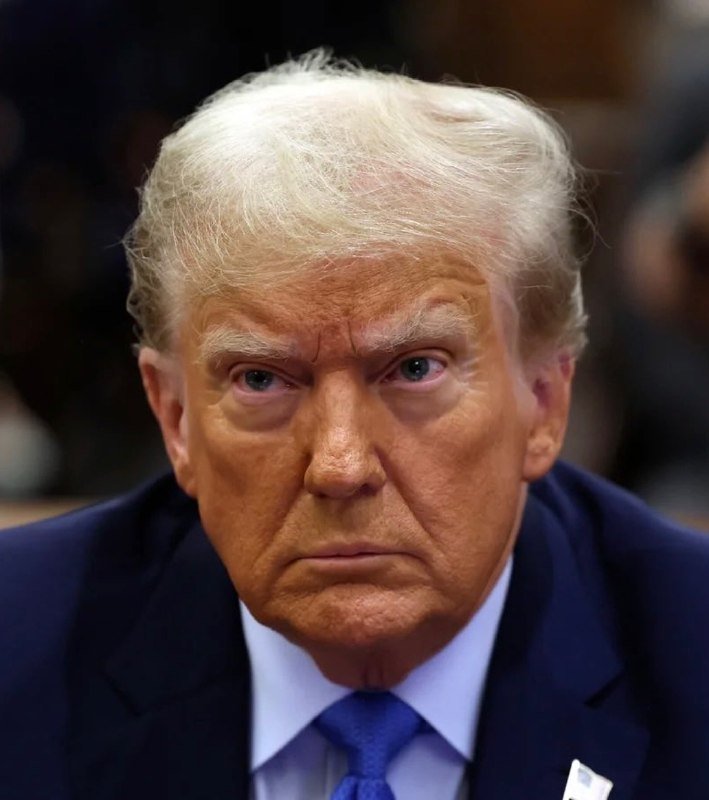
The United States Senate on Tuesday used its rarely invoked war-powers authority to instruct President Trump to end military operations against Iran or return to Congress for explicit authorisation — a rebuke that, on paper at least, is one of the more consequential intra-branch clashes of this presidency. The vote lands at the intersection of constitutional design and the lived conduct of American foreign policy, where the formal text of a resolution and its operational effect have rarely been the same thing.
The question is not whether the chamber spoke. It did. The question is whether the speaking changes anything inside the chain of command that has, for nearly a year, been directing strikes, deployments and naval movements against the Islamic Republic.
The vote, and what it actually orders
The resolution passed on 23 June 2026 directs the president to halt further military action against Iran absent congressional authorisation, according to wire reporting and a Telegram summary by Iranian state outlet Fars News that tracks the procedural language closely. The framing in the upper chamber is unusual: rare bipartisan in composition, and rarer still in being aimed at a sitting commander-in-chief in the middle of an active campaign. Trump's own statement, issued the same day, characterises the result in triumphalist terms — claiming that Iran has been left "without a navy, air power, air defense, missile capabilities, or a nuclear program" — which reads less like a concession to the Senate and more like a self-assessment that the war is already over, and that the Congress has been called in to ratify a fait accompli.
That framing is doing real work. If the president and his team believe the military campaign has effectively concluded, the war-powers resolution becomes a courtesy vote on a chapter that is closing — not a constraint on a chapter that is still being written. Both readings are consistent with the public record, and the public record is, for the moment, the only record available.
Why the resolution is structurally weak
War-powers resolutions of this kind have a built-in limitation that every Congress since 1973 has learned to navigate badly: they instruct, they do not appropriate. The resolution does not, on its face, cut off funding, restrict the use of specific platforms, or alter the legal authorities under which the executive is operating. A president determined to continue operations can — and recent presidents of both parties have — treat the resolution as a non-binding expression of opinion while continuing to prosecute the conflict under existing statutory authorities and claimed Article II powers. The legal scholars will argue; the operations will continue.
The structural problem is older than this vote. Congress ceded the routine conduct of foreign policy to the executive over decades, and war-powers resolutions are one of the few tools left in the legislative drawer. That they get used at all says more about how abnormal the present moment is than about how much constraint the chamber can impose on the executive. Tuesday's vote is a signal, not a switch.
The counter-narrative, and why it has weight
The dominant framing — that the Senate has reasserted its constitutional role and that the president has been checked — is the framing preferred by the war-powers resolution's sponsors and by most of the American press. There is a competing read, and it deserves more airtime than it usually gets.
If the campaign is in fact winding down on the schedule the president's own statement implies, then the resolution is not a check on the executive. It is the executive's preferred exit narrative, laundered through Congress. The chamber is being invited to take ownership of a drawdown that the White House had already decided to make. The bipartisan cosplay is a feature, not a bug: it gives the president a face-saving domestic argument ("even my critics agree it's time to stop") while leaving the strategic record — what was struck, what was preserved, what was conceded in any quiet-channel negotiation — outside the resolution's text.
There is a third reading worth registering. The Senate's move could also be read as an attempt to foreclose escalation. If Tehran is calculating that a longer, wider war serves its interests — and Iranian state media's prominent coverage of the vote suggests it is reading the chamber's hand carefully — then a clear, public congressional signal that further operations require authorisation raises the cost of any administration effort to widen the conflict. That is the most charitable read, and the one closest to what the resolution's sponsors will tell you in private.
What the structural frame actually looks like
Strip away the procedural language and Tuesday's vote sits inside a familiar pattern: the institutional centre of US foreign policy — the elected legislature — periodically reasserting a role that has been hollowed out by two decades of executive practice. The interesting variable is not the reassertion itself, which has become almost routine in the post-2001 era, but the alignment of forces around it. Bipartisan votes on war powers have historically clustered around presidents of the opposing party. Tuesday's vote is unusual precisely because the bipartisan coalition cuts across the president's own electoral base, which is the kind of fracture that usually only appears when the domestic political cost of the war has begun to bite.
The stakes are concrete. If the resolution is treated as binding by the executive, the US posture in the Gulf reverts to a pre-campaign baseline, and the question of what the campaign actually achieved becomes the central political fight of the next 18 months. If it is treated as advisory, the precedent — that Congress can be moved to the side during active operations — hardens further, and the next president, of whichever party, inherits an even narrower set of legislative constraints than the present one.
What remains genuinely uncertain
The public sources available at the time of writing do not specify the precise vote count, the number of Republicans crossing the aisle, the exact statutory authority the president claims for ongoing operations, or the operational tempo of strikes in the 24 hours before and after the vote. Iranian state media's framing of the resolution is, predictably, framed as a political win for Tehran; the White House framing, as already noted, is that the war is essentially over. Both of those framings serve their authors' interests. The honest reading is that we do not yet know which framing the next 72 hours will ratify, and the Senate has done less than the headlines suggest to settle the question.
— Monexus framed this as a constitutional-process story with a strategic exit-narrative counter-read, rather than the wire default of "Senate checks president." The procedural vote matters; the operational reality is not yet in the public record.
Wire provenance
This editorial synthesis draws on the following public wire/social posts:
- https://x.com/sprinterpress/status/
- https://x.com/sprinterpress/status/
- https://t.me/farsna/
- https://t.me/insiderpaper/
Follow the event.
These dated source records provide context. They do not retrospectively verify this archive article.
Separate what the nuclear watchdog reported from what it could not determine after the June 2025 strikes.