SpaceX's $20 Billion Bond Launch Quietly Rewrites the AI Compute Map
A single private company is borrowing more than some sovereigns while locking up nine-figure monthly compute contracts. The AI build-out is no longer about models — it is about who owns the electrons.
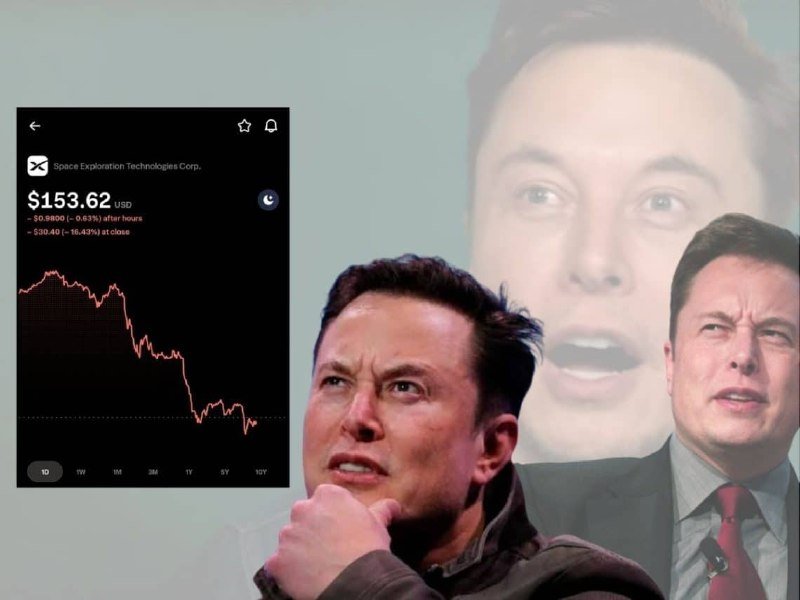
On 22 June 2026, SpaceX formally opened its first-ever senior unsecured note offering, targeting at least $20 billion in fresh debt. Three days earlier, on 19 June, the same company disclosed that it was sitting on more than $100 billion in cash. The juxtaposition tells the story: this is not a balance sheet in distress. It is a balance sheet positioning for the next industrial cycle.
Within hours of the bond launch, the market learned the use of proceeds is, in effect, already spoken for. According to CNBC reporting flagged on 22 June, SpaceX has signed a roughly $6.3 billion compute agreement with Reflection AI, valued at about $150 million per month, running from July 2026 through 2029. The arithmetic is striking: a single customer contract, structured as a multi-year monthly draw, accounts for a meaningful share of the bond raise the company is now marketing to fixed-income investors. The point of the debt is not to fund rockets. It is to fund silicon, racks, cooling and power contracts — the physical substrate on which the AI economy actually runs.
From launch cadence to compute ledger
For two decades SpaceX's centre of gravity was cadence: how many Falcon 9s per year, how many Starlink satellites in orbit, when Starship flies and at what cost per kilogram. That gravity is shifting. The company that put reusable flight on a quarterly footing is now a hyperscale infrastructure landlord, and the bond is the receipt. A senior unsecured structure implies an issuer confident in its investment-grade trajectory and willing to pay a coupon rather than dilute equity or pledge specific assets. The cash pile north of $100 billion disclosed on 19 June gives the new notes a layer of collateral-by-reputation: investors are not lending against a moonshot, they are lending against an existing cash engine.
The Reflection deal changes the texture of the contract book. A 36-month, $150 million-per-month compute commitment is not the kind of agreement a startup signs when it is testing a model. It is the kind a customer signs when it has a product, a backlog and a regulatory horizon it can underwrite. Reflection AI is, in effect, pre-paying for capacity that does not yet physically exist in the configuration it needs — a familiar pattern from the early cloud era, transposed into the AI build-out.
Who is actually on the hook
The headline numbers invite a misreading. SpaceX is not the buyer in the Reflection transaction; it is the seller. The $6.3 billion is owed to SpaceX over the contract window, not the other way around. The bond is how SpaceX finances the capex required to deliver on that obligation. Read together, the two announcements describe a classic infrastructure play: raise long-dated debt against a contracted revenue stream, use the proceeds to build the asset, capture the spread between the cost of capital and the contracted yield.
That is a Wall Street story — but it is also an industrial-policy story. The same company that delivers broadband from low Earth orbit is now deciding where gigawatts of new compute get sited, which power purchase agreements get signed, and which substations get reinforced. AI policy debates in Washington and Brussels tend to focus on model capabilities, safety evaluations and export controls. The decisive levers are increasingly upstream of all that: who owns the racks, who signed the PPA, who locked in the cooling-water rights.
The counter-read: this is just a balance-sheet shuffle
The bear case is straightforward. SpaceX already has the cash to fund its own build-out; adding $20 billion of senior unsecured debt on top of $100 billion in cash is, on its face, a financing choice rather than a necessity. Sceptics will argue the bond is financial engineering — a way to keep the cash earning one yield while the notes pay another, or a tax-efficient structure, or preparation for a future spin-off. There is also a real possibility that not all of the $20 billion is earmarked for compute at all; SpaceX's launch and defence businesses consume capital at unpredictable intervals, and Starship's path to full reuse remains the single largest discretionary line on the books.
The dominant framing, though, holds. Compute is the constraint. The customers lining up are not signing optionality agreements; they are signing delivery commitments with penalty clauses. The debt is the bridge between today's contracted backlog and tomorrow's physical plant. In that sense the $20 billion is not a balance-sheet flourish — it is the capitalisation of an industrial assumption: that AI demand, in 2027 and 2028, will outrun the available supply of trained silicon and the electrons that run it.
Stakes, in plain terms
If the trajectory holds, two things follow. First, the locus of pricing power in the AI stack migrates upward, away from the chip designer and the model lab toward whoever controls datacentres, power and orbital connectivity. SpaceX, with Starlink as a global distribution tail and now a contracted compute book, is positioning to be one of those controllers. Second, the geographic map of compute starts to bend toward wherever SpaceX can land capacity cheaply — which means the United States, by default, but also whatever jurisdictions can offer power at industrial speed and at scale.
What remains genuinely uncertain is whether $150 million per month is a market-clearing price or a loss-leader. The sources do not specify the cost basis, the take-or-pay terms, or what happens to the contract if a competing compute architecture matures faster than the Reflection roadmap assumes. What they do show, unambiguously, is that the AI race is no longer being run primarily in research labs or even in chip fabs. It is being run in bond prospectuses.
Desk note: this piece treats the 22 June bond launch and the reported Reflection compute agreement as separate but linked disclosures from a single issuer, framing the combined signal as an industrial-policy event rather than a routine financing round.
Wire provenance
This editorial synthesis draws on the following public wire/social posts:
- https://t.me/unusual_whales/218763
- https://t.me/unusual_whales/218717
- https://t.me/unusual_whales/218837