Trump's Hormuz Gambit: Blockade Lifted, 'Guardian Angel' Pitch Floated, Tehran and Muscat Circle the Tolls
Within a single trading session on 23 June 2026, Washington suspended its naval blockade of the Strait of Hormuz, floated a 20-percent 'guardian angel' oil cut, and watched Tehran and Muscat announce a joint committee to administer the waterway.
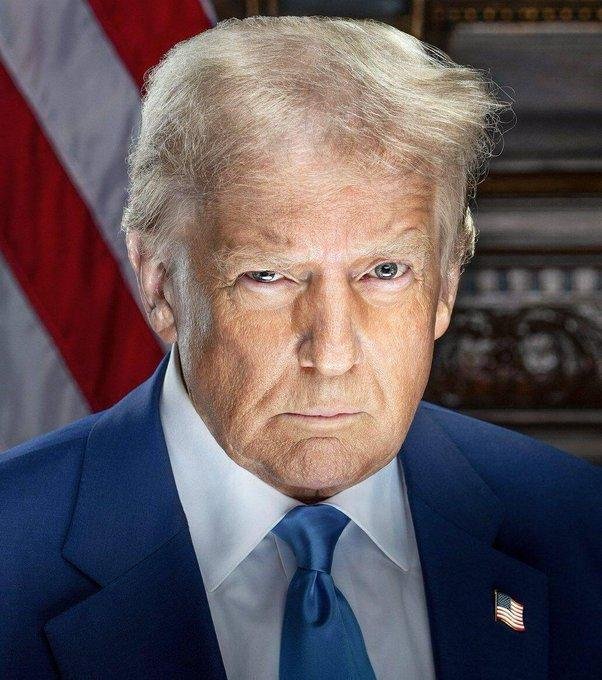
At 15:57 UTC on 23 June 2026, Donald Trump announced that he had "agreed to allow the Strait of Hormuz to remain open," ending, at least for now, the naval blockade the United States had reimposed on the world's most sensitive oil chokepoint. Twenty minutes later, Tehran and Muscat went public with a parallel track: a joint committee to administer the strait, and what one X wire called "a framework to jointly manage navigation & shipping fees" through the waterway. By 16:31 UTC, the United Nations said an evacuation plan had begun to help the hundreds of ships and roughly 11,000 seafarers still stranded in and around the strait.
The day's cascade looks, at first glance, like a clean de-escalation. It is not. It is the visible layer of a quiet restructuring of who gets paid for keeping the oil moving — and the same restructuring that, only hours earlier, the US president had tried to capture for Washington alone.
From blockade to "guardian angel"
The blockade had been Washington's bluntest instrument. In a 02:58 UTC post relayed by Unusual Whales, Trump told Fox News that the United States could become the "Guardian Angel" of the Strait of Hormuz and take 20 percent of the oil that transits it. The pitch was not abstract: roughly a fifth of all seaborne crude — and a comparable share of LNG — moves through the 21-mile shipping lane between Iran and Oman, and any premium or skim on that flow is a sovereign-scale revenue stream.
By mid-afternoon UTC, the pitch had softened into a posture. At 15:37 UTC, Trump said the United States would keep its ships in place and "reinstitute the blockade if necessary." At 15:57 UTC, he declared the strait open. At 16:31 UTC, the UN's evacuation plan began to move the backlog.
The order of those statements matters. The blockade is being suspended, not surrendered. The carrier group stays. The threat of reimposition remains the operative lever.
Tehran and Muscat move first on the tolls
The Iranian–Omani move is the day's under-reported headline. According to a Polymarket wire at 14:20 UTC, the two governments are "negotiating a framework to jointly manage navigation & shipping fees." The Palestine Chronicle confirmed the thrust of that report at 16:31 UTC, citing an agreement "to form a joint committee to discuss the future administration of the Strait of Hormuz."
For Oman, this is a diplomatic coming-of-age moment. Muscat has long cultivated quiet neutrality — useful to Tehran, useful to Washington, useful to Riyadh and Doha in equal measure. A co-administrative role over Hormuz gives the sultanate a formal seat at the table that, until now, only the great-power navies and the Iranian Revolutionary Guard Corps had occupied.
For Iran, the framework is more pointed. A jointly-set transit fee, collected by a committee in which Tehran has a binding voice, is a direct answer to the American "20 percent" pitch. If Washington wants a cut of Hormuz oil, Tehran's message is: so does the country the strait actually borders, and that country's preference for the arrangement is not negotiable from the outside.
The numbers behind the rhetoric
Trump claimed, in remarks carried by Cointelegraph at 11:30 UTC, that 19 million barrels of oil flowed through Hormuz "yesterday" — "an all-time record." That figure, if accurate, puts daily throughput above the pre-blockade baseline of roughly 17–18 million barrels per day reported by major wire services in 2024–25, and would imply that the blockade either never fully choked off flow or that pent-up demand snapped back the moment the choke was eased.
Two caveats apply. First, the 19-million-barrel claim originated with the US president and has not been independently corroborated by IEA, EIA, or Vortexa tanker-tracking data in the source material available to this publication. Second, even a record flow on a single day does not establish a sustainable rate; the UN's own 16:31 UTC advisory referenced hundreds of ships still stranded, a backlog that will take days to clear.
What remains uncertain
Three things are genuinely contested in the day's reporting, and the source material does not resolve them.
First, the substance of the Iran–Oman framework. The Polymarket and Palestine Chronicle items describe a "joint committee" and a "framework to jointly manage navigation & shipping fees." Neither names a fee schedule, a revenue split, or a dispute-resolution mechanism. The committee could be operational within weeks or it could remain a diplomatic placeholder for a year.
Second, the durability of the US blockade suspension. Trump's own statement — that American ships will stay in place and "reinstitute the blockade if necessary" — explicitly preserves the option. The suspension is conditional, and the condition has not been named.
Third, the "guardian angel" oil share. No source item in this wire carries a US executive order, Treasury guidance, or congressional referral implementing a 20-percent skim. The figure remains a presidential pitch, not a policy.
The structural read
Strip the day's headlines back and the pattern is familiar. A superpower tries to convert naval supremacy into a permanent revenue claim on a global commons; the littoral states, with the quieter diplomatic backing of customers in Asia, build an alternative administration that prices the superpower out of the rentier role. The US gets the visible win — the strait is open, the blockade is lifted, the stranded seafarers go home. The structural win goes to whoever writes the next transit-fee invoice.
The Hormuz question has always been a question about who is paid to keep the oil flowing. On 23 June 2026, Washington answered: us. Tehran and Muscat answered: us, together. The market — and roughly 11,000 seafarers still waiting off Bandar Abbas and Muscat — will spend the next several weeks deciding which answer lasts.
How Monexus framed this: the wire cycle focused on Trump's blockade announcement. Monexus reads the same-day Iran–Oman committee announcement as the more durable structural shift, and runs both threads at equal weight.
Wire provenance
This editorial synthesis draws on the following public wire/social posts:
- https://x.com/polymarket/status/...
- https://x.com/unusual_whales/status/...
- https://x.com/unusual_whales/status/...
- https://x.com/polymarket/status/...
- https://t.me/cointelegraph/...