Trump's Iran Wager: Inspection Bluff or Run-Up to Blockade?
Donald Trump says Iran has agreed to nuclear inspections. Prediction markets are pricing something far less diplomatic: a US blockade of the Strait by year-end.
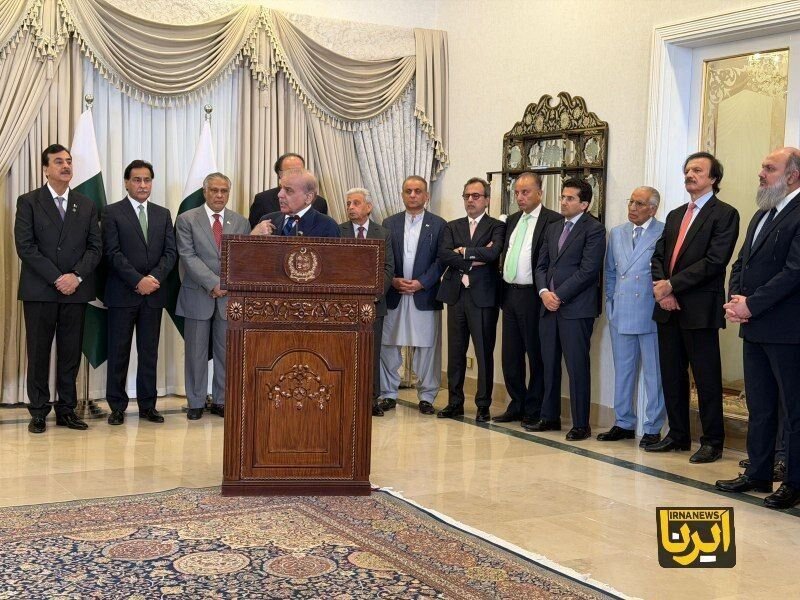
On the afternoon of 23 June 2026, Donald Trump told reporters that Iran had agreed to nuclear inspections — a claim delivered with the certainty of a man who has made such announcements before and later watched them collapse. Within hours of the same news cycle, a new prediction market opened on Polymarket asking whether the United States would announce a blockade on Iran by a specified date. The juxtaposition tells you almost everything worth knowing about where this standoff actually sits: in the gap between presidential rhetoric and the strategic logic that rhetoric is meant to disguise.
The claim and the bet do not contradict each other. They are two faces of the same escalation ladder. Trump's statement, posted at 15:17 UTC on 23 June, frames a deal as imminent. The Polymarket contract, posted three hours earlier at 12:21 UTC, prices the alternative outcome that the diplomatic vocabulary is preparing for. Read together, they describe an administration holding both branches of the same tree.
What Trump actually said
Asked at a press availability whether he was willing to risk economic catastrophe and strike Iran again, Trump answered: "A nuclear weapon supersedes depression. Depression's real bad. Nuclear weapon will cause depression much more quic[ker]." The remark, captured on the Unusual Whales feed at 11:57 UTC on 23 June 2026, lands as both a threat and a policy doctrine — one in which the catastrophic downside of a regional war is treated as the lesser catastrophic downside. It is the kind of statement that, in any other administration, would generate a 72-hour news cycle about nuclear brinkmanship. Here it has already been overtaken by the inspections claim.
That claim is the more consequential of the two, because it asserts a fact on the ground — Iranian consent to inspection — that Iran has not publicly confirmed. Past patterns matter. Trump's first-term diplomacy repeatedly produced headline agreements that Tehran treated as provisional, contested, or never concluded in the first place. The framing that an inspection regime is already in place is itself a negotiating position; it assumes the deal exists and pressures Tehran not to contradict the announcement.
The prediction market read
Markets are not buying the diplomatic version. The Polymarket contract posted at 12:21 UTC on 23 June 2026 — "US announces blockade on Iran by [date]" — exists because traders see a non-trivial probability that the inspections claim is the prelude, not the alternative, to a kinetic move. A blockade is not a strike. It is something more revealing: a posture that declares Iran's export economy an instrument of US policy without committing to the immediate military costs the President's remarks acknowledge.
A second Polymarket contract posted the previous day, at 21:44 UTC on 22 June 2026, asks whether Iran will announce withdrawal from MOU (memorandum of understanding) negotiations. The two contracts together describe a binary the administration is preparing to operate inside: Iran either accepts terms, or it withdraws, or the United States imposes a maritime quarantine. Each branch of that fork is treated as live. None of them is presented as a status-quo option.
What an inspection bluff would look like
The most plausible reading of the 23 June claim is not that Iran has secretly agreed to inspections but that the announcement is intended to test whether Iran will publicly agree in the days that follow. The mechanism is familiar: declare the deal, give Tehran a window to confirm it, and treat silence as acquiescence. If Iran declines, the inspections claim becomes the justification for the next step on the ladder — the blockade scenario now being priced in.
This is what the President's own doctrine predicts. The 11:57 UTC exchange is explicit: a nuclear-armed Iran is treated as a worse outcome than depression. Inspections, in that frame, are not the goal. They are a checkpoint on the way to the goal, and if Iran refuses to pass through it, the next checkpoint is kinetic.
The structural problem
None of the available reporting confirms that the International Atomic Energy Agency, the Iranian Foreign Ministry, or any Iranian official has corroborated the inspection announcement. Western wire services have not, in the source material available to this publication, carried an independent confirmation. Iranian state outlets — PressTV, Tasnim, IRNA — have not been cited in the underlying feed. The inspection claim therefore rests on a single attribution: the President's own statement.
That is the structural problem this publication keeps encountering in coverage of US–Iran negotiations. The information environment is built around what US officials say about Iran, with Iranian confirmation treated as a slow, filtered, secondary input. The result is a news cycle that can run for days on the strength of an assertion that has not been corroborated on the other end of the wire.
The Global South frame
A blockade of the Strait of Hormuz would not be a bilateral US–Iran event. Roughly a fifth of seaborne oil transits the chokepoint. The principal downstream casualties — by volume of imports exposed — are China, India, Japan, and South Korea, with secondary exposure across Southeast Asia. For the Global South, a blockade is not a sanction with loopholes; it is a fuel price event with no good substitute.
That asymmetry is the part of the story the prediction markets are pricing, and the part that gets least attention in Western coverage of the President's statements. The same rhetoric that the White House frames as a defence against nuclear proliferation is, viewed from Beijing, New Delhi, or Jakarta, an instrument that determines their energy costs without their consent. Whether that framing rises to a formal diplomatic objection depends on whether the blockade scenario matures from a Polymarket contract into a policy.
Stakes and what remains uncertain
What we do not yet know is whether Iran has, in fact, agreed to inspections in any forum that matters — IAEA correspondence, a bilateral channel, a public statement from Tehran. The source material does not contain that confirmation. What we do know, on 23 June 2026, is that the US President has asserted it, prediction markets are pricing the alternative, and the President's own remarks about nuclear risk versus economic risk suggest an administration that has already decided which downside it prefers.
The honest read is that the inspections claim is the opening bid on a much more aggressive posture, not a substitute for one. Whether Iran confirms, denies, or stays silent in the next 48 hours will determine which Polymarket contract resolves first.
— Desk note: Monexus framed this against the prediction-market data rather than the press-conference transcript alone. The wire copy will foreground the President's claim; the market data tells you what serious money thinks the claim is worth.
Wire provenance
This editorial synthesis draws on the following public wire/social posts:
- https://x.com/unusual_whales/status/2069279058974720000
- https://x.com/unusual_whales/status/2069173219471372289
- https://x.com/unusual_whales/status/2069173219471372288
Follow the event.
These dated source records provide context. They do not retrospectively verify this archive article.
Separate what the nuclear watchdog reported from what it could not determine after the June 2025 strikes.