Trump's Theatrical Diplomacy and the Iran Inspection Question
A presidential exchange with reporters over IAEA inspections reveals the gap between public theatre and the written record on US-Iran nuclear diplomacy.
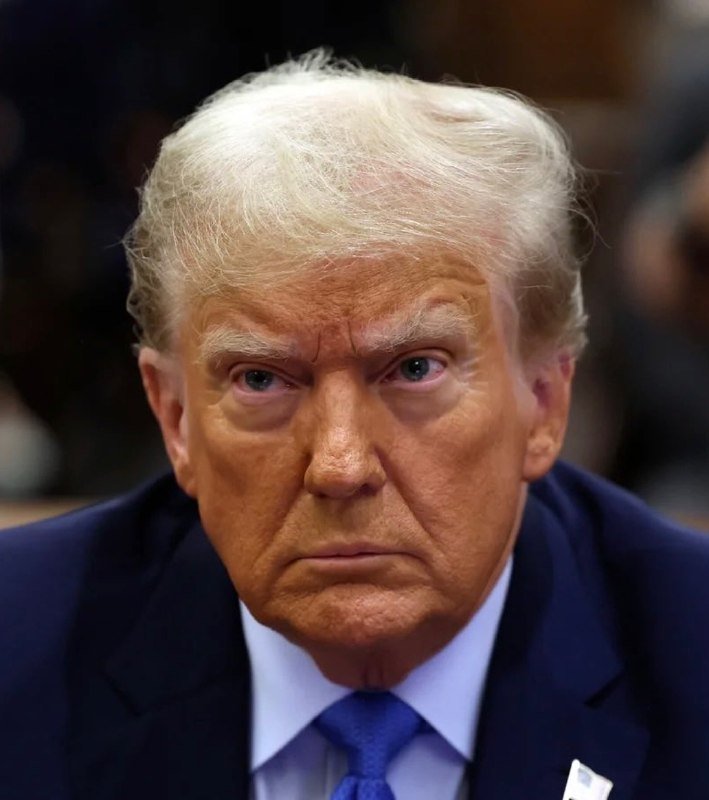
At 20:44 UTC on 23 June 2026, a reporter put a direct question to President Donald Trump in the White House press area: the Iranians are saying there is no scheduled visit for IAEA inspectors? The president did not hedge. "They are wrong," he replied. "They told us inside, and we have it down 100% inspections. If they were right, I cancel the—" The video, captured by the Sprinter Press pool, cuts off mid-sentence, but the assertion is on the record: there is, in Trump's telling, a firm US-Iran understanding on International Atomic Energy Agency access, and Tehran's public denials do not match what was agreed privately.
The exchange is the kind of moment that looks throwaway and isn't. The IAEA access question is the single most consequential technical issue between Washington and Tehran, the metric by which any deal will be judged inside both governments. When the US president says on camera that Iran is wrong about its own commitments, and a sitting IAEA inspection regime is the subject, the words travel — to capitals, to markets, to the agency itself in Vienna.
The performance and the paper
A separate clip circulating on the same day, headlined "Trump held an acting masterclass" by the Sprinter Press feed, catalogues the rhetorical register: confident contradiction of the foreign counterpart, conditional threat delivered as conversational aside ("if they were right, I cancel the—"), and a 100% guarantee offered without visible hedging. Taken together with the IAEA exchange, the impression a reader gets is of diplomatic substance delivered almost entirely through improvisation, with the press conference standing in for written text.
The problem is not that presidents improvise; they always have. The problem is that the inspector-access question has a documentary life of its own. It will be answered by IAEA Director General reports to the Board of Governors, by quarterly inventories at Natanz and Fordow, and by whatever joint technical arrangement Washington and Tehran have or have not signed. Trump is asking the public — and the market — to accept the verbal version as definitive while the documentary version is, at best, days or weeks behind it.
What the Iranians actually said
The Iranian side of the record is more restrained. The exchange in the pool video is one-sided by definition: a Trump answer, no Iranian readout attached. Iranian state-aligned channels have, in the days preceding this incident, signalled ongoing technical discussions without confirming any specific inspection schedule, a posture consistent with the negotiating position Tehran has held through previous rounds. The reporting does not specify whether Iran's public denial of "scheduled visits" refers to a formal calendar, an ad-hoc access arrangement, or a misreading of an offer — a gap that the president's flat contradiction does not, by itself, close.
That gap matters. A 100% guarantee of inspections, delivered as a rejoinder to a foreign capital's denial, is only as durable as the agreement underneath it. If the US record consists of a phone call and the Iranian record consists of a statement to domestic audiences, the two will diverge the next time an inspector tries to enter a facility and is met at the gate.
The wider White House calendar
The 23 June exchange did not occur in isolation. The same day, a federal court lifted a 250th-anniversary deadline that had been pressing the Trump administration to reinstall exhibits at US national parks — a separate, domestic-governance story but a useful reminder of the administration's pattern of treating judicial and bureaucratic deadlines as advisory rather than binding. The cultural-policy track and the foreign-policy track run on different dockets, but they share a posture: a willingness to be on the wrong side of a written deadline in public, while insisting the underlying commitment is sound.
On Iran, the same posture carries higher stakes. The IAEA access question is the load-bearing wall of whatever non-proliferation arrangement the administration is trying to sell. If that wall turns out to be a press conference line, the rest of the structure does not survive contact with a Technical Cooperation meeting in Vienna or a Senate Foreign Relations hearing.
The structural problem with verbal guarantees
Diplomatic history is littered with verbal guarantees that held for a week. Inspection regimes, by contrast, are designed precisely because verbal guarantees do not. They work by being boring: scheduled visits, continuity of knowledge, environmental sampling, camera streams, quarterly reports. The whole point of the IAEA framework is to substitute routine for trust, to make the relationship between a capital and a centrifuge dependent on paperwork rather than on what a president happened to say on a Tuesday afternoon.
When the US side privileges the verbal over the documentary, it is asking the system to work in a mode it was never built for. The Iran file has survived, in its weakest periods, because the agency has held the technical line. The risk now is not that inspections are denied, but that they are announced, performed, and then quietly rescheduled in a way that leaves the agency holding a contradiction it did not write.
Stakes and what remains unclear
If the Trump reading is correct, the inspector pipeline is intact and the public dispute is theatre. If the Iranian public position is correct, the US is operating on a confidence that the technical record will not support, and the first IAEA quarterly report after 23 June will be the test. The reporting in hand does not resolve which is the case. The official Iranian counter-statement to this specific exchange has not surfaced in the pool video, and the IAEA's own public schedule for the relevant facilities is not part of the source material reviewed here.
What is not in doubt is the political shape of the moment. A US president told the world, on camera, that Iran is wrong about Iran. Either the paperwork backs him up, in which case Tehran has a public-credibility problem, or the paperwork does not, in which case Washington has one. Until the agency's next report cycle, the question sits in the gap between a press conference answer and an inspector's calendar entry — exactly where the inspection regime was built to keep it from sitting.
This piece leans on the reporter-pool exchange of 23 June 2026 and the same day's domestic court ruling on park-exhibit deadlines, rather than on summary wire characterisations, because the substance of the argument turns on what was said in the room and on the official record.
Wire provenance
This editorial synthesis draws on the following public wire/social posts:
- http://reut.rs/43OnK0u
- https://t.me/sprinterpress
- https://t.me/sprinterpress
Follow the event.
These dated source records provide context. They do not retrospectively verify this archive article.
Separate what the nuclear watchdog reported from what it could not determine after the June 2025 strikes.