Trump's Monday: quantum orders, Strait posturing, and a fresh fast-track deportation win
On 23 June 2026 a federal appeals court cleared the way for nationwide fast-track deportations, the president signed twin quantum-computing executive orders, and a flotilla stayed in place in the Strait of Hormuz — a single day's stack of moves that reframes the White House's second-term agenda in one stroke.
Three actions, one working day. On 23 June 2026, a federal appeals court cleared the way for the Trump administration to expand fast-track deportations nationwide; the president signed executive orders setting a 2028 target for a powerful US quantum computer and accelerating the migration to post-quantum cyber defences; and US naval forces held position in the Strait of Hormuz, with the president publicly reserving the option to re-impose a blockade. Each item stands on its own. Read together, they sketch a White House in motion — judicial, technological, and military tracks running in parallel, all stamped with a single decision-making style.
The courtroom win, and what it actually changes
The court ruling reported on 23 June 2026 lifts a constraint. With the appeals court now onside, the Department of Homeland Security can push fast-track removal — the streamlined procedure historically reserved for migrants apprehended at or near the border and unable to demonstrate credible fear — into the country's interior, against people who have lived in the United States for years. The mechanism is administrative rather than legislative, which is precisely why it has moved so quickly. The administration does not need a new statute. It needs a court to defer to its reading of the existing one, and on 23 June 2026 it got that deference.
The legal pivot is a reminder that immigration enforcement in the second Trump term is being rebuilt in the executive-branch machinery already on the books, not by fresh acts of Congress. Practically, the immediate effect is operational: more removals, faster, with less pre-removal judicial review. The political effect is harder to measure. Supporters will read the ruling as long-overdue clarity. Opponents will read it as the visible edge of a much larger project — the conversion of interior immigration policing from a back-office function into a front-line federal priority. Both readings are defensible. The evidence on the page so far is procedural, not statistical: the sources do not specify a removal-rate change, and the only firm number is the date the court said yes.
Quantum: the executive order, the 2028 clock, and the procurement question
The quantum orders signed on 22 June 2026 set two deadlines that the federal procurement system will now have to meet. The first is a working, powerful US quantum computer by 2028. The second is a faster migration to post-quantum cryptography across federal systems — a defensive move driven by the recognition that a sufficiently capable quantum machine will eventually crack the public-key standards that currently protect everything from bank transfers to classified cables.
The strategic logic is the easy part. Quantum is the next platform layer in computing, and the country that arrives at a fault-tolerant machine first will hold a structural advantage in code-breaking, materials simulation, optimisation, and cryptanalysis. China has been building a national quantum programme on an industrial-policy model: state funding, long time horizons, and a willingness to absorb losses in pursuit of capability. The United States has a deeper private-sector stack — IBM, Google, Microsoft, a long tail of well-capitalised startups — but the procurement problem is its own. Federal agencies do not buy the way venture-backed labs sell. If the 2028 deadline is to mean more than a ribbon-cutting, the White House will need to translate an executive order into multi-year purchasing commitments, security-clearance pipelines, and standards work. None of that is visible in the order text. It is, however, the only thing that determines whether the deadline is a target or a wish.
The Strait: a blockade paused, not a crisis ended
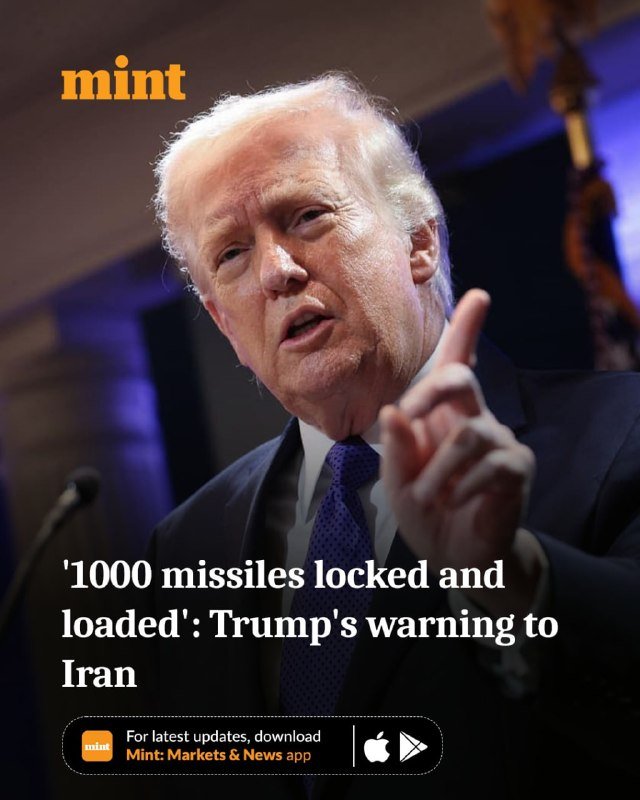
The naval posture in the Strait of Hormuz, in place since the 22 June strikes on Iranian nuclear and military infrastructure, was not withdrawn on 23 June. The president, quoted on the same day, framed the choice in conditional terms: the United States will keep its ships in place and re-impose the blockade if necessary. The phrasing is doing real work. A blockade that has been "paused" is a blockade that the other side knows can be switched back on; that uncertainty is itself a lever.
Iran's read of the situation, signalled by the public commentary of commentator S. M. Marandi on 23 June 2026, is openly dismissive — the line that "if anyone believes Trump, they need to see a doctor" is a shorthand for a position that takes the conditional at face value and treats the lever as theatre. That is a fair reading if the goal is to deny the White House the diplomatic win of a quiet stand-down. It is a less comfortable reading if the blockade is, in fact, switchable, because the cost of misjudging the conditional is borne not by the commentators but by the shipping insurance market and the oil futures curve. The structural point is that the Strait is the single chokepoint where US naval power, Iranian asymmetric retaliation, and global energy prices intersect. The administration has chosen to keep that intersection visibly armed. Iran has chosen to call the bluff. Both choices are reversible, and that reversibility is the news.
Capital markets, presidential commentary, and the buyback question
Away from the courtroom and the bridge, the president used the same day to weigh in on capital structure. The comment that stock buybacks are "a fake way to raise a price" is a politically loaded line from the mouth of a Republican president. It is also a line that runs against decades of mainstream financial economics, in which repurchases are a legitimate return-of-capital mechanism that, in principle, signals management's view that the share is underpriced relative to the cash on the balance sheet. That theoretical defence coexists with an empirical pattern: in the post-2017 tax-cut era, US corporations spent trillions on buybacks, and critics across the political spectrum have argued that the same cash, deployed into capex or wages, might have produced broader growth.
The same news cycle carried a smaller, more human story. The president said publicly of IBM: "I used to have that stock when it was much lower. I brilliantly sold it when I became president. That was not a good move." It is a rare and lightly entertaining admission that the holder of the office does not, in fact, beat the market on every trade. The disclosure also sits inside a separate ethics question — whether the president's personal holdings, disclosed or not, colour the policy choices that touch the underlying companies — that the sources do not resolve. The comment on buybacks is the more consequential of the two. It is a presidential signal, however informal, that the climate for repurchases may be cooling just as the Federal Reserve's interest-rate path is itself uncertain.
What remains uncertain
The honest ledger is short. The appeals court ruling is reported; the full opinion and the scope of the remand, if any, are not in the source material. The quantum orders are signed; the procurement pipeline that will deliver a working machine by 2028 is not yet on the page. The Strait of Hormuz deployment is in place; the conditions under which the blockade will be "reinstated" are deliberately unspecified, which is itself a form of policy. And the buyback comment is a one-liner; whether it is the opening shot of a Treasury or SEC review, or simply a president's preference, cannot be inferred from a single remark. Monexus will update each of these threads as the underlying documents — the opinion, the orders, the deployment order, any follow-on regulatory guidance — become public. For now, the day is a clean sample of a second-term White House that is comfortable issuing instructions across judicial, technological, financial, and military registers in a single afternoon, and that wants the public to know it.
Desk note: the wire on 23 June stacked three large stories and one market colour line. Monexus treats them in that order, with the buyback line held at the end as commentary rather than as a stand-alone policy event.
Wire provenance
This editorial synthesis draws on the following public wire/social posts:
- https://t.me/polymarket/1
- https://t.me/unusual_whales/1
- https://t.me/unusual_whales/2
- https://t.me/unusual_whales/3
- https://t.me/polymarket/2
- https://t.me/s_m_marandi/1