Vance pushes Beirut into a US–Lebanon–Iran security triangle, exposing Lebanon's Christian fault line
On 23 June 2026, the US vice president announced a trilateral working group in Beirut. Within hours, the head of the Lebanese Forces was telling him to cut Lebanon loose entirely.
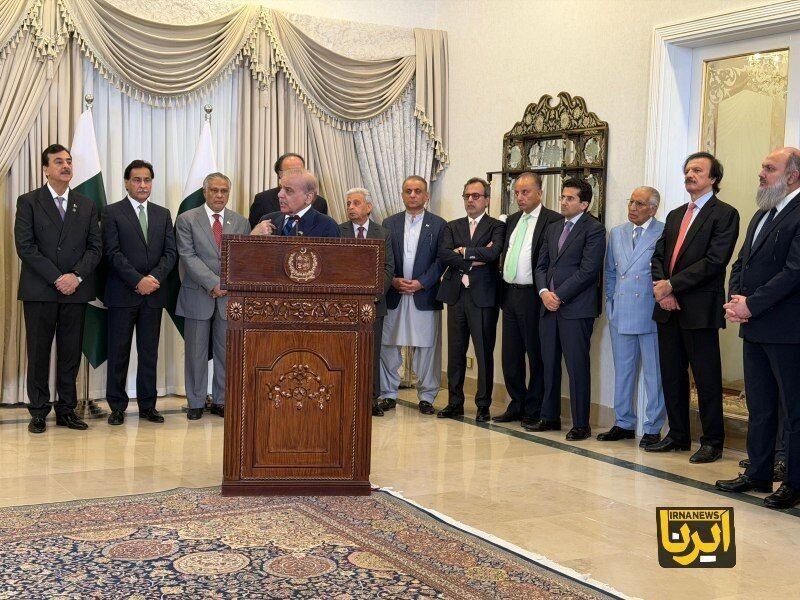
US Vice President J.D. Vance arrived in Beirut on 23 June 2026 and, alongside Lebanese President Joseph Aoun, publicly endorsed a joint working group that would bring the United States, Lebanon and Iran into a single mechanism for monitoring the country's ceasefire. The announcement, carried by Iranian-affiliated outlet Tasnim via the JahanTasnim channel at 14:56 UTC, frames Lebanon as the first Arab state in which Washington and Tehran would formally co-manage a security file on Lebanese soil. The proposal lands in a country whose internal map is being redrawn in real time.
Within sixteen minutes of that report, an entirely different message was travelling in the opposite direction. At 14:10 UTC, the abualiexpress channel carried an open letter from Samir Geagea — the long-time head of the Lebanese Forces, Lebanon's principal Christian party — addressed to Vance, asking the United States to sever institutional ties with what he called a Hezbollah-dominated order. The 14:12 UTC summary from englishabuali ran the same letter in fuller form, framing it as a Christian appeal to a Christian-aligned Washington. The two documents, dispatched in the same hour, lay bare the contradiction the Vance visit has exposed: an American administration trying to stabilise Lebanon through Tehran, and a Christian leadership trying to stabilise Lebanon against Tehran.
What Aoun and Vance actually proposed
The joint working group, as described in the Iranian readout, is structured as a trilateral — Washington, Beirut, Tehran — with the explicit mandate of "controlling" the ceasefire that halted the most recent round of Israel–Hezbollah fighting. That is a notable departure from the architecture of prior Lebanon ceasefires, which have typically been mediated bilaterally (US–Israel) or through a single external sponsor such as France or the UN Special Coordinator's office. The Tasnim-affiliated summary frames the arrangement as a confidence-building measure; Iranian state media has historically favoured formats that give Tehran a seat at the table in any file touching its armed allies.
The Lebanese presidency's own statement, as relayed by the JahanTasnim channel, has not yet been published in full text. The sources available to this publication do not specify the working group's reporting line, its rules of engagement, or what "control" means in operational terms — whether the mechanism covers ceasefire violations only, or extends to weapons flows, border security, and the disarmament of non-state actors. The absence of those details is itself a fact. A trilateral with Iran on Lebanese soil touches the core concern of every Lebanese faction that has spent the post-2005 period arguing that Iran's proxies are the problem, not a partner in managing it.
The Christian objection
Geagea's letter is the sharpest articulation yet of the position held by much of Lebanon's Maronite establishment: that any architecture legitimising Hezbollah's role in the state is incompatible with Lebanese sovereignty. The englishabuali summary, in the more detailed of the two readings, frames the appeal as a Christian-to-Christian communication — Geagea invoking shared religious ties to argue that American engagement with the current order amounts to a betrayal of Lebanon's pluralist constitutional compact. The abualiexpress summary, drawn from the same letter, uses more transactional language, calling on Vance to "sever all ties" with what it describes as the Iranian-aligned bloc.
The substance of the complaint predates Vance's visit. Lebanon's Christian parties have argued since at least the 2005 withdrawal of Syrian forces that Iran's military infrastructure in southern Lebanon and the Bekaa — through Hezbollah — makes a sovereign Lebanese state a fiction. The novelty is the audience. Geagea is not writing to a Beirut prime minister or to the European Union; he is writing directly to the sitting US vice president, asking the world's most powerful officeholder to choose sides within Lebanon's internal politics. That is a different kind of intervention than the one Vance arrived to propose.
Why Washington is here at all
The Vance visit itself is a continuation of an administration-level engagement with Lebanon that has intensified since the ceasefire took hold. The structural logic is straightforward. Hezbollah spent the last two years degraded by Israeli operations and the collapse of its Syrian logistics corridor; Lebanon is in the worst economic shape in its modern history, with the lira and the banking sector still unreformed; and Iran's regional position is constrained by the post-October 2023 environment. A trilateral working group, in this reading, lets Washington thread two needles at once: it gives Iran a face-saving role that does not require Iran to disarm Hezbollah, and it gives Lebanon a security guarantee that does not require Washington to commit troops. It is the same logic that produced the November 2024 arrangement, extended.
The risk is that the arrangement freezes in place precisely the order that Lebanon's Christian parties say they cannot live with. If the working group succeeds, Hezbollah remains armed, Iran's seat at the table is now codified, and the 1989 Taif Accord architecture — which explicitly moved Lebanon away from confessional tutelage toward a more balanced state — is functionally superseded by a confessional-international one in which Washington and Tehran are the guarantors. The Taif framework at least had the advantage of being regionally Arab. A US–Lebanon–Iran framework has the disadvantage of treating Lebanon as a theatre in a broader US–Iran contest.
Counter-read: the working group is the only available game
The strongest case for the Vance–Aoun line is that nothing else has worked. Bilateral US pressure on Hezbollah, eighteen years of UN resolutions, the 2006 war, the 2018–19 sanctions architecture, and the 2024–25 conflict all failed to dislodge the party from its entrenched position. A trilateral that gives Iran a stake in Lebanese stability is, in this reading, the first mechanism in two decades that ties Tehran's behaviour to a Lebanese outcome it can be held to. Critics of the arrangement are, the counter-argument runs, asking Washington to do nothing while Hezbollah reconsolidates.
That case has a real bite. Lebanon's economic collapse, the displacement still unresolved in the south, and the slow-motion failure of state institutions all create an urgent case for any architecture that lowers the temperature. But the case is not self-answering. A working group that requires Iranian cooperation to function is, by construction, a working group that Iran can break — and that Hezbollah, which has historically acted semi-independently of Iranian directives when its domestic Lebanese interests diverge, can break more easily still. The 2024 ceasefire held for the period it did largely because Hezbollah was militarily exhausted, not because it was institutionally committed to restraint. Whether a trilateral mechanism changes that calculus is the empirical question the next six months will answer.
What remains uncertain
The two Telegram-sourced readouts available to this publication are themselves politically positioned. The JahanTasnim summary of the Aoun–Vance meeting is an Iranian-state read of a Lebanese announcement; the englishabuali and abualiexpress summaries of the Geagea letter are Maronite-aligned channels reproducing a Maronite-aligned text. Neither is, on its own, a neutral wire report. The full text of Geagea's letter has not been independently published in this thread context; the full text of the Aoun statement on the working group's mandate has not been published in this thread context. The names of working-group members, the schedule of its first meeting, the dispute-resolution mechanism, and the position of the Lebanese prime minister and speaker of parliament are all unstated in the materials available to this publication.
What can be said with confidence is narrower than the headlines suggest: as of 14:56 UTC on 23 June 2026, a US vice president and a Lebanese president have publicly endorsed the principle of a trilateral mechanism including Iran; and as of 14:12 UTC the same day, the leader of Lebanon's principal Christian party has publicly asked that vice president to do the opposite. The two positions are not reconcilable in their current form. Which one prevails will say less about Lebanon than about the kind of order Washington intends to underwrite in the eastern Mediterranean.
This publication reported the Vance–Aoun announcement from the Iranian-state-affiliated Tasnim wire and the Geagea letter from the Lebanese-Forces-aligned englishabuali and abualiexpress channels; the available materials do not include an independent Western-wire confirmation of either, and the working group's operational details have not been disclosed in the readouts available at the time of writing.
Wire provenance
This editorial synthesis draws on the following public wire/social posts:
- https://t.me/JahanTasnim
- https://t.me/englishabuali
- https://t.me/abualiexpress