AJ Dybantsa goes No. 1 to Brooklyn: a draft night that doubles as a bet on the 2027 cap spike
The Nets made AJ Dybantsa the No. 1 pick in the 2026 NBA Draft on Tuesday night, handing a 19-year-old a rookie-scale contract whose value will be set by a salary cap league executives expect to surge again in 2027.
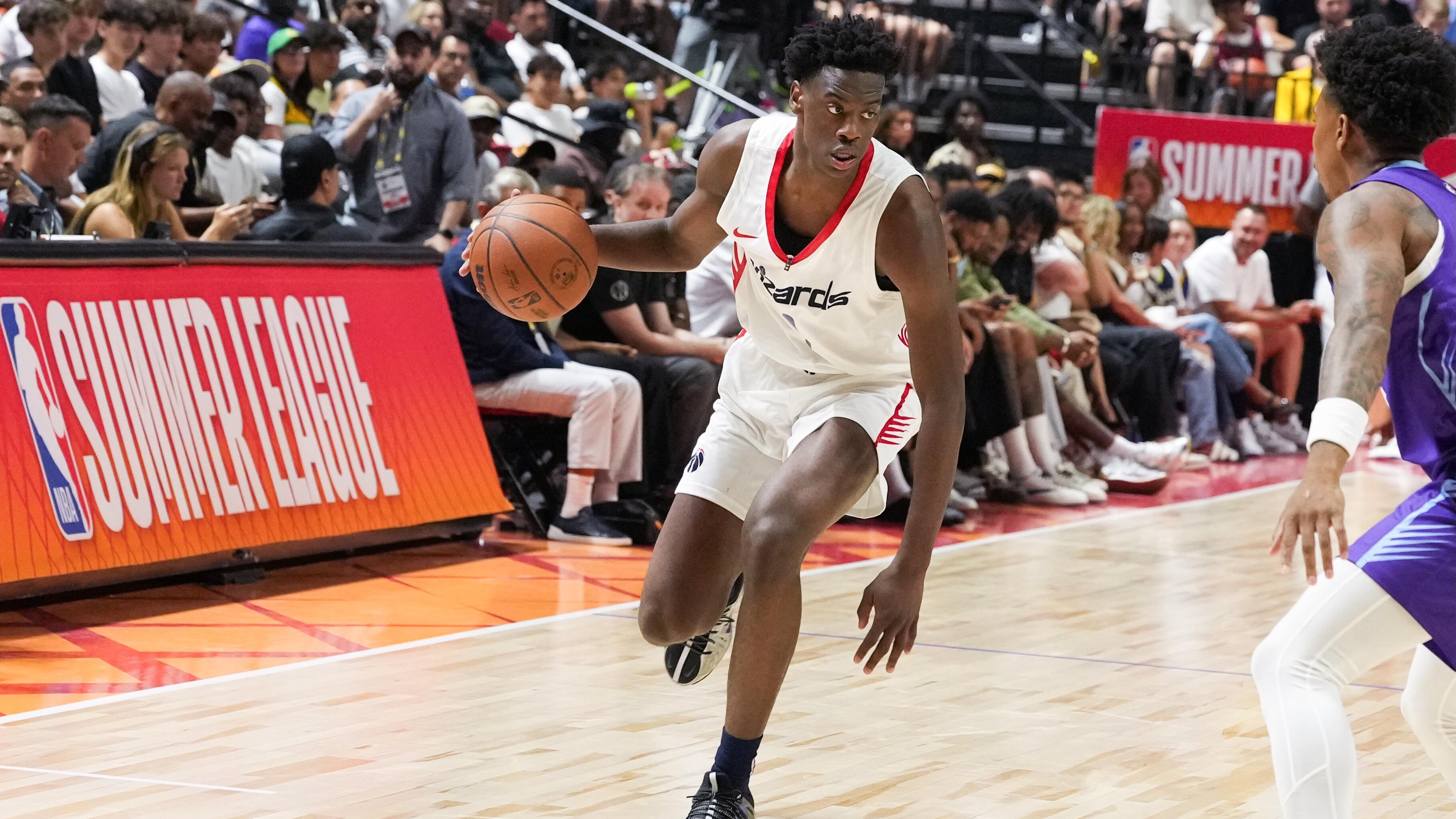
The Barclays Center floor in Brooklyn belonged to a teenager on Tuesday night. AJ Dybantsa, a 19-year-old wing out of the pre-draft consensus at the top of every big board, heard his name called first by the Brooklyn Nets at the 2026 NBA Draft, the league's annual reset of who owns the right to develop the next generational talent. The moment was the kind the league's marketing arm has spent two decades trying to manufacture: a polished prospect, a franchise in need of a hinge, and a draft stage built for the cameras. What Dybantsa does with the jersey is a problem for next season. The contract he signed the moment his name was read is a question for the league's accountants, and it is the more interesting one.
The Nets did not draft a rookie on Tuesday. They drafted a slot on a salary cap that the rest of the league expects to climb sharply in 2027. Rookie-scale extensions are calculated as a percentage of the cap, which means the first overall pick's paycheck is a derivative of a number that has been climbing for three straight years. Dybantsa's selection is a bet that a player taken at the top of a thin class will outrun a market that already pays teenagers like veterans.
The cap math nobody on the broadcast will explain
The rookie scale is a formula, not a feel-good story. Slot one in 2026 will earn a defined percentage of the salary cap in each of the four guaranteed years of the contract, with option years tacked on for the team. If the cap climbs the way most front offices have been quietly modelling — driven by the new national TV deal, the league's international rights renewals, and the ever-expanding cap smoothing mechanism designed to stop the spike from being a cliff — the player taken first on Tuesday night will be earning like a mid-level veteran before his rookie extension. The first overall pick in 2014 was making less in his fourth year than a rotation player is making now. That is the structural backdrop to every applause line on draft night, and it is the part of the broadcast that tends to get lost in the player-cam shots of teenage forwards hugging their fathers, a beat the NBA's own content team is now deliberately scripting after the league's draft coverage pivoted harder toward family narratives in 2024.
What the Nets actually bought
Brooklyn is a franchise that has spent the better part of three years rebuilding in public, trading veterans, absorbing bad money, and compiling the kind of asset base that makes a tank look like a plan. The No. 1 pick is the public-facing receipt for that process. What matters now is the shape of the roster around Dybantsa. The Nets have a young core, a large expiring book, and a front office that has been explicit about wanting to be a free-agent destination again within two cycles. The bet is twofold: that the player justifies the jersey within 12 months, and that the cap mechanics make the contract a bargain the moment the second TV money arrives. Both legs have to hit. One without the other and the pick becomes a five-alarm salary-cap problem the franchise cannot trade away quickly enough.
The counter-narrative: thin class, thick risks
The 2026 class was widely described in pre-draft coverage as top-heavy and short on the kind of second-tier depth that usually produces rotation pieces in years three and four. That matters because rookie contracts are not just about the player taken first; they are about the players taken fifth, fifteenth, and thirtieth, who become trade filler, matching salary, and bench bodies on contenders. Thin classes depress the value of the entire pool below the top pick. The counter-narrative, then, is that Brooklyn paid retail for a marquee asset in a class where everything else was on clearance. The optimistic read is that a thin class concentrates the upside in the first name called. The pessimistic read is that it concentrates the downside too. Both readings are in the room at Barclays Center tonight; only the optimistic one gets to take the stage.
Stakes and the 2027 horizon
The structural frame is straightforward. The NBA's economics are entering a window in which the cap is expected to jump, media rights revenue is locked in through the end of the decade, and a new collective bargaining agreement has tightened the apron rules that used to let teams spend their way past the cap. Every rookie signed this week is being signed into that environment. Dybantsa is the headline case, but the second contract he signs — the extension in 2030, after his fourth year — will be the one that defines his career earnings. Tonight's contract is the entry fee for that negotiation. Brooklyn's job is to develop a player worth extending. The player's job is to be the kind of talent that makes a franchise forget what it gave up to take him. The audience's job is to remember that a draft pick is a financial instrument wrapped in a highlight reel, and to price it accordingly.
The sources do not specify which team held the second and third picks, the financial terms of Dybantsa's rookie-scale contract, or the precise cap projection for 2027 used by Brooklyn's front office. Those details will fill in over the next 48 hours as agents file and beat reporters file their confirmations. What is already on the record is that the 2026 No. 1 selection was AJ Dybantsa, taken by the Brooklyn Nets, on a Tuesday night in June, in a draft whose financial logic will outlast the applause.
This article was written by Monexus News' sports desk. Draft night coverage elsewhere tends to lead with the player's backstory; we lead with the contract, because the contract is what the pick actually is.
Wire provenance
This editorial synthesis draws on the following public wire/social posts:
- https://t.me/NBALive
- https://t.me/NBALive