Australia move to brink of Women's T20 World Cup semis as Pakistan routed at Headingley
A 113‑run win keeps Australia unbeaten at the Women's T20 World Cup, with Ellyse Perry's 71 anchoring a total of 199‑7 before Pakistan folded for 86 in 13.4 overs — but an injury cloud over a senior all‑rounder has tempered the celebration.
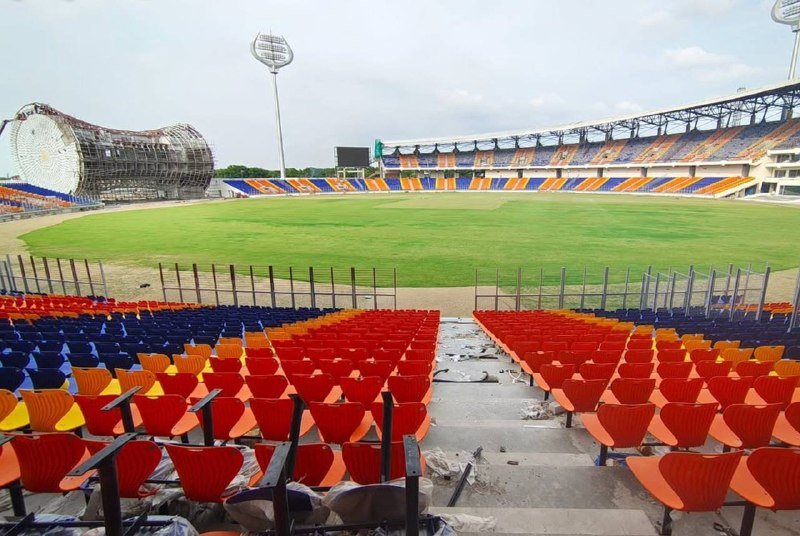
Australia stand one win from the semi‑finals of the ICC Women's T20 World Cup after dispatching Pakistan by 113 runs at Headingley on Tuesday 23 June 2026, a result that underlined their depth while casting a shadow over the squad's fitness heading into the business end of the tournament.
Ellyse Perry's 71 held together a total of 199 for 7, the highest posted by any side at this edition of the competition. Pakistan, asked to chase a steep target on a Leeds surface offering genuine carry, were bowled out for 86 in 13.4 overs. The margin — 113 runs — is the most lopsided of Australia's four group‑stage victories and confirms the six‑time champions as the side to beat. It also, however, leaves the coaching staff with selection questions that no margin of victory can paper over.
A fourth win that settles nothing mathematically
Australia's record is now four from four. That sequence leaves them top of Group B and, in practical terms, already through. The narrow path that would see them miss the knockouts requires a series of net run‑rate reversals so severe that, in the language of the broadcast box, the side has effectively qualified even if no formal rubber‑stamp has yet been issued by the ICC. Pakistan, by contrast, have been eliminated. They finish the group stage without a win and with a net run‑rate that the remainder of their fixtures cannot meaningfully repair.
The schedule does the rest of the arithmetic for them. Australia play their final group fixture on 25 June 2026, against a side yet to register a meaningful upset in the tournament. A win would confirm top seeding and a semi‑final slot, with the venue determined by group‑stage placings. Perry's innings — built rather than bludgeoned, the kind of innings that defines T20 innings construction in the post‑powerplay era — gives the side a benchmark for the knockouts: if Australia bat first and post 199, they almost certainly win. The question is whether their opponents will let them bat first.
The injury cloud
The celebration was muted. One of Australia's senior all‑rounders left the field during Pakistan's chase with an injury the team's management did not immediately characterise in detail, and the post‑match broadcast ran a live update rather than a celebration piece. Cricket is a sport in which a hamstring strain to a player who fields at cover and bowls three overs can become the defining story of a tournament, and the Australian camp will treat Tuesday's win as a problem‑solved exercise only when the medical staff clears the player in question.
There is no public confirmation of the diagnosis. Reporters on site noted the player walking off rather than being carried, a small piece of evidence that points away from an acute structural injury and towards a soft‑tissue complaint. That kind of complaint, in a tournament compressed into two weeks, is the difference between a full‑strength semi‑final and a scramble.
Pakistan: a tournament that exposed the gap
The contest was over as a contest inside the first six overs. Pakistan's chase lost a wicket in the second over and never recovered. The lower order, asked to hit out against a target already beyond reach, were dismissed for 86 in 13.4 overs. The side has now played four matches across the group stage and finished with a winless record. The structural reasons are not new and not unique to this squad: the gap between the full‑member programmes that pay their players professional wages and the associate‑adjacent programmes that do not is the single largest determinant of result at this level. Pakistan, for all the talent in their domestic structure, sit on the wrong side of that line.
What this World Cup has shown is not that the gap is closing. It is that the gap is widening. Australia's bench is deep enough to rest front‑line quicks and still win by eight wickets. Pakistan's bench is thin enough that a bad day with the ball becomes a 113‑run loss.
Stakes and forward view
For Australia the next 72 hours are about triage, not triumph. The medical staff have until 25 June to clear the injured player; the selectors have until the semi‑final to decide whether to gamble on form players carrying knocks or to lean on a squad that has, in the group stage, been the deepest in the competition. Either way, the side's batting looks settled. Perry's 71, the seventh highest individual score at this tournament, is the template.
For Pakistan the tournament is over in everything but name. The remaining fixture is a chance to blood players for the next cycle, not to alter the ledger of this one. The structural question — how a Full Member with a population north of 240 million finishes behind teams with a fraction of that talent pool — is one for the Pakistan Cricket Board and its funding model, not for a Tuesday night in Leeds.
This publication framed Pakistan's defeat as a structural story rather than a freak result; the 113‑run margin is consistent with the gap between full‑member and emerging programmes that the Women's T20 World Cup has consistently exposed across editions.