Cameron Boozer lands in Memphis: a No. 3 pick, a twin in another city, and a Grizzlies reset
Memphis spent the third pick on a 19-year-old power forward who has never played a minute without his twin brother on the roster. The fit is promising — and complicated.
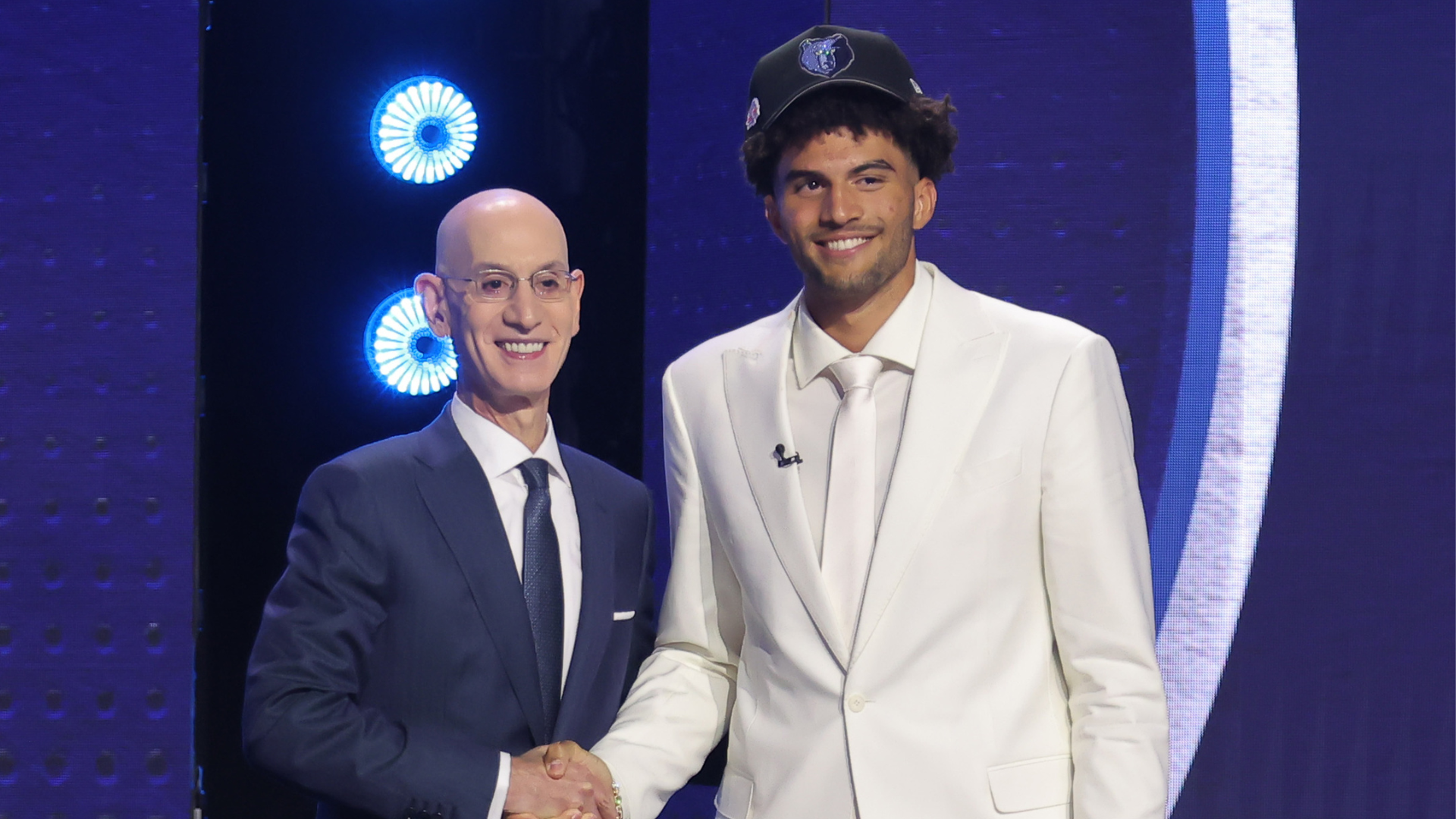
At 00:28 UTC on 24 June 2026, the Memphis Grizzlies used the third pick of the NBA Draft to take Cameron Boozer, the power forward out of Miami. The selection was confirmed by the NBA Live broadcast feed on ABC and ESPN, which announced the pick from the Barclays Center stage in Brooklyn and aired the player's first interview in a Grizzlies cap roughly five hours later, at 05:11 UTC, where Boozer credited his family for walking every step of the road with him. Memphis, in short, bet a top-three selection on a player who has spent his entire organised career attached at the hip to his twin.
The bet is a sensible one on tape and a fascinating one off it. Boozer arrives as the kind of inside-out forward the modern NBA still struggles to defend: a 6-foot-9 lefty with a post game older than his birth certificate, an elbow and corner three, and a basketball IQ sharpened by a father, Carlos, who was a 13-year NBA veteran. He also arrives in the small forward slot of a roster that has spent two years pivoting around Ja Morant and Jaren Jackson Jr. and trying to figure out what comes after the Morant–Jackson pairing when neither is on the floor. The Grizzlies need a third hub. They have drafted one. The harder question is what changes for the player himself.
The No. 3 pick, and what Memphis actually needs
Boozer's freshman season at Miami (2025-26) was the kind of campaign a top-three pick is supposed to have: a reliable double-double, efficient mid-range volume, and the kind of late-game possessions a coaching staff trusts to a 19-year-old. Memphis's decision to take him third, rather than trade the pick for veteran help, is a signal about the franchise's clock. The Grizzlies are not trying to win the 2026-27 West. They are trying to make the 2028-29 West uncomfortable, and Boozer is the first concrete asset in that window.
The on-court fit is cleaner than the headlines suggest. Jackson Jr. is a drop-coverage five who needs a four who can shoot from the dunker spot to the wing and switch onto perimeter scorers in a pinch. Boozer profiles as exactly that — a four who can play beside a five rather than instead of one. Lineup data from his Miami season is not part of the broadcast feed, so the defensive questions are still open: how he handles quicker fours on switches, whether his lateral quickness survives at the next level, how he navigates the league's growing appetite for five-out spacing.
The twin problem, plainly stated
For the first time in eight years, Cameron Boozer will not have his brother Cayden on the same roster. Cayden Boozer, a guard, was not selected in the first round of this draft, and Cameron acknowledged the separation in an on-camera exchange aired by NBA Live at 02:34 UTC on 24 June. The line — that he is preparing to play without his twin for the first time in eight years — is the kind of line that gets clipped into a TikTok and forgotten in a fortnight. It is also, in the way front offices actually think, a real variable.
The Boozers have shared a backcourt and a frontcourt, a high school, an AAU programme, and a college rotation. They have built on-court habits — the blind backside cut, the early-entry pass, the offensive rebound tip-out — that only exist because both brothers are on the floor. Cameron now has to rebuild those habits with new teammates, on a faster clock than a teenager usually gets. Memphis's player-development staff, the group that turned Jackson Jr. and Morant into All-Stars between 2019 and 2023, will be working against the steepest learning curve in the draft class: how to be half of a duo when you are, suddenly, a soloist.
The counter-read: Memphis passed on the higher-upside swing
The dominant critique of the pick is structural, not personal. The 2026 draft class is widely viewed as top-heavy but thin, and the names that have moved on mocks in the days before the event were perimeter scorers and wing defenders — archetypes the Grizzlies arguably need more than a second big. Taking Boozer third is a bet on size, touch, and basketball family. It is also a bet that the perimeter help can be acquired later, in free agency or by trading from a depth chart the Grizzlies have spent three drafts building.
The alternative reading is that the Grizzlies, a small-market franchise with a thin free-agent draw, are using the draft to take the player whose floor is highest, even if the ceiling is contested. Cameron Boozer is not the kind of prospect who becomes a bust. He is also not, on the broadcast evidence available so far, the kind of prospect who becomes a franchise-altering No. 1 option. He is the kind of prospect who becomes a long, excellent career.
What we do not yet know
The 24 June coverage — six Telegram items from the NBA Live channel, the broadcast feed, the on-floor interview — tells the reader what happened and how the family framed it. It does not yet tell the reader how Memphis's front office frames it. There has been no press conference transcript, no general manager interview, and no trade activity around the pick in the thread context. The trade-and-stash scenarios that typically animate the night of a top-three pick are absent here. Whether the Grizzlies view Boozer as the third piece of a finished core, or the first piece of a longer rebuild, is the question that will define the front office's next eighteen months — and the question the available sourcing cannot yet answer.
What is clear is that Cameron Boozer will be a Memphis Grizzly on 25 June 2026, that his family was on the Barclays Center floor with him when the pick was announced at 00:28 UTC, and that he will play, for the first time since he was 11, without Cayden beside him. The rest is the work of summer league and an October training camp.
— Monexus framed this as a player-and-organisation story rather than a family story. The family quotes are present, but the structural read is on what the pick means for Memphis's roster window, and on the open question of how a player built as half of a duo becomes a soloist.
Wire provenance
This editorial synthesis draws on the following public wire/social posts:
- https://t.me/s/NBALive/1762
- https://t.me/s/NBALive/1763
- https://t.me/s/NBALive/1764
- https://t.me/s/NBALive/1765
- https://t.me/s/NBALive/1766
- https://t.me/s/NBALive/1761