Co-hosts make their move: USA and Canada chase group-stage finishes as knockout rounds beckon
Two co-hosts, two final group games, two markets tipping them as favourites. The numbers behind Wednesday's and Thursday's matches say less about the hosts' form than about who the bookmakers believe they have already outclassed.
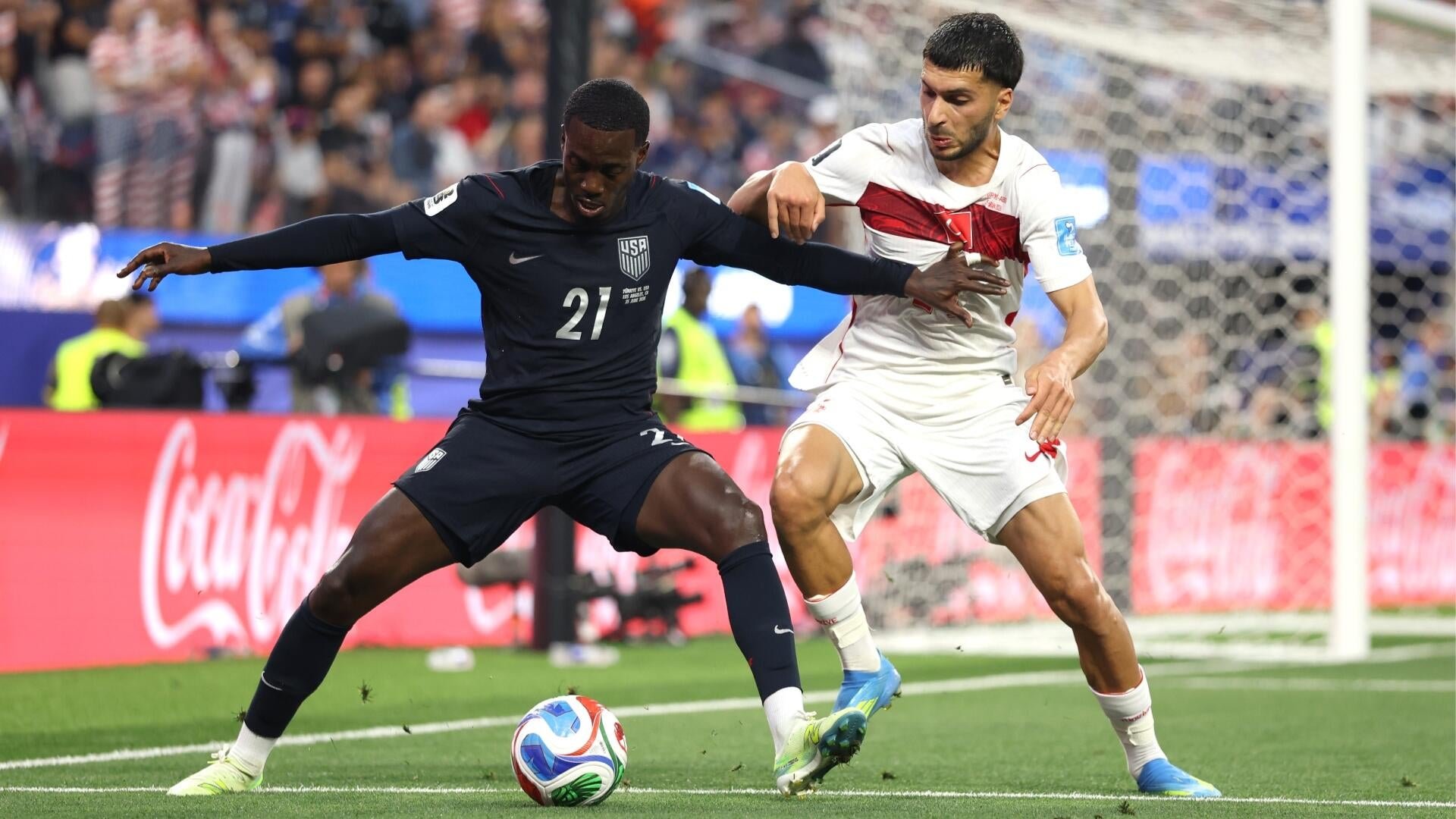
Canada's men step onto the pitch at 17:00 UTC on Wednesday 24 June 2026 to face Switzerland in what is, on paper, the easier of their two remaining group assignments at a World Cup they are co-hosting. A win would carry the Canadians into the knockout round and complete a quietly stated ambition — to be the third host nation, after the United States and Mexico, to advance. The fixture comes 24 hours before the United States Men's National Team meets Türkiye at the same tournament, with kick-off scheduled for Thursday 25 June 2026, in a match that decides the pecking order at the top of the USMNT's group.
Both co-hosts arrive at these fixtures priced as favourites by SportsLine's projection model, which has compiled a 21-12 record across recent selections. The model, run by analyst Jon Eimer, has installed Switzerland as a modest underdog against Canada and installed the United States as favourites against Türkiye — a pair of lines that, taken together, describe the shape of the tournament more clearly than any single scoreline can.
What the lines say, and what they don't
The Canada–Switzerland price treats the match as a coin-flip with the hosts holding a slight edge. The USMNT–Türkiye price tilts more decisively toward the Stars and Stripes, reflecting both home advantage and a deeper squad that has been built over the last cycle with this tournament in mind. Neither line tells the reader anything the league tables do not already imply. What they do tell the reader is who the market believes has been eliminated from contention, and who has merely stumbled.
Switzerland, despite a single-goal group-stage loss earlier in the tournament, retains the squad depth and tournament pedigree that come from three consecutive knockout-round appearances at the previous three men's World Cups. Canada's case rests less on pedigree than on the production of striker Cyle Larin and on a midfield that has, in the early rounds, held its own against more established opposition. The Canadians' group-stage ceiling is the open question; the floor is now visible.
For the United States, the Türkiye fixture is the kind of match that exposes either composure or its absence. The USMNT have spent the last 12 months auditioning a young core, anchored by Sergino Dest and a forward line that combines European-league starters with MLS regulars, and the line that the model publishes treats that audition as largely over.
The co-host dynamic, in plain terms
The 2026 tournament is the first to be hosted across three countries — the United States, Canada and Mexico — and the format has produced an unusual incentive structure. Each host federation has, at minimum, the right to expect its own side out of the group; the right to hope for two; and the right, more delicately, to avoid the embarrassment of finishing behind a guest on home soil. The first of those thresholds is now within Canada's reach. The second is the implicit target set by the United States' squad construction and budget.
The dynamic is not entirely sporting. Hosting a World Cup reshapes a federation's domestic calendar, its broadcast rights, and its political leverage with FIFA. A host that exits in the group stage does not merely disappoint fans; it burns political capital it cannot afford to spend. The markets, in pricing Canada and the USMNT as they have, are pricing in the cost of that capital.
What to watch in the next 72 hours
Three fixtures matter more than the rest. Canada against Switzerland on Wednesday 24 June 2026 at 17:00 UTC will determine whether the Canadians advance as group winners or as runners-up — a distinction that draws a meaningfully harder round-of-32 opponent. The United States against Türkiye on Thursday 25 June 2026 will decide whether the USMNT finishes first in its group and, in doing so, avoids the kind of early round-of-32 fixture that has ended American World Cup runs in three of the last four cycles.
The third is the one the wire services have spent the least ink on: what happens to the co-hosts' standing inside FIFA if either, or both, fail to clear the group. The federation that helped bankroll the tournament's expansion from 32 to 48 teams is the federation whose representative currently faces the harder path.
What remains uncertain
The SportsLine model that informs both CBS Sports previews is a projection, not a forecast — and a 21-12 record, however respectable, is a sample too small to read as a track record. The lineups confirmed for Wednesday and Thursday, the tactical adjustments each coach chooses to make, and the refereeing assignments are all variables the model does not absorb. Canada's defensive shape against a Swiss attack that includes several Bundesliga starters remains the single largest source of variance in the Wednesday match. For the USMNT, the open question is whether the squad rotation that has produced depth has also produced chemistry.
The bookmakers' verdict, for now, is that the co-hosts have done enough. The fixtures will say whether that verdict holds.
This piece is framed for Monexus readers who want the structural read on a tournament where the host nations' politics matter as much as their football. The wire-service previews published on Wednesday and Thursday morning focus on lineups and individual player form; Monexus foregrounds the group-stage economics and the federation-level stakes that those previews leave implicit.