Chip cycle meets carry trade: how a Seoul-Tokyo sell-off pulled Bitcoin under $60,000
A two-day rout in Seoul and Tokyo erased nearly $30 billion of Korean chip-market capitalisation and dragged Bitcoin under $60,000 — exposing how the AI trade has quietly tied the world's largest crypto asset to Asian memory-chip cycles.
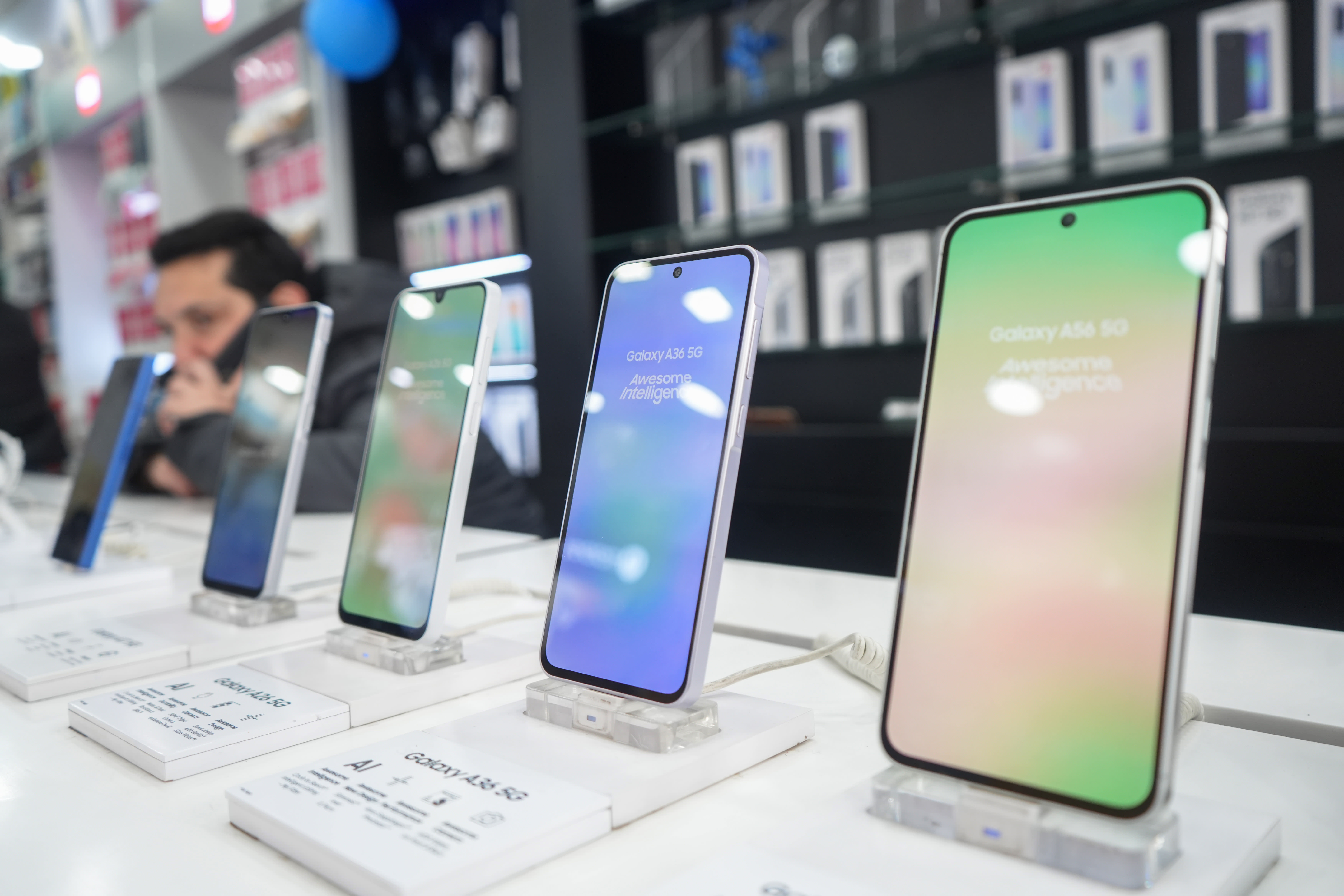
On the morning of 24 June 2026, two Asian open markets told a single story in unison. Seoul-listed semiconductor majors lost close to a tenth of their value in a single session the day before; Tokyo's tech-heavy names fell roughly half that. By midday Wednesday, both bourses were flat, but the rot had spread across the Pacific: Bitcoin, the asset most often described as a hedge against exactly this kind of macro stress, slid under $60,000. The trigger, on the surface, was a U.S. listing filing from a South Korean memory-chip giant preparing to raise close to $30 billion in New York. Underneath, a more durable pattern is hardening — the AI trade has bound the world's largest crypto asset to the fortunes of Asian memory manufacturers in ways almost no retail holder has registered.
The proximate cause is unglamorous: a South Korean memory-chip company filed on Wednesday to raise nearly $30 billion in a U.S. offering, according to wire reporting tracked by CoinDesk on 24 June 2026 at 16:01 UTC. Memory chips — the DRAM and NAND that feed AI accelerators, data centres and the high-bandwidth memory stacks stacked onto GPUs — have been the single most cyclical corner of the global semiconductor industry for two years. A capital raise of that scale signals either confidence in multi-year demand or an attempt to lock in equity value before a cyclical peak. Markets read it as the latter. The selling was indiscriminate across the Korean chip complex and bled into Japan's equipment makers. Nikkei Asia reported on 24 June 2026 at 05:01 UTC that Seoul and Tokyo stocks had each lost momentum the previous day — Seoul almost 10%, Tokyo around 4% — and were flat at midday Wednesday.
Bitcoin's slide to $60,000 inside the same 24-hour window is the part of the story that still gets underweighted in mainstream coverage. The asset long marketed as digital gold, uncorrelated to equities, an inflation hedge, a sovereign-reserve challenger, has been trading more like a high-beta chip-stock proxy for at least six months. The mechanism is straightforward if unflattering. The same institutional desks that ran the AI trade through 2024 and 2025 — buying Nvidia, AMD, TSMC, Samsung Electronics, SK Hynix, the Japanese lithography supply chain — also carried significant Bitcoin exposure as the cleanest expression of "AI-adjacent risk-on." When those books get margin-called, the liquidation is thematic, not asset-by-asset. Bitcoin sells because the same risk-parity sleeve that owns it also owns the Korean chip names now down 10%.
What the Korean offering actually signals
A $30 billion equity raise is not, by itself, bearish. Korean memory makers have tapped U.S. markets at moments of pricing power before. What made Wednesday's filing read as a sell signal was the timing relative to spot DRAM and HBM pricing. Industry trackers tracked by Nikkei Asia had begun showing spot DRAM contracts softening into the second quarter, while high-bandwidth memory — the SK Hynix-led product that sits at the centre of every Nvidia GB200 rack — was still supply-constrained but with order books lengthening beyond 2027. That combination is classic late-cycle: the killer product (HBM) is sold out, but the commodity layer (conventional DRAM) is rolling. A company raising equity in that window is plausibly pre-funding HBM capacity build-out, or plausibly topping up the balance sheet before a working-capital crunch when conventional DRAM inventories build. The market cannot tell which. It sells first and reads the prospectus later.
That ambiguity is precisely what made the Seoul session violent. Korean retail and foreign passive flows were already positioned for a melt-up after the AI capex announcements of late 2025. The filing forced a re-pricing of what "AI beneficiary" actually means in 2026: it means GPU vendor, HBM vendor, and lithography supplier — but it increasingly means not commodity DRAM. The Japanese leg of the rout, smaller in percentage terms, reflected the same re-rating — Tokyo Electron and the lithography supply chain fell less than the memory names because their order books are still tied directly to Nvidia's roadmap. The market is differentiating inside the AI trade for the first time in eighteen months.
The carry-trade tail nobody is naming
There is a second mechanism in this story, less discussed in Western wires but visible in the Nikkei Asia coverage: the yen-and-won carry trade. Japan's syndicated-loan market — the corporate funding channel for Japanese firms — reached a record high last fiscal year, with Taiwanese, Chinese and South Korean banks stepping up as arrangers, Nikkei Asia reported on 23 June 2026 at 22:31 UTC. In plain terms, regional banks lent into Japan at scale. The funding side of that lending — yen borrowed cheaply, redeployed into higher-yielding Asian chip equities, Bitcoin, and U.S. AI names — is the carry trade that funded the 2024-2025 risk-on rally. When the Korean chip complex wobbles, the carry trade unwinds. Bitcoin is a prime candidate for forced selling because it trades 24/7, has deep liquidity, and is held by the same speculative sleeves that own the chip equities. Selling Bitcoin to meet a Seoul margin call is, mechanically, no different from selling Samsung Electronics.
This is the structural story that has not yet been told cleanly in the financial press. The AI trade, the chip cycle, the regional carry trade, and the crypto rally have been four expressions of the same underlying bet — that U.S. tech capex would continue to absorb Asian manufacturing capacity at high margins, funded in part by cheap yen and won. The 24 June sell-off was the first session in which all four legs of that bet moved against the holders simultaneously. That is why a Korean equity filing moved Bitcoin by four figures.
Counterpoint: the AI-capex thesis still holds
It is important not to overstate the rupture. The dominant Western framing — that the AI build-out is a multi-year capex super-cycle — has not been falsified by a single trading session. Nvidia's order book, hyperscaler capital expenditure guidance, and the HBM supply contracts reported through Q1 2026 all point to continued absorption of Asian memory output through at least 2027. The Korean chip companies remain the only credible high-volume source of HBM3E and the coming HBM4 generation; Samsung Electronics and SK Hynix together account for the overwhelming majority of qualified capacity. A cyclical wobble in conventional DRAM does not change that structural position. The bull case — that any sell-off in the chip complex is a buying opportunity because the AI capex pipeline is contractually locked — is defensible.
The counter-frame — that the AI capex cycle is showing late-cycle characteristics, that hyperscaler spending is shifting from training to inference (which requires less memory per dollar of compute), and that 2027 will see HBM over-supply as Samsung brings new capacity online — is also defensible. The 24 June session did not resolve that debate. It raised the cost of holding the bull case through volatility.
Stakes: who wins, who loses, and what comes next
For Korean policymakers, the immediate priority is the won-dollar level. The Bank of Korea faces a familiar dilemma: ride out an equity correction that may be a healthy re-pricing, or step in to support the won and risk amplifying the carry-trade unwind. History — the 1997 Asian financial crisis, the 2008 dollar-funding squeeze, the 2020 pandemic dash for cash — argues for liquidity provision rather than direct intervention. The structural question is whether Seoul is prepared to tolerate a 10% memory-chip correction as the cost of a healthier cyclical posture, or whether the political economy of chaebol employment will force the same kind of state-backed buying window that followed the 2008 rout.
For Bitcoin holders, the lesson of 24 June is uncomfortable. The asset has spent the last 18 months being marketed as a sovereign-money hedge, a treasury-reserve asset, an inflation-protected store of value. The trading tape says something else. Bitcoin in 2026 is a high-beta proxy for the Asian AI-chip carry trade. When Samsung, SK Hynix and Tokyo Electron sell off because a Korean chip maker files to raise $30 billion in New York, Bitcoin sells off in lockstep. Holders who bought the "digital gold" narrative in 2024 were not hedged against that correlation. They were concentrated in it.
For the broader AI trade, the 24 June session is a warning shot rather than a turn. The cycle will turn eventually — chip cycles always do. The question for the second half of 2026 is whether the next leg down is a routine mid-cycle re-pricing absorbed by the structural demand picture, or a regime change in which AI capex disappoints and the carry trade unwinds violently. CoinDesk's framing of 24 June — "AI trade continues to draw investor interest and capital" — is the consensus read. The consensus read has, historically, been wrong at cycle turns. The unwinding of a regional carry trade funded by cheap yen and won, expressed through a Korean equity offering and visible in a $5,000 Bitcoin drawdown, is the kind of cross-asset move that consensus reads tend to miss until after the fact.
What remains uncertain
The sources do not specify the identity of the Korean memory-chip issuer, nor the exact use of proceeds. The 24 June coverage tracked here reports the filing as a wire item, not a deep dive. The Nikkei Asia syndicated-loan reporting from 23 June documents the regional-banks-as-arranger trend but does not quantify the share of Japanese corporate lending funded by yen carry. The relative weighting of the chip-cycle mechanism versus the carry-trade mechanism in the Bitcoin drawdown cannot be cleanly separated from publicly available data on this date. What is clear is that the AI trade, the chip cycle, the Asian carry trade, and Bitcoin have become a single trade, and that single trade was repriced across a 48-hour window beginning 23 June 2026.
Desk note: Monexus framed this as a cross-asset story linking an Asian chip-cycle signal to a crypto-market drawdown. The wire coverage on the day treated the Korean filing and the Bitcoin move as parallel items. Nikkei Asia's syndicated-loan reporting was the strongest public signal that a regional carry trade was funding the AI-chip-crypto complex; Monexus connected it to the Bitcoin tape rather than reporting it as a stand-alone banking story.
Wire provenance
This editorial synthesis draws on the following public wire/social posts:
- https://t.me/NikkeiAsia
- https://t.me/nikkeiasia
- https://t.me/NikkeiAsia
- https://en.wikipedia.org/wiki/High_Bandwidth_Memory
- https://en.wikipedia.org/wiki/DRAM
- https://en.wikipedia.org/wiki/Carry_trade
- https://en.wikipedia.org/wiki/Samsung_Electronics