An Engine Sale to Turkey and the Quiet Geometry of NATO Industrial Politics
A reported $700 million GE engine transfer to power Turkey's KAAN fighter lands weeks before a NATO summit — and exposes how alliance politics runs on equipment, not just communiqués.
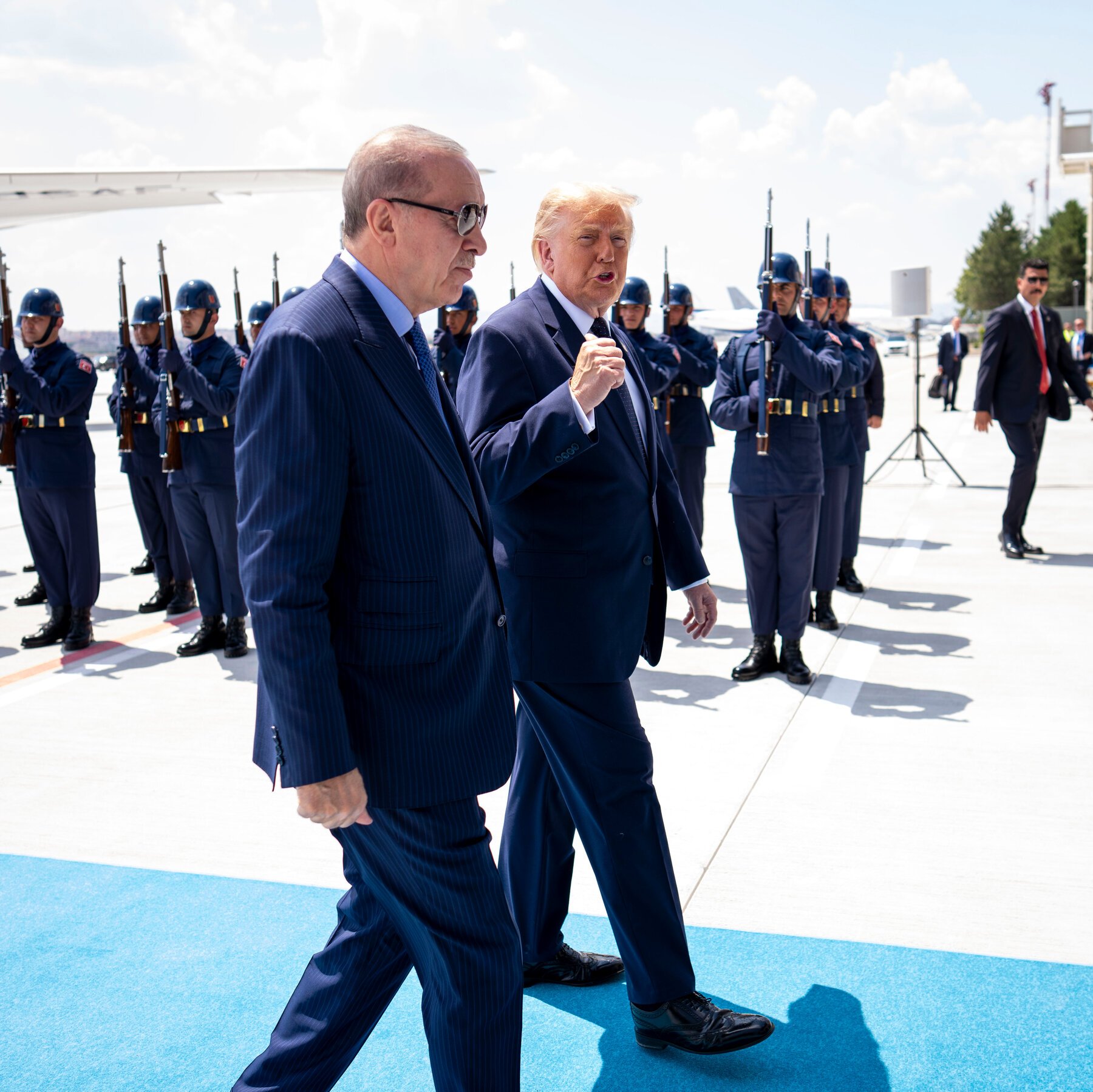
On 24 June 2026, Reuters reported that the Trump administration is preparing to advance a sale of more than $700 million worth of General Electric jet engines to Turkey, hardware intended to power the country's indigenous KAAN fifth-generation fighter programme. The package, according to the wire, is being lined up ahead of next month's NATO summit in The Hague, despite internal objections raised earlier in the review process.
The shape of the deal matters less than what it reveals about how the alliance actually operates. Industrial pipelines — which factory feeds which airframe, which export licence unlocks which assembly line — have become the binding tissue of NATO cohesion. Communiqués follow the supply chain, not the other way around.
What is being moved, and to whom
The hardware is a batch of GE Aerospace powerplants destined for Turkish Aerospace Industries' KAAN, a fifth-generation platform Ankara has billed as the centrepiece of an autonomous combat-aircraft capability. The dollar figure cited — north of $700 million — reflects engine cost, not airframe value, and represents the kind of transfer that sits inside a separate US export-licensing track from a NATO member-state sale. The wire reports the move is going forward despite objections raised during the interagency review, a signal that the decision has been escalated above the level where those objections were lodged.
The political timing is the story. A NATO summit gives a transactional arms package the cover of a multilateral setting. A sale that might otherwise read as a unilateral concession to Ankara — a NATO ally with a recently independent defence doctrine, a Russian air-defence acquisition in the rear-view mirror, and an unresolved position on Nordic membership ratifications — gets framed inside a routine pre-summit deliverables list.
The counter-narrative inside Washington
The objections that Reuters flagged are not abstract. They come from officials wary of two things: first, that handing Turkey a US engine for a domestic fighter accelerates an indigenous platform that, once flying, will compete with the F-35 in regional tenders Ankara can reach; second, that any transfer of high-end propulsion technology to a country that operates the S-400 Triumf air-defence system sits awkwardly next to existing CAATSA-style restrictions and the rationale that justified ejecting Turkey from the F-35 programme in 2019.
Those objections have weight. The KAAN programme is real, well-funded, and on a credible trajectory; the moment it produces a flying, exportable airframe, the US loses a measure of customer lock-in across a swathe of buyers Turkey can already address — Pakistan, parts of the Gulf, North African air forces. The propulsion decision is, in that sense, a market-share decision disguised as a foreign-aid gesture.
The counter-position — the one the package appears to be advancing — is that an aircraft flying with a US engine stays inside the Western logistics orbit, regardless of whose airframe it wears. A KAAN powered by GE remains a platform that needs US-trained maintainers, US spare parts, US diagnostics and, eventually, US-clearance for weapons integration. That argument treats the engine as a tether rather than a gift.
Industrial geometry, in plain language
What is on display is a familiar pattern: alliance cohesion is increasingly maintained through supply-chain integration rather than through shared strategic doctrine. Members that diverge politically — Turkey on Russia, on Israel, on Eastern Mediterranean questions — stay structurally bound when their aircraft, air-defence radars and command systems run on shared components and shared software stacks.
This is not new. The US has used propulsion access as a strategic lever for decades; the F-104, F-4 and F-16 all functioned as binding mechanisms with European partners. What is newer is the asymmetry. Turkey has spent fifteen years building the engineering base to design around being cut off, which is what the S-400 episode demonstrated. Ankara absorbed the cost of ejection from the F-35 programme and continued. A re-entry via KAAN, on Turkey's airframe with US engines, inverts the leverage: the US now sells the most strategically sensitive component into a programme it does not own.
The structural frame, then, is one of reversible dependency. NATO cohesion has historically rested on the assumption that whoever supplies the propulsion owns the platform's trajectory. The KAAN deal suggests the assumption is being relaxed — at least with Ankara, at least for now — in exchange for keeping the supply chain inside the alliance perimeter.
What is at stake before The Hague
The summit stakes are concrete. If the package clears, the US arrives in The Hague with a deliverable that demonstrates alliance management is still functional in a year when other headlines — Sweden's path, Greek-Turkish atmospherics, burden-share arithmetic — have run hot and cold. It also gives Turkey a visible win it can show domestically, useful for a government that has been pressing for years to be treated as an architect rather than a supplicant of European security.
If the package stalls, the signal is the opposite. A blocked engine sale, three weeks before a summit at which Turkey's role is on the agenda, would read as Ankara being managed rather than partnered. The Turkish defence establishment has prepared alternative propulsion paths, and a rebuff would not slow KAAN so much as push it further toward non-US suppliers over the next decade — exactly the outcome the engine-leverage theory is meant to prevent.
What remains unresolved
The wire reporting identifies the dollar value, the platform, the timing and the existence of interagency objection. It does not name the specific engine variant, the delivery schedule, or which offices filed the objections. It also does not address how the package reconciles, if at all, with the legal architecture that ejected Turkey from the F-35 line seven years ago. Those gaps matter: the same export-licensing logic that prohibited a more mature programme can be deployed, or waived, against this one, and the public reasoning for either move is not in the current record.
What can be said with confidence is that the geometry of the deal — high-end US hardware into a sovereign Turkish platform, ahead of a multilateral summit, over internal objection — fits a longer pattern of alliance management by supply chain. Whether that pattern is holding or fraying depends on which component fails first.
— Monexus staff: how we framed this. The wire line treats the engine sale as a discrete transaction; the analytical line treats it as a structural moment inside a NATO whose cohesion increasingly runs on interchangeable parts rather than interchangeable positions.
Wire provenance
This editorial synthesis draws on the following public wire/social posts:
- https://t.me/osintlive
- https://t.me/wfwitness