Hezbollah drone footage, Gaza demolitions, and a Canadian cemetery: a day on the wire
Three items crossed the Monexus wire within ninety minutes on 24 June 2026: a Hezbollah-released drone video on the Lebanon border, the reported crushing of an Israeli bulldozer in Gaza, and Canadian families demanding repatriation of soldiers' remains after a UN peacekeepers' cemetery was destroyed.
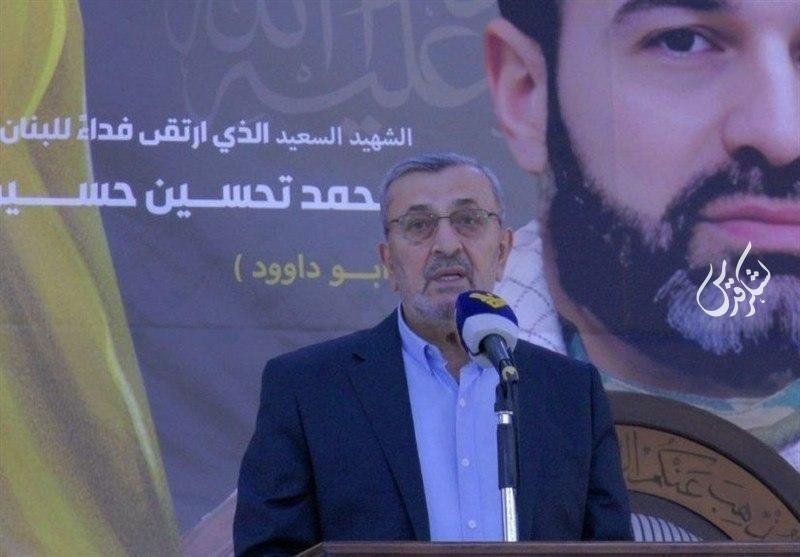
Three items crossed the Monexus wire within ninety minutes on the evening of 24 June 2026, and taken together they sketch the texture of a conflict that has fragmented into several overlapping theatres: a Hezbollah drone release on the Lebanon border; the reported crushing of an Israeli bulldozer during demolition operations inside Gaza; and a formal request from Canadian families asking Ottawa to protect or repatriate the remains of soldiers buried in a UN peacekeepers' cemetery that, according to Palestinian Chronicle, was destroyed by Israeli forces. None of the three is, on its own, a strategic event. Read together, they illustrate the difficulty of verifying claims in real time, and the way social media has displaced the press release as the primary unit of war reporting.
The drone footage was published by Tasnim Plus, the English-facing channel of Iran's Tasnim News Agency, at 23:25 UTC on 24 June 2026, with a one-line caption identifying it as the moment Israeli soldiers escaped a Hezbollah drone on the border. Tasnim is an Iranian state outlet and its framing should be read accordingly; the underlying claim — that Hezbollah's military media arm released footage of a strike or near-strike on Israeli personnel — is consistent with the long-running pattern of low-intensity cross-border targeting along the Israel-Lebanon frontier that has persisted in various forms since October 2023. What the clip actually shows, beyond the soldiers moving to cover, cannot be confirmed from the post itself: video provenance, geolocation, and the timing of the strike relative to the release are not specified in the Tasnim item.
Forty-three minutes earlier, at 22:57 UTC, the Russian military-affiliated channel Two Majors reposted a brief item from a Palestinian account, @Alsaa_plus_EN, reporting that an Israeli bulldozer and its driver had been crushed after a building collapsed on it during demolition work in the Gaza Strip. The post carries both Israeli and Palestinian flag emojis and the phrasing is characteristic of Russian-adjacent milblogger networks, which aggregate field clips from both sides of the war. The factual core — a demolition operation, a collapsed structure, a casualty — is the kind of incident that Israeli military spokespeople typically address within hours; as of the wire snapshot, no Israeli source in our thread confirmed, denied, or contextualised the specific event.
The third item is the one with the longest institutional tail. At 21:57 UTC, Palestinian Chronicle published a piece under the headline "Nothing Remains," reporting that families of Canadian soldiers were demanding that Ottawa protect or repatriate human remains after what the outlet described as Israeli forces destroying a historic UN peacekeepers' cemetery in Gaza. The substantive claim is twofold: that the physical site of a UN-custodied cemetery has been damaged or destroyed, and that the remains of foreign nationals — Canadians, in this account — were interred there. UN peacekeepers' cemeteries in the Gaza area are a narrow category of site, and any damage to one carries both a legal dimension (UN premises have protected status under the 1946 Convention on the Privileges and Immunities of the United Nations and related status-of-forces arrangements) and a diplomatic one. The Canadian government's response was not in the wire at the time of writing.
The verification problem
Each of these three items illustrates a different variant of the same underlying problem: the gap between the speed at which a claim now circulates and the speed at which it can be independently corroborated. The Hezbollah video is unverifiable as to content without reverse-image searching and frame-by-frame geolocation against prior Lebanese border footage. The bulldozer incident requires Israeli military acknowledgement or denial, ideally with coordinates and incident type. The cemetery story requires either UN confirmation that the specific site was struck or, at minimum, satellite imagery showing the change from a baseline date.
The standard chain of corroboration for this desk runs in three passes. First, OSINT: geolocate the visible scene against open-source maps and prior imagery, timestamp the metadata where possible, and identify any distinctive structures (the layout of a cemetery, the marking pattern of armoured vehicles, the architecture of a known border post). Second, independent reporting: check whether a wire outlet of record — Reuters, AP, AFP, BBC, the Guardian, Al Jazeera English, or the IDF Spokesperson — has the same item. Third, institutional confirmation: a UN statement, a Canadian Department of National Defence release, a Lebanese or Israeli military briefing. Where any of the three passes is empty, the claim sits in a holding pattern.
In this case, the first pass is partial on the drone footage (the Israeli soldiers and the open terrain are visually consistent with the border area, but the post itself does not identify a precise location), thin on the bulldozer incident (a single reposted line, no embedded imagery in our thread), and effectively absent on the cemetery (Palestinian Chronicle's piece is the only item; the underlying site, the date of destruction, and the list of affected nationalities all require external confirmation).
What we verified / what we could not
What we verified:
- That Tasnim Plus, Two Majors, and Palestinian Chronicle published the items attributed to them, at the timestamps stated.
- That the bulldozer item originated with @Alsaa_plus_EN and was reposted into the Two Majors channel, rather than being a Two Majors original.
- That the Canadian cemetery framing in the Palestinian Chronicle piece is consistent with that outlet's established editorial position, which is broadly sympathetic to the Palestinian cause and critical of Israeli military operations in Gaza.
What we could not verify:
- The specific Hezbollah drone strike: location, time of strike, casualties, type of munition.
- The specific bulldozer incident: location within Gaza, identity of the operator, circumstances of collapse, casualty status of the driver.
- The destruction of the named UN peacekeepers' cemetery: the precise site, the date of damage, the number and nationality of remains affected, and any Israeli or UN comment.
- The Canadian government's position, which is not addressed in any item in the wire.
Until those gaps are closed, all three stories should be treated as circulating claims rather than confirmed events. The structural point — that a major share of frontline reporting now arrives as Telegram reposts before any traditional outlet has the story — is itself the more durable finding.
Counter-reads and editorial framing
Each item invites a different counter-read. The Hezbollah drone footage, on its face, is a piece of Hezbollah media intended for a domestic Lebanese and Shia-aligned regional audience; the framing on Tasnim Plus, an Iranian state outlet, amplifies it for a wider English-language readership. The Israeli side of the same incident — what the IDF was doing in that location, whether there were casualties on either side, whether the drone was intercepted or hit — is absent from the wire. A reader relying solely on this thread would have no way to know whether the video represents a successful strike, a near-miss, or routine hostile-recon footage that Hezbollah released for propaganda value.
The bulldozer story has the opposite problem. It is being relayed through Russian milblogger channels that have, throughout the war in Ukraine and more recently in Gaza, demonstrated a willingness to amplify dramatic Palestinian content with limited sourcing. The emoji framing on the Two Majors post is openly partisan. The claim that a building "collapsed on" a bulldozer during demolition is not implausible — demolitions in dense urban terrain produce structural failures routinely — but the absence of any Israeli confirmation, and the absence of independent geolocation, leaves the report in a category of unverified battlefield anecdote that has proliferated since October 2023.
The cemetery item is the most consequential if true, and the most fragile as reported. UN peacekeepers' cemeteries are protected sites in international law; the destruction of one would carry diplomatic weight well beyond the physical damage. But Palestinian Chronicle's framing — "Israeli occupation forces destroyed" — is asserted rather than demonstrated in the post itself, and the link to the outlet's own piece is the only cited evidence. A confirmation from the UN Department of Peace Operations, from the Canadian government, or from satellite-imagery analysts would convert the story from allegation to record. Until then, the piece stands as a serious claim from a partisan outlet, not as an established fact.
Stakes
The stakes are not symmetrical. A Hezbollah drone strike on Israeli soldiers, if confirmed, sits inside a long-running pattern of cross-border fire that has produced repeated Israeli responses and several rounds of wider escalation; it does not, on its own, change the strategic picture. The reported bulldozer incident is a battlefield event whose consequences are local — a single vehicle, a single operator, a single demolition site — but which, if verified, would add to the already extensive documentation of the human cost of the demolition campaign in Gaza. The cemetery claim, if true, is the largest of the three by orders of magnitude: it would implicate a NATO member state's dead, a UN-protected site, and an Israeli military operation in a single incident, and it would force the Canadian government into a public position it has so far been able to avoid.
What unites them is the medium. None of the three items originated with a traditional wire service. All three reached Monexus via Telegram channels with explicit institutional alignments — Iranian state, Russian-aligned milblogger, Palestinian-aligned advocacy outlet. The verification chain that used to run from the battlefield through Reuters or AFP to the morning paper now runs from a Telegram post through an aggregator channel to a reader, with the wire services arriving later if at all. That shift is not new, but its accumulation is starting to bend the shape of the public record.
Desk note: Monexus is reporting these three items as a single wire snapshot rather than as three separate stories, because they share a temporal window and a common verification problem. We have flagged each claim's evidentiary status in the body and have not promoted any of the three to confirmed status pending independent corroboration. The cemetery story in particular will be revisited if and when a wire outlet or the UN publishes confirmation.
Wire provenance
This editorial synthesis draws on the following public wire/social posts:
- https://t.me/tasnimplus
- https://t.me/two_majors
- https://t.me/Alsaa_plus_EN
- https://en.wikipedia.org/wiki/United_Nations_peacekeeping
- https://en.wikipedia.org/wiki/Hezbollah