Inspectors return, missiles stay: the shape of the interim US-Iran arrangement
IAEA inspectors will return to Iranian enrichment sites, but Tehran keeps its ballistic-missile programme off the table. The interim deal's boundaries are now visible — and so are its gaps.
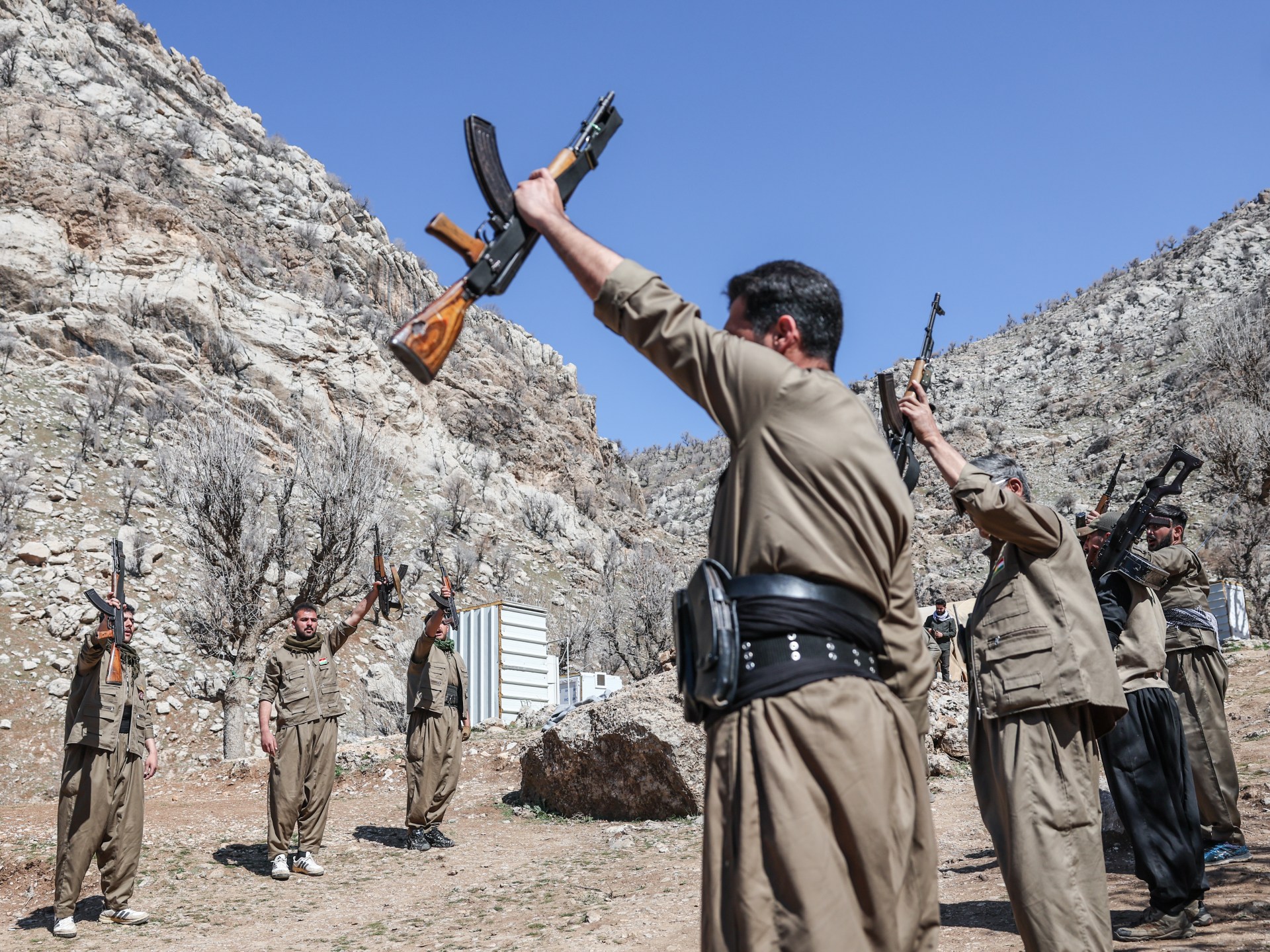
Lead
On 24 June 2026, the head of the International Atomic Energy Agency said inspectors would travel to Iranian enrichment sites under the interim arrangement being negotiated with Washington, calling the work a "central component" of any deal that ends the broader confrontation. The same day, Iranian officials made clear, through regional outlets, that the country's ballistic-missile programme was "never on the table" in those talks. The two statements, delivered within hours of each other, sketch the architecture of an emerging compromise: international verification of nuclear facilities in exchange for leaving untouched the conventional deterrent Tehran has spent four decades building. The shape of the deal, in other words, is becoming legible — and so are the things it is not trying to settle.
Nut graf
This publication treats the disclosure as the first concrete read on what Washington and Tehran are actually willing to trade. The interim deal, as described by officials and reporting on 24 June, narrows the dispute to enrichment monitoring and a partial sanctions easing. It conspicuously declines to reopen the missile file, the regional-proxy question, or the longer-standing demand for a broader "strategic" settlement. Read together, those decisions tell a story about coercive bargaining under pressure: a maximalist agenda quietly trimmed down to what each side believes it can politically survive.
The verification bargain
IAEA Director General Rafael Grossi said on 24 June that inspectors would visit Iranian enrichment facilities, with modalities under discussion, according to a Reuters report published at 14:40 UTC. The agency chief framed the visits as a "central component" of the interim agreement aimed at ending the conflict — language designed to signal continuity with the inspection regime that existed before the latest crisis, but also to acknowledge that something new is being negotiated around it. The Open Source Intel channel summarised the same disclosure in parallel: inspectors would return to enrichment sites as part of an interim US-Iran arrangement.
What is being verified, and by whom, matters more than the word "inspections" suggests. The IAEA's legal authority inside Iran has been the subject of dispute since at least 2019, when Tehran began restricting inspector access; the agency's ability to maintain continuity of knowledge at Fordow, Natanz and Isfahan is the technical foundation on which any political deal rests. Grossi's confirmation that inspectors will travel is therefore not administrative housekeeping but a confidence-building measure that the rest of the interim package is supposed to rest on. The visit has not yet been carried out, and the modalities remain under negotiation; the IAEA disclosure describes a process, not a completed return.
The asymmetry between the two sides' appetite for that process is itself a feature of the deal. Iran has reason to insist on the IAEA format — it preserves the agency's role as the formal arbiter of compliance and avoids a US-only inspection regime that would be politically harder to accept and legally easier to weaponise. The United States has reason to insist on robust inspector access precisely because the missile file is being deferred: in the absence of broader constraints, the nuclear file is what is being watched, and watched closely.
What is not on the table
If enrichment monitoring is what the deal is for, ballistic missiles are what it is not about. Middle East Eye reported on 24 June, at 13:29 UTC, that Iran's ballistic missiles were "never on the table" in the US talks. The framing is striking less for what it concedes than for what it forecloses: a generation of Western negotiating mandates — from the early-2000s missile-technology control regime discussions through the Obama-era Joint Comprehensive Plan of Action negotiations — tried to fold missile-range restrictions into the nuclear file. Tehran's flat refusal, delivered through a regional outlet with close ties to the Iranian foreign-policy establishment, suggests that line has been held.
The Iranian position is structurally intelligible. Ballistic missiles are not, in Tehran's telling, a nuclear-side concern; they are a conventional deterrent calibrated against perceived regional threats and against the experience of the 1980s war, when Iraqi missile strikes hit Iranian cities with little international objection. From that vantage, agreeing to constrain missiles in exchange for nuclear-file relief looks less like reciprocity and more like trading away the only deterrent still under Iranian control. The Iranian statement on 24 June does not articulate that argument at length; it simply draws the line.
The US position is structurally intelligible too. Demanding missile concessions that the Iranian side has now publicly ruled out, at this stage of the talks, would either collapse the interim or push Washington into a posture it has spent months trying to leave. The decision to keep the missile file out of scope is, in that sense, a pragmatic concession to the negotiation's own constraints. Critics of the emerging arrangement — and they exist on both ends of the policy spectrum in Washington — argue the opposite: that without missile constraints, the deal resolves a narrow technical question while leaving the architecture of Iranian deterrence intact. Both readings can be true.
What the framing leaves out
Coverage in the Western wire and in the regional press has converged on the same two beats on 24 June — inspectors in, missiles out — and that convergence is itself a clue. It flattens two important absences. The first is the question of regional non-state actors, including the Hezbollah and Houthi arsenals that US officials have publicly tied to Iranian supply chains. If those linkages are real, leaving the missile file untouched also leaves the proxy file untouched, even if no one at the table on 24 June said so directly. The second absence is the question of enrichment level and stockpile size: the IAEA disclosure confirms inspectors will travel, but the publicly available reporting on 24 June does not specify whether the interim deal caps enrichment at 3.67% (the JCPOA reference), at 20%, or at higher levels. The interim may be silent on this, or the silence may reflect reporting limits rather than negotiating limits.
A skeptical reading of the wire coverage is therefore warranted. The picture on 24 June is real but partial: there is a verification track that will move, and a missile track that will not. Between those two signals lies a great deal that the public reporting has not yet reached — the fate of Iran's accumulated stockpile of 60%-enriched material, the timing of any sanctions relief, the conditions under which "interim" becomes "comprehensive," and the role, if any, of the Gulf states and the European parties who are not at the centre of the day's coverage but whose interests are bound up in the outcome.
Stakes and what to watch
If the interim deal holds, the immediate beneficiaries are legible. Tehran gets partial sanctions relief and a verified inspection regime that re-establishes its nuclear file inside an international framework rather than a unilateral one. Washington gets an inspection-driven constraint on enrichment that it can present as a non-proliferation win without having to declare an end to the maximum-pressure architecture it has built over several administrations. The IAEA gets its inspectors back into facilities where continuity of knowledge has frayed. The losers, in the short term, are the harder-line constituencies on each side: in Tehran, those who argued for a longer, more escalatory posture; in Washington and in third capitals, those who argue that any deal that leaves the missile file untouched is, by definition, not the deal the United States should be making.
What to watch over the coming weeks is whether the verification track deepens or stalls. Grossi's disclosure on 24 June is a statement of intent, not a completed operation; the first round of inspector visits, and the modalities document that accompanies them, will be the first real test of whether the interim arrangement is functioning or merely announced. The second test is whether Iran's missile posture — which Tehran has now drawn a line around in public — draws any corresponding response in Washington or in regional capitals, or whether, by mutual agreement, that question is allowed to settle into a longer deferral. The third test is the stockpile question: the disclosure on 24 June is silent on what happens to Iran's highly enriched material, and that silence will not last.
A final caveat, because this stage of any deal is when over-confidence is most expensive: the sources on which this account rests do not yet establish whether an interim agreement has been formally signed, only that the parties are describing its principal components in public. The Reuters and Middle East Eye dispatches on 24 June describe an arrangement in formation, not one in force. Until inspectors are on the ground and modalities are published, the architecture described above is what is being negotiated, not what has been agreed.
This publication frames the interim deal as a verification bargain with deliberate holes — inspectors in, missiles out, and several large questions about stockpiles and regional proxies still unanswered. The Western wires and the regional outlets are converging on the same two beats; the harder story is what that convergence is leaving out.
Wire provenance
This editorial synthesis draws on the following public wire/social posts:
- http://reut.rs/3QnUPxf
- https://t.me/s/open_source_intel
Follow the event.
These dated source records provide context. They do not retrospectively verify this archive article.
Separate what the nuclear watchdog reported from what it could not determine after the June 2025 strikes.