Iran's doctors carry a message the regime wants the world to hear
A Fars-distributed address from Iranian medical delegations frames regional pressure as failure and Tehran as a rising power. The messaging tells us more about the regime's needs than about the underlying balance.
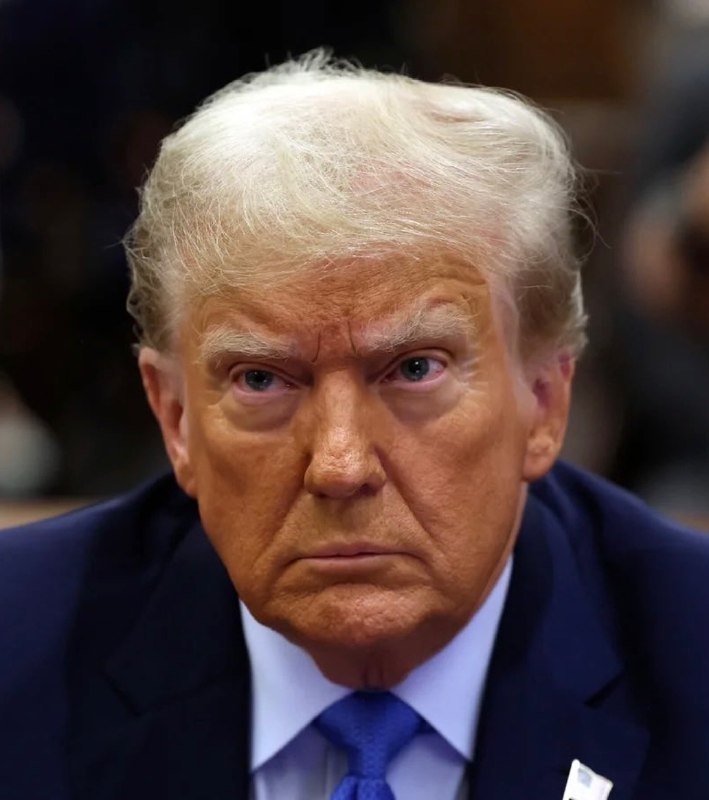
On 24 June 2026, Fars News Agency circulated three short video addresses from Iranian medical delegations speaking to the camera in fluent, stage-managed cadence. The line was identical in each clip: the enemy expected the Islamic Republic to collapse inside three days, Iran's armed forces did something the world did not expect, and the region now looks at Iran as a respectable power. The speakers tied that claim to a single recent act of violence, the assassination of Ismail Haniyeh, and asked God not to embarrass them before the Iranian people or before what they called the blood of the supreme leader and the country's martyrs. (Fars News, 24 June 2026, 20:08 / 20:13 / 20:19 UTC)
The clips are not aimed at a foreign policy audience. They are aimed at a domestic one, and they tell us more about the regime's anxieties than about the regional balance of power.
The message is consistency, not content
The speeches are notable for what they do not contain: dates, names of operations, casualty figures, geographic specifics, or any framing of Iran's regional role beyond the rhetorical. The "three days" reference is a stock phrase in Iranian state media used whenever Tehran wants to claim vindication against predictions of collapse, a line that has recurred in different crises over the past decade. The fact that doctors are delivering it, rather than generals or diplomats, is the message itself. It signals that the regime wants the narration of resilience broadcast through civilian, professional voices, not only through uniformed ones.
This is a deliberate propaganda choice, and a familiar one. Authoritarian systems under pressure tend to flood civic channels with carefully choreographed patriotic speech from credible-seeming professionals: teachers, engineers, medics. The goal is to make patriotism appear organic, distributed, and uncontested. The Fars distribution pattern, three nearly identical messages in the space of eleven minutes, suggests a coordinated rollout rather than spontaneous reaction.
What the Haniyeh reference actually tells us
The speakers name Haniyeh explicitly. The Haniyeh assassination in Tehran, attributed by Iran and widely reported in Western outlets to Israeli intelligence, was a profound humiliation for the Islamic Republic's security apparatus. The leader of Hamas, a key Iranian ally, was killed on Iranian soil. The Islamic Revolutionary Guard Corps failed to protect a guest.
That the doctors return to the assassination, rather than to subsequent operations, suggests the regime has chosen not to broadcast the retaliation to a domestic medical audience. The messaging it wants broadcast is the failure-fended-off narrative, not the strike-and-respond narrative. The retaliation, when it is publicly owned, will be claimed by the security forces; the resilience frame is the consolation distributed to the wider population.
The "respectable power" claim is a defensive frame
"Now everyone in the region sees Iran as a respectable power" is not how respect is built. It is how it is described when a system is trying to convince its own population that the perception exists. Regionally, Iran's position has been battered. Hezbollah, the most prominent Iranian proxy in the Levant, was dealt severe blows through 2024 and 2025. Haniyeh's assassination exposed a security perimeter that did not hold. The Syrian route, which for years allowed Iran to arm Hezbollah, was disrupted by the collapse of the Assad government in late 2024. Iraqi militias continue to oscillate between rest and pressure.
A reasonable counter-reading is that the Fars messaging is precisely the response to a region that does not, in fact, see Iran as ascendant. Otherwise the speeches would not need to be made. If the respectability frame were settled, doctors would not be required to recite it on camera.
Stakes, and what remains uncertain
The stakes of this kind of rollout are internal. A domestic audience told often enough that Iran is a respectable power, that the enemy failed to destroy the Republic in three days, that the blood of the supreme leader and the martyrs must not be put to shame, becomes harder to mobilise for any course the regime frames as concession. The rhetorical floor is being raised against any future accommodation.
What remains genuinely uncertain is whether the underlying balance supports the line. The sources available here are three short Fars-distributed clips, all carrying the same frame, none offering operational detail. Independent verification of the regional perception Iran claims is not possible from this material alone. What is verifiable is that Tehran is investing in the appearance of that perception, and that it is doing so through channels designed to feel organic. That is itself the news.
Desk note: The wire covered the Haniyeh assassination as a security and intelligence story; this piece reads its aftermath as a domestic-legitimation story. Both framings can be true, and the Fars distribution pattern is the bridge between them.
Wire provenance
This editorial synthesis draws on the following public wire/social posts:
- https://t.me/farsna/
- https://t.me/farsna/
- https://t.me/farsna/
Follow the event.
These dated source records provide context. They do not retrospectively verify this archive article.
Separate what the nuclear watchdog reported from what it could not determine after the June 2025 strikes.