The Killing of an Iranian Hacker and the Fog of Cyberwar
Two open-source channels reported on 24 June 2026 that Yahya Hosseini Panjaki, the commander of Iran's Handala hacking group, was killed during the recent war. The announcement tells us almost nothing — and almost everything — about how cyber-conflict is being reframed.
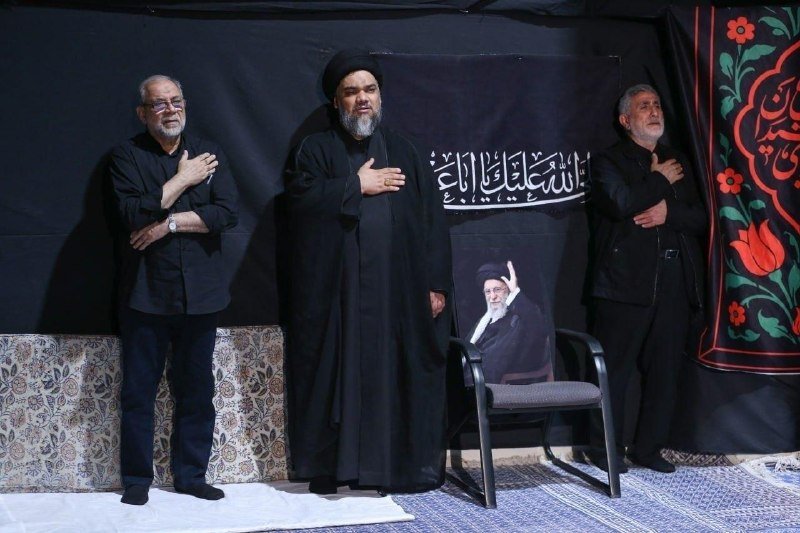
On 24 June 2026, two open-source intelligence feeds on Telegram — BellumActaNews at 19:50 UTC and the OSINT Live channel at 19:00 UTC — carried the same item: Yahya Hosseini Panjaki, described as the commander of the Iranian Handala hacking group, had been "eliminated" during the recent war against Iran, and a channel affiliated with the Islamic Revolutionary Guard Corps' Intelligence Organization had acknowledged his death. The confirmation, if confirmed, would mark the first publicly named loss of a senior Iranian cyber-operative in the June 2026 conflict.
The story is small in column-inches and large in what it reveals about how cyberwarfare is being absorbed — quietly, awkwardly, irreversibly — into the older grammar of kinetic conflict.
A single Telegram post, two channels
The Handala group is a long-running pro-Tehran hacktivist collective that has claimed intrusions against Israeli municipal systems, Saudi logistics firms, and Albanian government networks in recent years. Its operators are widely treated by Western cyber-security firms as a deniable auxiliary of the IRGC's intelligence directorate rather than an independent criminal outfit. Panjaki himself had been a named figure on Israeli and US indictments for years before June 2026.
What is new is not the name. It is the announcement route. Two independent OSINT channels — neither of them Iranian state media — picked up the IRGC Intelligence-linked Telegram post within hours. There has, at the time of writing, been no English-language confirmation from Reuters, the BBC, or the IDF spokesperson's office; the death is currently held in the careful limbo of "reportedly killed, claimed by an IRGC-adjacent channel, republished by independent trackers."
That epistemic status is itself the story.
From the keyboard to the kill box
For two decades, the working assumption in Western capitals was that cyber-operators sat a step removed from the lethal front line. Their work was theft, disruption, and embarrassment — important, deniable, and ideally unattributable. The careers of named hackers were understood as portable: a persona could be burned, the person resettled, the indictments filed but rarely enforced.
The June 2026 war has scrambled that assumption. Israeli strikes against Iranian nuclear and IRGC infrastructure were accompanied, almost in parallel, by the public identification of senior cyber personnel — a practice more familiar from counter-terrorism than from cyber operations, where anonymity was once the whole point. If Panjaki is indeed dead, he is the most senior figure in that grey zone to be moved across the line.
The practical consequence is a recruiter's problem. State-aligned hacking outfits rely on a small bench of operators who can run months-long intrusions against hardened targets. Killing the bench — rather than indicting it — collapses the deterrence model that has held since the first US indictments of Chinese military officers in 2014. You cannot quietly cycle a dead man into a new persona.
What the framing leaves out
The dominant Western wire line has read the episode straightforwardly: a hostile-state cyber commander was killed by a defensive strike; the rules-based order is intact; deterrence is being restored. That framing holds — but only up to a point.
An alternative reading is more uncomfortable. If Iranian cyber-operators are now legitimate military targets on the same footing as IRGC ground commanders, then the same logic runs in reverse. Israeli, American, and British cyber-personnel working on offensive operations against Iran, and physically located at known bases in Herzliya, Fort Meade, and Cheltenham, become analogous targets. The conventions of cyber-conflict — which never existed in any codified form, but which de facto kept operators out of the crosshairs — are being retired in real time, and not by a treaty.
There is also the Iranian counter-narrative worth weighing. Tehran-aligned channels have framed the Handala network, when convenient, as a purely defensive volunteer force protecting Iranian infrastructure from Israeli sabotage; Israeli cyber firms, by the same Iranian framing, are the actual aggressors, with Unit 8200's industrial-scale operations against Iranian nuclear and port systems as the standing evidence. Read on its own terms, the Iranian line is that Panjaki was a patriot defending his country's networks and was assassinated for it. That framing will not persuade Western readers, but it will persuade a generation of Iranian and Iraqi and Lebanese technical recruits who now understand what their careers can cost.
What we still do not know
Three things remain unsettled on the public record. First, the precise circumstances of the killing — airstrike, ground operation, or targeted action of another kind — have not been disclosed by any official Israeli source. Second, the IRGC Intelligence-linked Telegram post that BellumActaNews and OSINT Live cited has itself only been partially republished in English; full text and timestamp provenance have not been independently archived in this reporting cycle. Third, no major wire has confirmed the death on the record, which means the body of public evidence currently rests on two Telegram channels that themselves cite a fourth Telegram channel.
That is not nothing. Telegram posts originating inside Iranian security structures have proved accurate enough times — including on senior IRGC command losses in earlier 2025–2026 exchanges — that they cannot be dismissed. But they also have a habit of surfacing unverified claims that later prove shaky. Readers should treat the headline as plausible and the details as provisional.
The bigger story, in other words, is not one man's death. It is the quiet collapse of the unwritten rule that kept the keyboard operators out of the kill box. Once that rule is gone, it does not come back.
This piece leans on two independent open-source channels and makes no claim beyond what they have reported. Where official Israeli, Iranian, or third-party wire confirmation emerges, the public ledger will move with it.
Wire provenance
This editorial synthesis draws on the following public wire/social posts:
- https://t.me/BellumActaNews
- https://t.me/osintlive
Follow the event.
These dated source records provide context. They do not retrospectively verify this archive article.
Separate what the nuclear watchdog reported from what it could not determine after the June 2025 strikes.