Trump claims Iran has dropped Strait of Hormuz tolls as US–Oman framework talks surface
President Donald Trump said on 24 June 2026 that Iran has informed Washington it will not impose transit fees at the Strait of Hormuz, hours after AP reported Oman and Iran were drafting a joint framework for navigation in the chokepoint.
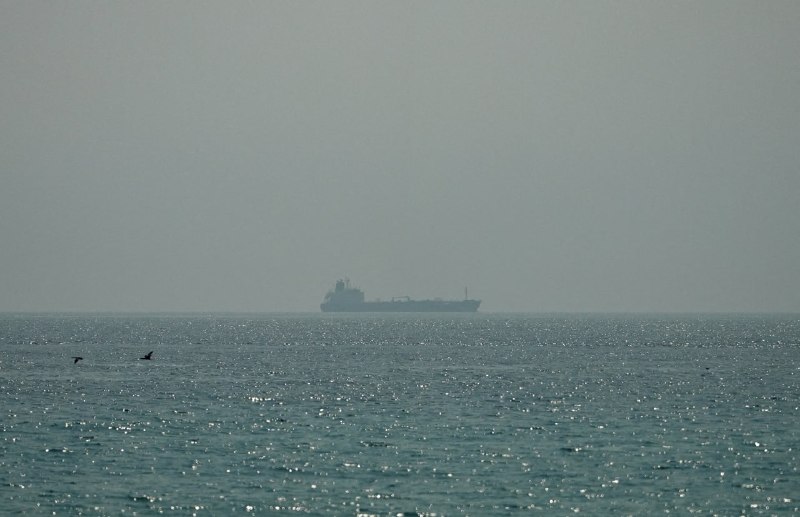
President Donald Trump said on 24 June 2026 that Iran has told the United States it will not impose transit fees on shipping passing through the Strait of Hormuz, a claim that, if it holds, would remove the most combustible variable from a months-long standoff in the world's most consequential energy chokepoint. Speaking to reporters, Trump said "Iran has said there are no tolls to be on the Strait of Hormuz," and warned that he would "halt negotiations" if Tehran was in fact collecting transit fees. The remarks, carried by Reuters at 14:46 UTC, came the same day Associated Press reported that Iran and Oman are in talks on a framework for jointly overseeing navigation and maritime services in the waterway through which roughly a fifth of global seaborne oil moves.
The dual-track signal — conciliatory public language from Washington, paired with an emerging Omani-mediated architecture for the strait itself — suggests the diplomatic phase of the post-war settlement is now extending beyond nuclear files and frozen assets into the physical governance of one of the most strategically valuable sea lanes on earth. It also lands on a US fuel market the White House is simultaneously scrambling to defend from a domestic price-gouging narrative.
The Hormuz question
The Strait of Hormuz is the only sea passage from the Persian Gulf to the open ocean, narrow enough at its tightest point to be policed from both shores. Any sovereign levy on transit — a toll, in the diplomatic language — would be a unilateral tax on the global economy and a direct challenge to the US Navy's longstanding posture of treating the waterway as effectively international. Tehran has, on and off for two decades, floated the idea of imposing fees or requiring Iranian escorts for tankers, most acutely during periods of maximum sanctions pressure. That the Iranian government has now apparently walked that position back, at least in private, is a measurable concession.
The Reuters report quotes Trump directly: "Iran has told US no tolls being sought at Strait of Hormuz." The Cradle, a Beirut-based outlet that has carried Iranian- and resistance-axis framing throughout the post-war period, reported the same line at 14:20 UTC, attributing the claim to the US president. The unusual alignment between a wire service and a regional outlet with a structural scepticism of US framing is itself a small data point: both are reading off the same presidential statement, and neither is, on this question, contradicting the other.
The Oman channel
The more interesting development is the AP report, carried by Unusual Whales at 10:17 UTC, that Iran and Oman are negotiating a framework for "jointly overseeing navigation and maritime services" in the strait. Oman has been the consistent Gulf back-channel for US–Iran diplomacy across multiple administrations — the Musandam Peninsula overlooks the strait's southern approach, giving Muscat a geographic claim to mediation that no other Gulf state can match. A bilateral Iran-Oman arrangement short-circuits the more combustible alternative: an Iranian unilateral declaration of a navigation regime, which would draw an immediate US naval response.
A joint framework is also a face-saving structure for Tehran. It positions Iran not as a state extracting tolls but as a co-administrator of a shared waterway, a status that maps onto the Iranian foreign-policy line that the Gulf's security is a regional — not an American — responsibility. For the United States, an Omani-mediated deal offers a way to keep the strait de-escalated without publicly conceding that point. The structural pattern — a third-party Gulf state as the institutional vehicle for great-power de-escalation — is the same one that produced the original 2015 nuclear framework and the 2023 hostage-prisoner exchange.
The fuel-market backdrop
Hormuz is not negotiating in a vacuum. The BBC reported on 24 June at 07:09 UTC that Trump had announced a federal probe into petrol price gouging, an unusually aggressive domestic move at a moment when the president is publicly claiming credit for ending a war. The framing is notable: Trump is positioning the White House as the consumer's defender against refiners and retailers, while simultaneously telling voters the underlying geopolitical risk — the Iran war that spiked crude — has been resolved. Both claims can be true only if oil flows through Hormuz without disruption and remains globally well-supplied. The petrol-gouging probe, in other words, is a hedge against any wobble in the strait narrative.
Trump was also asked about Iranian frozen assets and said the released funds "will be used to buy food from US farmers," a formulation that ties Iranian reconstruction directly to the US agricultural balance sheet. It is a politically useful sentence: it gives Tehran a face-saving rationale for accepting dollar-denominated trade and gives Iowa something to point to. It also, structurally, embeds the post-war settlement inside the existing US dollar-clearing architecture, which is exactly the outcome Washington tends to favour in any deal that touches the Gulf.
What remains contested
The dominant frame — Trump claims a clean Iranian climbdown, the BBC reports a White House defensive move on petrol prices, AP reports an Omani-brokered framework taking shape — is internally coherent, but it leans entirely on presidential statements and a single wire report. No Iranian foreign ministry readout confirming the no-tolls position has been cited in the available reporting; the claim is, for now, that Iran "has informed" the US, attributed to Trump and reproduced by Reuters and The Cradle, not by Tehran. The AP story on the Oman framework does not specify whether it is a draft text, a verbal understanding, or a structured negotiation.
The counter-narrative worth holding is straightforward: a US president claiming a foreign power has privately conceded a maximalist position is a familiar move in the run-up to either a deal announcement or a pressure campaign, and the same statement can be read as either. The "halt negotiations" line is doing double duty — it is a threat to Tehran and a domestic insurance policy in case the Iranian position turns out to be less concessive than advertised. Until Iranian state media confirms the no-tolls position, the operative read is that Tehran is signalling flexibility on a transit regime that it never had a sustainable way to enforce against the US Fifth Fleet, and that Washington is taking that signal at face value for political reasons of its own.
The stakes are concrete: roughly twenty per cent of seaborne oil moves through Hormuz, a sustained toll regime would impose hundreds of millions of dollars a year in additional costs on Asian importers in particular, and the naval signalling that would follow would push crude benchmarks higher within days. The trajectory on display — Oman-brokered framework, Iranian concession on tolls, US domestic fuel-price management — is the trajectory that lets that scenario stay hypothetical.
This piece is built entirely on reporting that surfaced on 24 June 2026. The toll concession is sourced to a Trump statement carried by Reuters and The Cradle; the Oman framework to a single AP report; the petrol-gouging probe to the BBC. Where Iranian state media has not been cited, the article has said so rather than infer.
Wire provenance
This editorial synthesis draws on the following public wire/social posts:
- http://reut.rs/4oMcDPj
- https://t.me/BellumActaNews
- https://t.me/thecradlemedia
- https://x.com/unusual_whales/status/iran-oman-hormuz-framework
- https://x.com/unusual_whales/status/trump-iran-on-the-ropes
- https://x.com/unusual_whales/status/iran-unfrozen-assets-food