Iran's security chiefs find their footing, and tell the public so
The IRGC's coordinated Telegram release after the 26 June U.S. strikes was less a press statement than a piece of stage management: a rehearsed vocabulary of 'treaty-breaking' and 'terrorist army,' distributed in minutes across Tasnim, Fars and Al-Alam, with Lebanon named as the trigger.
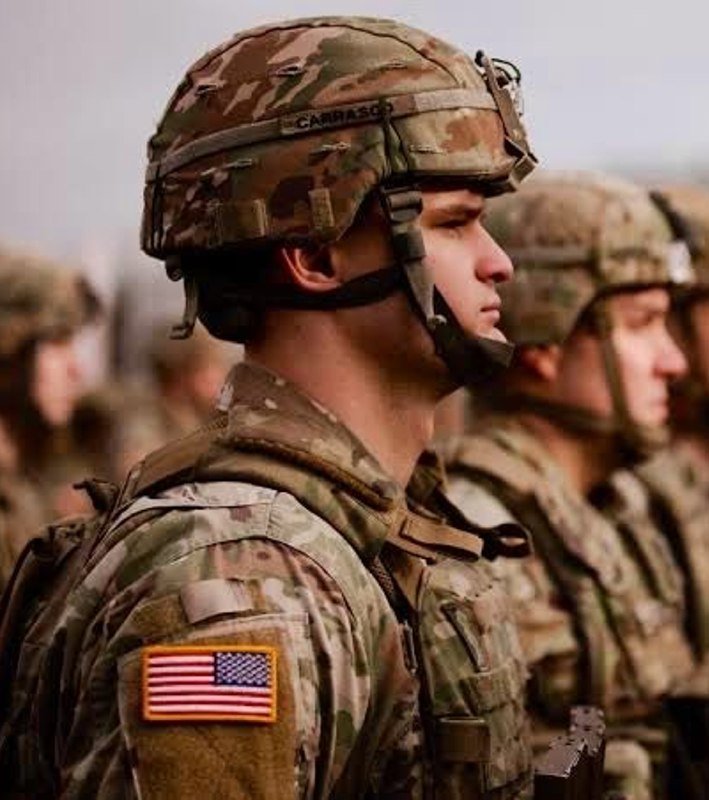
On 26 June 2026 at 22:38 UTC, the IRGC Navy told the world, through Tasnim and a flurry of Telegram channels, that it had struck United States military positions in the region in retaliation for American aggression and treaty violation. Two hours earlier, the U.S. military said it had hit radar sites inside Iran, four drone, missile and radar facilities struck in a single operation involving six American aircraft, per senior U.S. officials speaking to Fox News. By the time the IRGC communique landed, Tehran had the choreography it wanted: a public riposte, attributed, on-message and framed as a sovereign reaction to perfidy.
The substance of those exchanges is the subject of every other wire tonight. The more interesting story is the editorial frame the Islamic Republic has chosen to wrap around them, and how confidently it is now performing that frame for a domestic and regional audience.
A statement, then a movement
The IRGC's English-language Telegram posts followed a recognisable template. Opening with an accusation that Israel had violated the southern Lebanon ceasefire, the statement then pivoted to the United States, labelled a "treaty-breaking regime," before announcing that the IRGC Navy had "targeted several locations of the American terrorist army." It was published within minutes on Tasnim, on Al-Alam Arabic's channel, on Sepah-aligned outlets, and on Lebanon's Al-Mayadeen network. The volume alone tells you something: this is a message the regime wanted to land simultaneously, in several languages, with attribution back to a single public-relations office.
That decision, to publish the same statement across multiple platforms in near real time, is itself the news. Iran's security leadership has, in recent years, alternated between silence, deniable leaks and theatrical press conferences. Tonight's sequence was neither. It was a coordinated release.
The cover story is Lebanon
Read the IRGC's statement carefully and the sequence of events it describes is telling. The first sentence identifies the trigger as an Israeli violation of the southern Lebanon ceasefire, not the earlier American strikes. The U.S. attack on Iran appears in the second clause. Iran is, in its own telling, responding to Israel via Washington, rather than to Washington directly. Ebrahim Azizi, chair of the Iranian Parliament's National Security and Foreign Policy Commission, extended the same logic: "Once again, America has attacked Iran in the midst of negotiations." The subtext is that Tehran was negotiating in good faith and was ambushed.
It is a tidy frame, and it does work. It binds three audiences. For Lebanese Shia readers, it confirms that the resistance axis is still defending the south. For Gulf and Iraqi audiences watching the IRGC's naval moves in the Gulf of Oman, it places those moves inside a Lebanese story rather than an escalation story. For a domestic Iranian audience sceptical of another round of confrontation, it provides the comforting notion that the regime was on the diplomatic path and was hit anyway.
The choreography is the message
Senior security officials speaking through friendly outlets is not, on its own, unusual. What stands out is the speed and the layering. Within the same hour, Al-Alam Arabic reported the head of parliament's National Security Committee framing the U.S. strikes as an attack "in the midst of negotiations." Fars and Tasnim carried the IRGC text. Sepah's own public-relations office distributed a longer version via Sedavsima news agency, with the navy named as the operational arm.
This is not how the IRGC communicates when it is improvising. It is how it communicates when it has decided, in advance, what the day's story should be. The publication of the strike announcement, in the form and through the channels it appeared, suggests Iran's security chiefs had agreed on the line before the rockets, or the allegations of rockets, hit the wire.
What the public is being told to feel
For an outside observer, the strategic effect of this kind of messaging is modest. Western wires will carry the IRGC statements with appropriate caveats; analysts will weigh the claims against U.S. reporting of damage assessments and satellite imagery. Inside Iran, and across the axis the IRGC addresses as its constituency, the effect is different. The text of the statement, repeated across Telegram channels, performs a particular emotion: wounded dignity. The vocabulary is consistent ("treaty-breaking," "terrorist army," "Zionist regime"), and so is the cadence.
That vocabulary is not improvised. It has been refined across months of messaging about Lebanon, the nuclear file and the strait. By 26 June it sounds, to a sympathetic ear, less like a press release and more like liturgy. For a regime trying to convince an exhausted public that confrontation with the United States is a posture of honour rather than a posture of risk, that matters.
The foot the regime wants to land on
Two things will determine whether tonight's messaging works. The first is whether the IRGC's claim of hitting U.S. positions in the region survives the morning's damage reports. The second is whether the Israeli-Lebanon framework agreement, the text of which circulated on Telegram channels shortly before the IRGC statement, holds long enough for Tehran to keep blaming it as the proximate cause.
Both questions will resolve on a clock. The IRGC has, for now, told its version of that clock to anyone willing to read it. Whether anyone beyond its intended audience believes it is a separate problem, and one the regime is no longer pretending is easy.
This piece is the editorial wire's read of how Iran's security chiefs framed a single Tuesday night. We treat Iranian state-aligned Telegram channels as a primary source for what the Islamic Republic is choosing to say about itself, not as a window onto what it is doing. The record of damage, sequencing and intent remains with the U.S. military, regional governments and the open-source investigators now working the timeline.
Follow the event.
These dated source records provide context. They do not retrospectively verify this archive article.
Separate what the nuclear watchdog reported from what it could not determine after the June 2025 strikes.