Tehran in New York: the visa that almost wasn't
A loosened travel rule for Iran's footballers lands a day after the Senate reasserts itself on war powers — and the optics are doing work the policy never asked for.
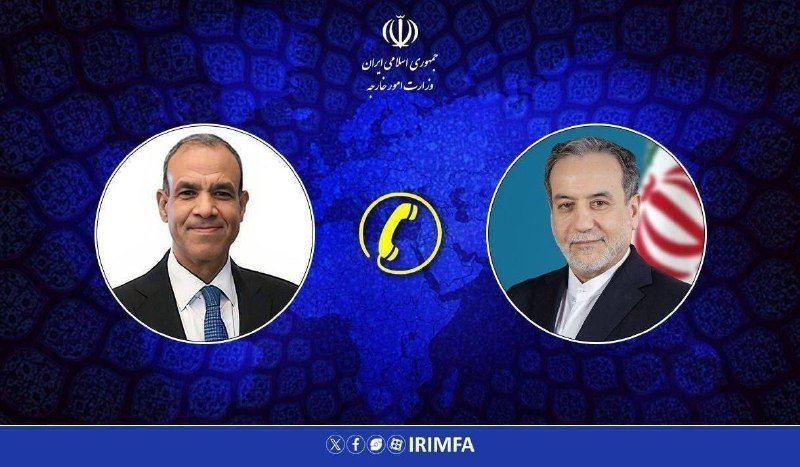
On 23 June 2026, at 20:41 UTC, the U.S. Senate voted to pass an Iran war-powers resolution requiring fresh congressional sign-off for any further American military action against Tehran. Eleven hours later, at 07:47 UTC on 24 June, the State Department quietly loosened the visa regime for Iran's national football squad so that players could enter the United States ahead of Friday's World Cup group fixture against Egypt. The two decisions belong to the same week, and possibly the same political weather system.
Taken together, they sketch an administration trying to hold two ideas at once: a legislative branch reasserting the constitutional awkwardness of presidential war-making, and a sporting calendar that requires Iran and the United States to share a field in New York without the diplomatic infrastructure to make that easy. The visa easing is small in legal substance. Its political substance is larger.
The visa that almost wasn't
Iran's team is playing its final group-stage match at MetLife Stadium on Friday. Entry rules introduced for the tournament — tightened for Iranian passport-holders in a manner widely reported as an outlier among the qualified federations — had left players travelling on short visas, limited transit windows, and a public complaint from the Iranian Football Federation that preparation was being compromised.
Per Telegram channel @StandardKenya on 24 June at 12:47 UTC, the U.S. granted Iran early entry, easing travel rules after complaints that restrictions hurt tournament prep. The Polymarket wire at 21:40 UTC on 23 June carried the same headline: travel restrictions on the Iranian squad had been eased ahead of the Egypt fixture. The change is administrative — a window of days, not a political opening — but it converts a logistical embarrassment into a managed photo-op.
Why a sports fixture reads as foreign policy
World Cup fixtures involving Iran have been diplomatically freighted for two decades. A 1998 draw with the United States, played in Lyon days after the U.S. embassy bombings were still front-page news, became a small parable of how soft power works when hard power cannot. A 2026 fixture, scheduled on the eve of intensified sanctions enforcement and inside a week of open debate over U.S. military authority, inherits that freight whether or not anyone wants it.
The tournament sits inside a wider argument about whether state-level friction should bleed into multi-sport institutions. FIFA's own statutes treat the national team as a unit of competition, not as a vector of foreign policy; in practice, host governments control the air, the visas, and the broadcast rights. The U.S. loosening of entry this week is the host instrument bending, for a few days, toward the federation's preferred norm.
The Senate reasserts itself
The other half of the week is the Senate vote at 20:41 UTC on 23 June — a war-powers resolution requiring congressional approval for any further military action against Iran. The text, as carried on the Polymarket wire, frames the question narrowly: the executive can continue what it is doing; it cannot escalate without the legislature.
War-powers resolutions are constitutionally odd creatures. They are not vetos in the ordinary sense, they do not bind a future president the way a statute does, and they pass with bipartisan cosplay when re-election looms. They are nonetheless informative as signal. A Senate that reasserts itself on Iran in the same week that Iran is being handed a smoother visa into the United States is not contradicting itself. It is sequencing: hard limits on the use of force, soft expansion on the use of sport as contact surface.
What the framing leaves out
There is a reading — most common on social feeds — in which the visa easing is itself a political gesture toward Tehran's leadership, a quid pro quo for some unnamed concession. The sources do not support that reading. The complaints recorded in the reporting were specifically about preparation time for a sporting fixture, not about the broader sanctions architecture, and the change is procedural. Anyone who has watched U.S. visa policy toward Iranian athletes over the last two decades knows the baseline friction is high; what changed this week was friction, not direction.
A second reading, equally partial, treats the Senate vote and the visa easing as opposites — one a fist, the other a glove. They are not opposites. The vote is a constraint on the use of force; the visa is a courtesy toward a sporting delegation. Both can coexist inside the same administration's posture without contradiction. The week only looks contradictory if you assume the United States speaks with one voice on Iran. It rarely does.
Stakes
The near-term stakes are procedural. Iran's squad flies in early. The Friday fixture takes place. The Senate's resolution becomes a talking point rather than a binding line unless something forces the issue. The longer-term stakes concern precedent: each tournament hosted on U.S. soil will face the same question, and each answer writes a small piece of case-law on how visas, sport, and statecraft meet.
What remains uncertain — and the sources do not specify — is whether the visa window for Iran's fans and media has shifted on the same terms as the squad, or only the squad. Nor is it clear how the State Department is treating Iran's likely round-of-16 scenario, should the team advance. Tournament diplomacy rarely settles its own open questions until the bracket does.
This publication framed the visa easing against the same week's war-powers vote rather than as a standalone sports story, on the read that the two moves describe one posture in two registers.
Wire provenance
This editorial synthesis draws on the following public wire/social posts:
- https://t.me/s/StandardKenya
- https://x.com/polymarket/status/
- https://x.com/polymarket/status/
Follow the event.
These dated source records provide context. They do not retrospectively verify this archive article.
Separate what the nuclear watchdog reported from what it could not determine after the June 2025 strikes.