Israel Holds the Line in South Lebanon: A Test of US Leverage
Israel's defence minister says Israeli forces will stay in southern Lebanon even if Washington asks them to leave — a direct public rebuff of the United States, with Hezbollah, Tehran and Beirut's diplomatic calendar all in play.
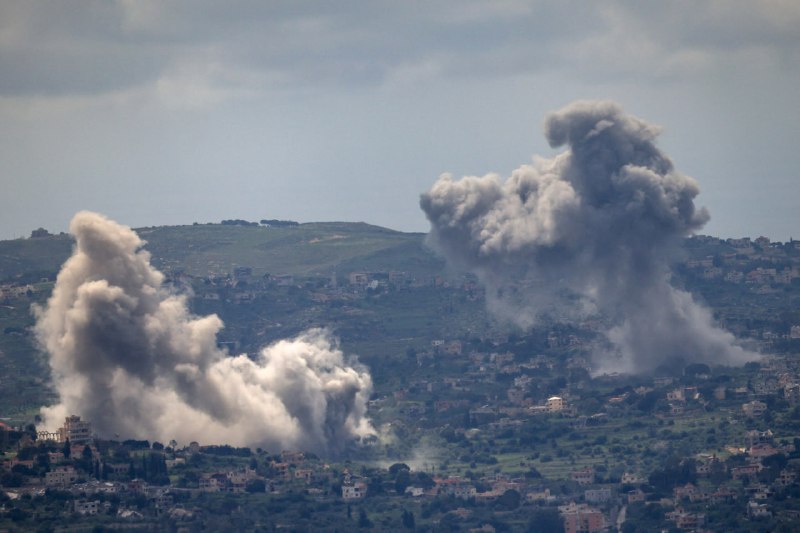
On 24 June 2026, Israel's Defence Minister Israel Katz put the question in writing. Israeli forces, he said, will not withdraw from southern Lebanon — even if the United States demands it. The statement, reported by Al Jazeera English in a breaking-news wire at 21:35 UTC and amplified minutes later by Israeli defence correspondents and US-market traders tracking the implications on Polymarket, is the bluntest public rebuff Washington has received from a sitting Israeli defence minister over the southern-Lebanon file since the current ceasefire framework took shape.
The rebuff lands in a week when Beirut-aligned outlets had been carrying the opposite expectation. Al Mayadeen, the Beirut-based broadcaster with close ties to Hezbollah, reported on 24 June — citing what it described as an informed source — that Israel was preparing for a staged withdrawal from southern Lebanon despite continued ceasefire violations on the ground. By 21:35 UTC that same day, Katz had publicly foreclosed that prospect. Polymarket's account at 17:27 UTC and the trader-feed account @unusual_whales at 16:57 UTC carried the operative line — Israel will not withdraw from South Lebanon, even if the US demands it — and the contest between the two readings became a single news cycle.
What is unfolding is not an argument about one village on the frontier. It is a public stress test of how far US-Israeli alignment holds when Washington's preferred settlement runs into an Israeli security calculation that insists the conditions on the ground have not been met.
A rebuff in real time
The mechanics of the statement matter as much as the substance. Katz chose the public-record register. He did not soften the line for diplomatic consumption; he did not leave it to a "senior official" on background. The Al Jazeera wire carries the formulation verbatim: Israel will maintain its presence in Lebanon even if the US demands withdrawal. The phrasing converts what would otherwise be a negotiation between allies into a public declaration of intent.
That posture is unusual. Israeli governments have, for decades, treated the question of withdrawal from southern Lebanon as the most sensitive item on the agenda with Washington precisely because American military and diplomatic backing underwrites Israel's regional position. The 1978 and 1982 incursions, the 2000 unilateral pullout, the 2006 war, the post-2023 cross-border exchanges — each round was shaped, in part, by what the United States would tolerate and what it would fund.
What has changed is the framing on the Israeli side. The Hezbollah threat, in the Israeli national-security consensus, is no longer a frontier-management problem to be contained by an internationally-monitored buffer. It is the central node of an Iranian-aligned axis that has been demonstrably weakened but not dismantled. The argument inside the Israeli security cabinet, as conveyed in reporting across the Israeli press, is that any withdrawal before verifiable disarmament of Hezbollah's residual rocket and drone capability inside Lebanon reproduces the strategic error Israel believes the post-2006 period represented.
That argument has now been put into a public form by the defence minister himself.
What the other side is saying
The framing in Beirut and in outlets sympathetic to the Hezbollah-led political coalition is the inverse. Al Mayadeen's reporting on 24 June — circulated via Palestine Chronicle's Telegram channel at 20:44 UTC — held that Israel was preparing to withdraw despite ongoing violations, in line with commitments made under US-brokered ceasefire understandings. The implied read is that Israeli public-facing toughness is bargaining posture ahead of a withdrawal that is already operationally planned.
There is a third framing circulating inside Washington and European capitals: that the rebuff is real, but narrow. On this read, Katz is signalling that Israel will not be bounced by unilateral US pressure at a moment when Hezbollah's compliance with the ceasefire terms is, by most external accounts, incomplete. The signal is directed at Israeli domestic audiences and at the Iranian side as much as at Washington. The implicit offer is that withdrawal is negotiable — but only in exchange for terms Israel judges adequate.
Each of these readings carries evidence. The Israeli rebuff is on the public record, in the defence minister's own voice. The Al Mayadeen claim of an imminent withdrawal rests on a single anonymous source and has been overtaken within hours by an on-record denial. The third reading — narrow rebuff, conditional exit — is consistent with how Israeli governments have historically handled Lebanon pullouts, but the framing now extends from a private channel of communication to an open one.
A wider structural test
Strip the story down to its mechanical content and a pattern emerges that runs well beyond the Israel-Lebanon frontier. The principal regional security guarantor of the current Israeli posture is the United States. The United States is also the principal diplomatic interlocutor with Beirut, with the Lebanese armed forces, and with Iran and its proxies over the architecture of deterrence that was supposed to follow the 2023–2025 fighting. When the guarantor and the recipient diverge publicly over the most sensitive operational decision on the ground, the architecture loses load-bearing support.
This is not the first time US-Israeli alignment has been visibly strained. The 1956 Suez episode, the 1981 Osirak strike, the 1991 loan-guarantee fight, the 2015 Iran-deal fallout — each produced a public rupture followed by reconsolidation. The present moment has features of its predecessors. What distinguishes it is the combination of three elements: a regional order in which Iran-aligned forces have been substantively degraded but not destroyed; a Lebanese state that is structurally incapable of imposing its writ south of the Litani at the pace Washington would prefer; and an Israeli political class that reads the post-2025 environment as one in which security guarantees are worth less than they were priced at.
Coverage routinely defers to the language of official spokespeople; the structural pressure underneath that language goes under-reported. The rebuff this week forces the structural pressure into the open.
What is at stake over the next quarter
The immediate stakes are operational and can be measured in weeks. If Israel retains its southern Lebanese positions into the autumn, the ceasefire framework that has nominally held since late 2025 will be functionally dead — replaced by a quiet, indefinite Israeli ground presence backed by periodic air strikes on what Israeli sources will describe as Hezbollah residual infrastructure. Beirut will protest through diplomatic channels; UNIFIL's mandate will come up for renewal at the Security Council; Iran will have an opening to argue, both at home and with sympathetic governments in the Global South, that the United States is unable or unwilling to enforce even the limited understandings it has brokered.
The medium-term stakes are regional and harder to calibrate. A US that cannot, or will not, compel even a close ally to comply with a publicly-stated preference loses bargaining leverage with every other capital watching the exchange. That compounds the difficulty of managing simultaneous files — the ceasefire architecture on the northern border, the still-incomplete arrangements in Gaza, the nuclear file with Tehran, the question of what shape a post-conflict Lebanese state can take at all.
The longer stakes are about the credibility of American security guarantees in a region where most of the United States' partners are small, exposed, and watching closely. Those guarantees do not need to be invoked often. They need to be credible when invoked.
What remains uncertain
The sources for the past 24 hours do not specify a great deal. Al Jazeera's wire carries the Katz statement but does not attribute it to a specific interview, statement, or address. Al Mayadeen's contrary read rests on a single anonymous source that the same day's news cycle has visibly overtaken. The Polymarket and @unusual_whales feeds reflect how traders priced the headline; they are not, by themselves, evidence of operational posture. The Israeli government has not, on the record available in the past 24 hours, published the operational timeline, the force disposition, or the conditions under which withdrawal might begin.
What this publication can say with confidence is that as of 21:35 UTC on 24 June 2026, the defence minister of Israel has publicly declared that Israeli forces will not withdraw from southern Lebanon in response to a US demand. What this publication cannot say, on the present evidence, is whether that declaration reflects settled cabinet policy, an opening negotiating position, a message to an Israeli domestic audience, or all three. The next round of evidence will come from the diplomatic traffic in Washington, the operational tempo on the ground, and the next round of public statements from Beirut and Tel Aviv.
Desk note: Monexus led this piece on the Israeli defence minister's on-record statement carried by Al Jazeera English, anchored the Lebanese/Hezbollah-aligned counter-reading via Al Mayadeen as cited in Palestine Chronicle's Telegram feed, and noted the market-side pricing of the headline via Polymarket and @unusual_whales — neither of which is treated as a stand-alone factual basis but as a real-time indicator of how the wire was being received. Western-wire editorial direction was not available in the thread context; the structural frame rests on the Israeli and Lebanese primary reporting.
Wire provenance
This editorial synthesis draws on the following public wire/social posts:
- https://t.me/palestinechron
- https://en.wikipedia.org/wiki/South_Lebanon_conflict_(1985%E2%80%932000)
- https://en.wikipedia.org/wiki/United_Nations_Interim_Force_in_Lebanon
- https://en.wikipedia.org/wiki/Israel_Lebanon_border
- https://en.wikipedia.org/wiki/Israel_Katz