Israel's UN envoy demands audit of 'anti-Israel bias' inside UN reports and staff
Danny Danon has written to António Guterres calling for an internal review of UN reporting and personnel. The request lands at a moment when the institution's posture toward the war in Gaza is under renewed political strain.
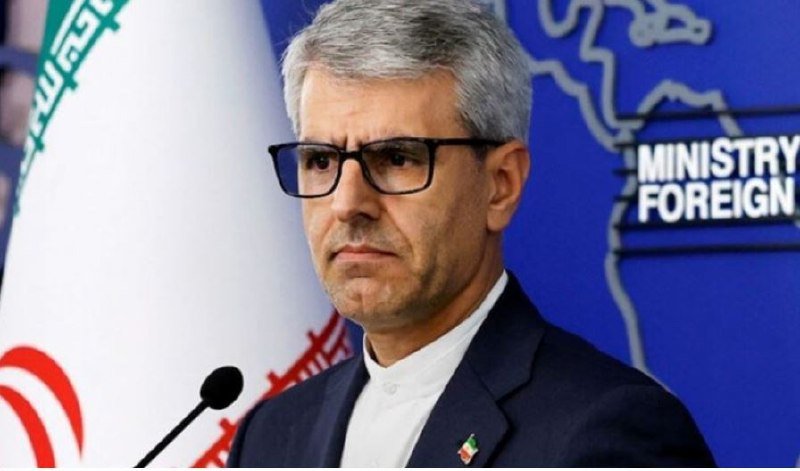
Israel's ambassador to the United Nations, Danny Danon, has formally asked Secretary-General António Guterres to open an internal review of what the envoy described as "antisemitism" and "anti-Israel bias" inside UN reports and among UN personnel, according to a video statement distributed by Disclose.tv and LiveNOW from FOX on 24 June 2026 at 18:15–18:29 UTC. The request, addressed to Guterres directly, is the latest in a long-running Israeli campaign to reframe the institution's treatment of the Jewish state as a structural problem rather than a series of isolated disputes over individual reports or resolutions.
The timing matters. Danon's letter lands while the UN's humanitarian and human-rights machinery remains consumed by the war in Gaza, where casualty reporting from the territory's health authorities has driven months of fraught debate inside the Security Council and the General Assembly. By demanding an audit of the secretariat's own work product, Israel is escalating a fight that, until now, has largely been waged over individual rapporteurs, country statements and resolutions — not over the institution's internal composition.
What Danon is actually asking for
In the statement carried by Disclose.tv and amplified across X, Danon calls on Guterres to "root out and investigate" alleged bias in two distinct places: in published UN reports and within the organisation's own ranks. The framing is deliberate. The first target — reports — is a content dispute, of the kind that has produced years of Israeli pushback against the findings of the UN Human Rights Council's permanent Commission of Inquiry on the Occupied Palestinian Territory and against periodic OCHA and UNRWA situation reports. The second target — personnel — is a structural one, suggesting that the problem is not only what the UN writes but who writes it.
Israeli governments have, in recent years, repeatedly accused UN bodies of applying a double standard to Israel, and the claim has been echoed in statements from the United States and a number of European Union member states. Danon's letter converts that complaint into a procedural ask: a Secretary-General-led review, with findings, on whether bias exists inside the institution and, if so, where.
Why this is harder than it sounds
The UN secretariat does not have an obvious mechanism for the kind of audit Israel is requesting. Investigations into staff conduct sit with the Office of Internal Oversight Services; investigations into the content of reports sit with the bodies that produced them. A review that spans both — and that is triggered by a single member state's complaint — would be politically combustible for any Secretary-General, and particularly for Guterres, who has spent much of his second term trying to keep the institution's posture on the Middle East from collapsing into open faction.
Guterres's office has, in the past, condemned antisemitism in general terms and signed onto the UN's own plan of action on the issue, but it has also resisted the framing that equates criticism of Israeli government policy with antisemitism. That distinction is at the heart of the dispute. For Israel and several of its Western allies, the two are increasingly treated as overlapping. For the UN's human rights apparatus, and for much of the Global South's diplomatic corps, the overlap is precisely the problem: it is the move that turns a political disagreement into a question of who is allowed to speak.
Counter-reads
Two competing accounts frame the request. The first, advanced by Israeli and several Western-wire commentators, holds that the UN system has accumulated a documented pattern of hostility toward the Jewish state, visible in everything from the disproportionate share of country-specific resolutions targeting Israel to the language used by individual rapporteurs. From that vantage, a Secretary-General-led audit is overdue and modest in scope.
The second, articulated in Palestinian, Arab and broader Global South commentary, is that an audit of this kind is itself a political instrument. It reframes a contest over evidence and law — settlements, the conduct of hostilities in Gaza, the legal status of the occupied territories — as a contest over bureaucratic culture, and it puts the burden of proof on the institution rather than on the policies being documented. The risk, on this reading, is that the audit becomes the story, and the underlying record recedes.
Both readings have evidentiary support, and the sources at hand do not resolve them. They do, however, fix the political geometry: a request from a permanent Security Council member's chief representative, addressed to a Secretary-General who is already under pressure from multiple directions, in a week when the UN's posture on Gaza is under fresh scrutiny.
What is uncertain
The Disclose.tv and LiveNOW materials do not specify whether Danon's request was delivered as a formal letter, a verbal demarche, or a public statement without a corresponding private communication. They do not name any specific UN report, agency or staff member alleged to be implicated. The Secretary-General's office had not, as of the 18:29 UTC distribution, issued a public response. None of the source items quotes Guterres, his spokesperson, or any other UN official by name on the substance of the request. The next 72 hours will determine whether the letter is treated as a formal complaint — triggering the procedural pathways inside the secretariat — or as a public-pressure move that runs in parallel to quieter bilateral diplomacy.
The stakes extend beyond the bureaucratic. An affirmative finding of bias would, in Israel's telling, vindicate a long-held grievance and weaken the credibility of future UN reporting on the conflict. A rejection, or a finding of bias in the other direction, would harden the existing impasse and give Israel's critics fresh ammunition. The most likely outcome is somewhere in between: a procedural response, a working-level meeting, and a long period during which the request itself does most of the work.
This publication treats the request as a diplomatic event whose significance is procedural as much as substantive. The wire cycle has so far carried Israeli characterisation of the letter; the Secretary-General's reply, and any internal UN response, will be tracked as they appear in primary channels.
Wire provenance
This editorial synthesis draws on the following public wire/social posts:
- https://t.me/s/disclosetv
- https://t.me/s/osintlive
- https://x.com/disclosetv/status/2069846045949845504