Italy pushes back as NATO chief credits Rome with 500 US aircraft flown against Iran
A NATO chief's claim that 500 US aircraft lifted off from Italian bases for strikes on Iran has produced an unusually public clash with Rome, exposing how little coordination sits behind the alliance's public messaging.
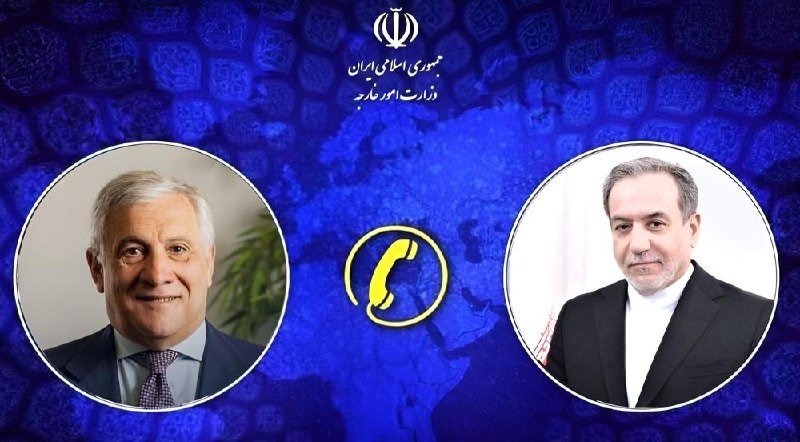
A public row broke open on 24 June 2026 between NATO's Secretary-General and the Italian government, after Mark Rutte told Fox News that roughly 500 US aircraft had taken off from American bases in Italy to support strikes on Iran under what he called Operation Epic Fury. Within hours, Italian Defence Minister Guido Crosetto had publicly rejected the framing, putting the alliance's top civilian spokesman on the spot over what Rome says is the use of sovereign Italian infrastructure for a war its parliament was never asked to authorise.
The dispute matters less for the precise number of sorties than for what it reveals about how decisions inside the Atlantic alliance are being communicated — and how little of that messaging now survives contact with the host governments on whose territory the alliance physically operates.
What Rutte said, and how Rome answered
The exchange began in a television interview. Rutte, the former Dutch prime minister now heading NATO, told Fox News that 500 US aircraft had lifted off from US bases in Italy to support Operation Epic Fury, the US–Israeli campaign against Iranian targets, as carried by Telegram channels including Open Source Intel and Clash Report. The figure was unusually precise for a NATO chief speaking on American cable, and was framed as evidence of allied burden-sharing.
Rome's reply came almost in real time. Crosetto, Italy's defence minister, publicly rejected the characterisation, complaining that the NATO secretary-general had invoked Italian bases without coordination or notification. Reporting compiled by The Cradle and circulated by Open Source Intel frames the Italian complaint in sharper terms: that Rome was being cited as a logistical platform for a conflict Rome had not endorsed, and that a NATO official had burnished the alliance's image on American television at Italy's expense. The Italian position is not an abstention from the Atlantic alliance — it is a demand that the alliance speak about Italian sovereignty in language Rome has signed off on.
The sequence matters. The comments came on the same day, with the Italian rebuttal following within hours of the Fox interview. That timing suggests the Italian government did not learn of the figure from NATO first; it learned of it from a US cable segment and was obliged to react in public rather than through the alliance's normal back channels.
Why this row is different from the usual friction
Host-nation complaints about US basing arrangements are as old as the bases themselves. Italy hosts several major US Air Force installations, including Aviano and Sigonella, and has lived through decades of bilateral friction over their use — from Libya in 2011 to the more recent posture shifts around the Mediterranean. What is unusual here is who made the claim and where he made it.
A NATO secretary-general does not normally volunteer operational specifics on a US news network. The post is, by design, a political and consensual office; it speaks for the alliance as a whole, and it normally does so in language cleared by the larger members. Rutte's choice to name Italian bases, name a sortie count, and tie both to a named operation against Iran is a more activist use of the role than his recent predecessors have attempted. It is also one that commits Italy's name to a campaign that, in Rome's telling, it has not formally joined.
That is the substance beneath Crosetto's irritation. The Italian objection is not to the aircraft themselves; it is to being named, on American television, as a participant in a war by an official whose job is to convey allied consensus rather than to assert it. For a country that hosts the bases and absorbs the political risk at home, the distinction is not cosmetic.
The structural frame: an alliance that announces before it consults
The row is best read not as a bilateral hiccup but as a stress symptom inside the alliance itself. Operations against Iran have been presented to European publics as a US–Israeli campaign with allied facilitation, not as a NATO operation. That distinction has allowed European governments to keep parliamentary debate at arm's length. When the NATO secretary-general names Italian bases, sortie counts, and an operation name in a Fox interview, he collapses that careful ambiguity in a single segment.
The pattern is recognisable. In recent years, allied infrastructure has been used for strikes that host governments later learn about in detail only after the fact, and only when journalists and opposition parliamentarians force the disclosure. The Rutte–Crosetto exchange makes that pattern legible in real time: the alliance's public messaging has run ahead of its internal coordination. The question now is whether Rome treats this as an unfortunate remark to be smoothed over, or as a precedent it intends to reverse.
There is also a domestic-Italian dimension that is easy to miss from Washington. Italy's governing coalition sits on a narrow majority, with hard questions already being asked in Rome about energy exposure to the Gulf, migration pressure across the Mediterranean, and the political cost of being visibly tied to a campaign against Iran. A NATO chief's off-the-cuff number on Fox News does not make those questions easier to answer.
Stakes and what remains unclear
The immediate stakes are diplomatic and procedural. If Rome's objection is treated by NATO headquarters as a one-off complaint, the alliance will continue to be vulnerable to the same problem at the next television appearance; Italy's standing inside the alliance will erode, and other host governments will read the episode as licence to distance themselves from the Iran campaign in public while tolerating it in practice. If, by contrast, NATO commits to a tighter clearance protocol before the secretary-general names specific national contributions, the row cools and the alliance's internal discipline is restored.
Several things remain genuinely unresolved. The exact number of 500 aircraft is Rutte's own figure, not an independently published tally, and neither NATO nor the Italian defence ministry has, in the public material available, broken it down by base, mission, or date. The operational name Operation Epic Fury likewise comes from the secretary-general's interview; no separate Pentagon or Israeli confirmation has been cited in the source material. Italian officials have rejected the framing, but they have not, on the record available, denied that US aircraft flew from Italian territory — the objection is to being publicly credited without coordination, not to the underlying flights. The source set also does not specify whether the Italian parliament has been formally briefed, whether any basing agreement clauses were triggered, or whether Rome is reserving the right to demand formal notification as a condition of continued use.
What is clear is that an alliance accustomed to speaking with one voice has, for a few hours on a Wednesday in late June, spoken with two — and that the second voice belongs to the country whose territory the first voice was busy describing.
*Desk note: Monexus leads with the Italian government's own framing of the dispute and treats the NATO secretary-general's specific figures as his claim, not as a confirmed operational tally. Where The Cradle and Open Source Intel carry the same factual core, both are cited; the structural reading is this publication's own.
Wire provenance
This editorial synthesis draws on the following public wire/social posts:
- https://t.me/osintlive
- https://t.me/osintlive
- https://t.me/ClashReport
- https://t.me/megatron_ron
- https://t.me/thecradlemedia
Follow the event.
These dated source records provide context. They do not retrospectively verify this archive article.
Separate what the nuclear watchdog reported from what it could not determine after the June 2025 strikes.