Pezeshkian's Mashhad stop turns a state visit into a sectarian signal
On his way back from Pakistan, Iran's president detoured into Mashhad on the eve of Tasu'a. The optics say more than the trip did.
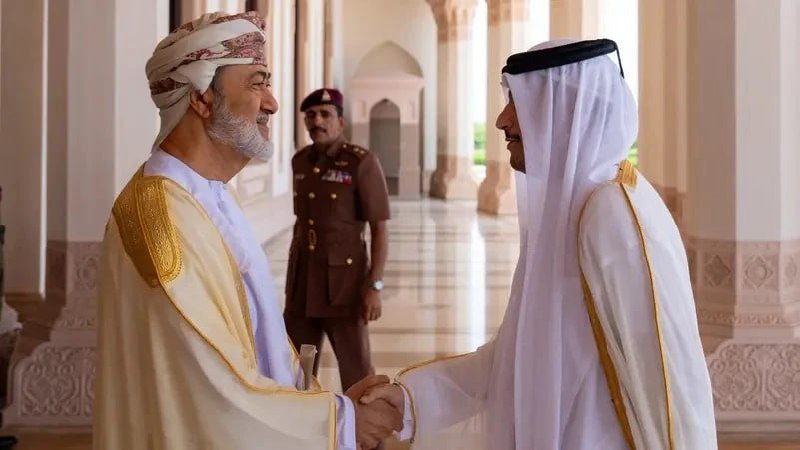
On the evening of 23 June 2026, returning from a state visit to Pakistan, Iranian President Masoud Pezeshkian broke his transit in Mashhad to walk the marble courtyards of the shrine of Imam Reza. Iranian state outlets carried the footage within hours, framing the stop as a private act of devotion timed to Tasu'a, the night that precedes Ashura on the Shia calendar. The choreography matters. A working president does not reroute a foreign trip through a holy city by accident; he does it because the ritual sits inside a political message he wants a domestic audience to read.
This was not a routine stopover. Pezeshkian had spent the previous days in Islamabad, in meetings that Iranian and Pakistani state media both described as a reset of bilateral ties under US tariff pressure and renewed India-Pakistan volatility. Coming home, he chose the shrine over the highway. Both the Tasnim and Mehr News wires carried the visit in near-identical language, down to the phrasing that the president entered Mashhad "on his way back from Pakistan, at the same time as the night of Tasu'a Hosseini." That repetition is itself the signal: the state broadcaster, the intelligence-adjacent news agency, and the president's own office are aligned on the optics.
Reading the optics, not the theology
Strip away the shrine and the trip is unremarkable. Pezeshkian's Pakistan visit was the substantive event. Mashhad is the framing. The shrine of Imam Reza, eighth of the Twelve Imams, is the largest pilgrimage site in Iran and a piece of soft-power infrastructure the Islamic Republic has spent four decades monetising and protecting. A sitting president timing his return to fall on Tasu'a is not a private believer managing a calendar. It is the regime performing one of its core functions: demonstrating that the head of state is a custodian of the country's sectarian identity, not merely its bureaucrat-in-chief.
The same footage plays differently to different audiences. To a domestic Shia constituency, the Mashhad stop signals that Pezeshkian, often cast by his critics as a technocratic outsider, is genuinely inside the symbolic order the state claims to defend. To a Pakistani audience still digesting the bilateral agreements, the visit is reassurance that the Iranian president is a man of the establishment, not a reformist interloper. To a Gulf and Saudi audience watching Iranian moves along their eastern flank, the imagery is a reminder that Tehran reaches for its most potent sectarian register when it wants to project continuity rather than change.
The counter-narrative is thin
There is a competing read. Pezeshkian's domestic political coalition is the loosest the Islamic Republic has fielded in a generation, and his office has spent the past year trying to triangulate between a hardline security establishment, a restive civil society, and a sanctions-scarred economy. A shrine visit costs nothing and buys goodwill across the spectrum. By that reading, Mashhad is a political-efficiency move, not a sectarian flex.
The structural fact, though, cuts the other way. The Tasnim and Mehr coverage ran the visit on the front of their state-aligned channels, in the same breath as Pezeshkian's foreign travel, and the chosen day was not a Friday prayer or a national holiday but Tasu'a. If the motive had been pure political housekeeping, the calendar would have been different. The regime's media architecture is sophisticated enough to know exactly what Tasu'a carries in the Iranian, Iraqi, Lebanese, and Bahraini Shia imagination. They chose it anyway.
What this says about Iran's external posture
Step back from the shrine, and the Mashhad stop fits a pattern of the past eighteen months. Iran's regional diplomacy has increasingly fused two registers: a technocratic, deal-making front aimed at Ankara, Islamabad, and the Gulf, and a sectarian-religious front aimed at the Iraqi, Lebanese, and Bahraini Shia arenas where the Islamic Republic's networks are deepest. Pezeshkian's government has leaned into the first register harder than its predecessors, pursuing trade corridors and prisoner swaps and quiet deconfliction with Saudi Arabia. It has not, however, retreated from the second. The Mashhad detour, on a transit day, with both state-aligned news agencies amplifying the timing, is the visible seam where the two registers are stitched together in a single frame.
That stitching is the story. A reformist-coded president does not disavow the shrine; he performs it, and lets the security state's preferred messengers carry the footage. The image is the compromise.
What the sources do not tell us
The available reporting is narrow: two near-identical wires, both from Iranian state-aligned outlets, both focused on the visit itself. There is no independent confirmation of how long Pezeshkian remained at the shrine, who accompanied him, or whether the stop displaced scheduled meetings. The framing of the Pakistan leg of the trip is similarly thin; this publication has not seen the joint readout. What is clear is the choreography, the calendar, and the state-aligned echo chamber that amplified both.
For an outside reader, the honest takeaway is this. Pezeshkian's Mashhad stop is a small piece of theatre, but it is theatre of a particular kind. It says the Islamic Republic is willing to let its president perform a soft, devotional, sectarian register on his way back from a hard, transactional foreign trip. That is not nothing.
This piece was written using only Iranian state-aligned wire reporting. The Pakistan leg of the trip will be revisited once independent readouts are available.
Wire provenance
This editorial synthesis draws on the following public wire/social posts:
- https://t.me/tasnimplus
- https://t.me/mehrnews