Qalibaf's three-line rebuke and the diplomatic vocabulary of an unequal front
The Speaker of Iran's parliament used a single appearance to lay out a coherent foreign-policy doctrine: distant powers are the problem, regional agency is the solution, and diplomacy must rest on equality or it will not last.
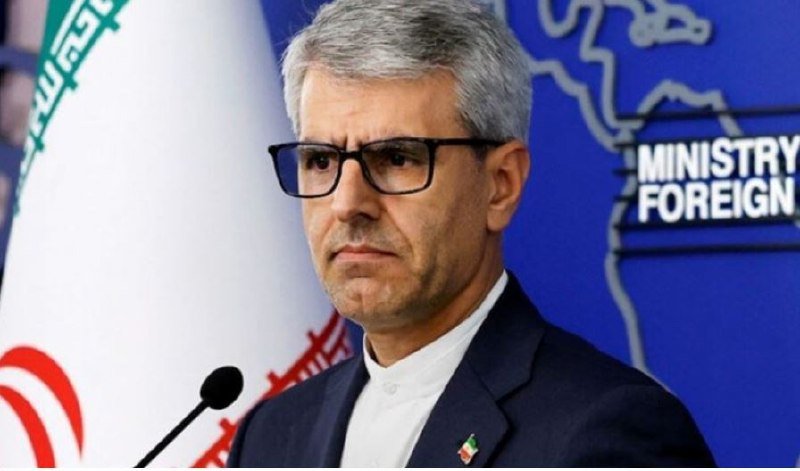
On 24 June 2026, in a single sequence of remarks broadcast by Al-Alam Arabic, Mohammad Bagher Ghalibaf — Speaker of Iran's Islamic Consultative Assembly — offered what amounted to a three-part foreign-policy doctrine. Diplomacy, he said, "is sustainable and effective when it is based on respect and equality and based on the support of the people." The war, in his framing, "was not just a military dream, but rather an organized effort to change the strategic balance of power in the region and impose the will of a free people." And the security of the region, he concluded, cannot be delivered by "forces and countries that come from thousands of kilometers away," who are "themselves anti-security agents." The three statements were issued within eleven minutes of one another — a tightly produced diplomatic package, not a string of asides.
Read together, the lines are not a complaint. They are a posture. Iran is articulating, in plain language, an alternative theory of regional order: one in which legitimacy flows from populations rather than from expeditionary force, and in which distant powers are recast not as stabilisers but as the principal source of instability. That framing has implications well beyond the parliament chamber in Tehran.
The doctrine, in three sentences
The first beat is procedural. Diplomacy, for Qalibaf, is conditional: it survives only when grounded in equality and popular consent. That is a deliberate inversion of a long-standing Western diplomatic vocabulary in which engagement is offered as a concession and leverage is held in reserve. By locating the test of legitimacy in the population rather than in the negotiating table, the speaker shifts the burden of proof.
The second beat reframes the war. The phrase "organised effort to change the strategic balance of power" treats the conflict not as a dispute to be managed but as a structural contest over regional architecture. The verb matters: "impose." Imposition, by definition, fails the equality test laid out in sentence one. The two statements are engineered to lock together.
The third is the geopolitical bottom line. Forces arriving from a distance — read: the United States and its expeditionary footprint — are not neutral arbiters of security but participants in the security problem. This is a familiar regional argument; what is notable is the delivery. It is being made by a parliamentary speaker on a state-aligned network, in quotable, pre-digested lines, in Arabic, for an Arab audience.
The audience is regional, not domestic
A speech of this kind, delivered in this register, is not principally addressed to the Iranian street. Al-Alam Arabic is a state-aligned outlet whose distribution runs through Arab audiences — Iraqi, Lebanese, Syrian, Yemeni, and the wider Gulf listening public. The choice of channel is itself a foreign-policy instrument: it tells a regional constituency that Tehran's framing of the war and of outside powers is being made in their language, on their screens, and in their name.
That matters because the practical question of who shapes the narrative of regional security is, at this point, as consequential as the question of who fields the largest air force. Where the public hears that distant powers are the problem, expeditionary basing becomes harder to sustain politically. Where the public hears that regional agency is the only legitimate basis for order, the demand for an indigenous security architecture becomes the default position of the street rather than the ambition of a faction.
A counter-reading, taken seriously
The harder reading is that this is rhetoric calibrated for domestic consumption, and that the regional audience is a useful by-product. Iran's regional partners have their own war-weariness, their own grievances, and their own interest in a discourse that legitimises distance from Washington. The argument travels because it flatters listeners who already half-believe it. On that reading, the doctrine is real only insofar as it is operationally backed — and on the operational record, Iran's regional posture has been costly and is contested.
A further counter-weight: a doctrine of equality and popular legitimacy cuts both ways. It can be used against outside powers. It can equally be used against a regional order in which Iran's partners are themselves accused of overriding the consent of their own populations. Qalibaf's framework is not, in other words, a neutral description of the regional balance; it is a normative claim with selective application. The same standard of "support of the people" that is invoked here has been a long-running point of friction inside the alliances Tehran is now trying to consolidate.
What to watch
The next test is not another speech. It is whether the framework travels into the working language of regional diplomacy — whether partners in Baghdad, Beirut, Damascus, and Sanaa begin to reproduce the equality-and-distance formulation in their own communiqués, and whether it appears in the preamble of any negotiation framework that touches the file. Words that stay on a parliamentary podium in Tehran are one thing. Words that show up in joint statements are another.
The structural stakes are straightforward. If the regional public converges on a view that outside military presence is itself the security problem, the cost of maintaining that presence — political, financial, and over time military — rises for every power that maintains it. If the view does not converge, the doctrine remains a domestic artefact and the regional order continues to be policed, as it has been, from a distance. Which way the argument settles is the question the next several months will answer.
Desk note
Monexus frames this story not as a controversy over one speech but as a window onto a regional discourse that Western wires tend to report only as quote-of-the-day. The doctrine, the audience, and the counter-weights are all in the public record; the editorial choice is to read the three lines as a single argument rather than three discrete statements.
Wire provenance
This editorial synthesis draws on the following public wire/social posts:
- https://t.me/s/alalamarabic
- https://t.me/s/alalamarabic
- https://t.me/s/alalamarabic