The Quake, the Outbreak, the Court: A Day That Refused to Settle
Three unrelated stories landed within ninety minutes on Tuesday afternoon — a 5.6 in Mendocino, an Ebola case in France tied to an African outbreak, and a Supreme Court ruling siding with Cisco. The connective tissue is the machinery of risk.
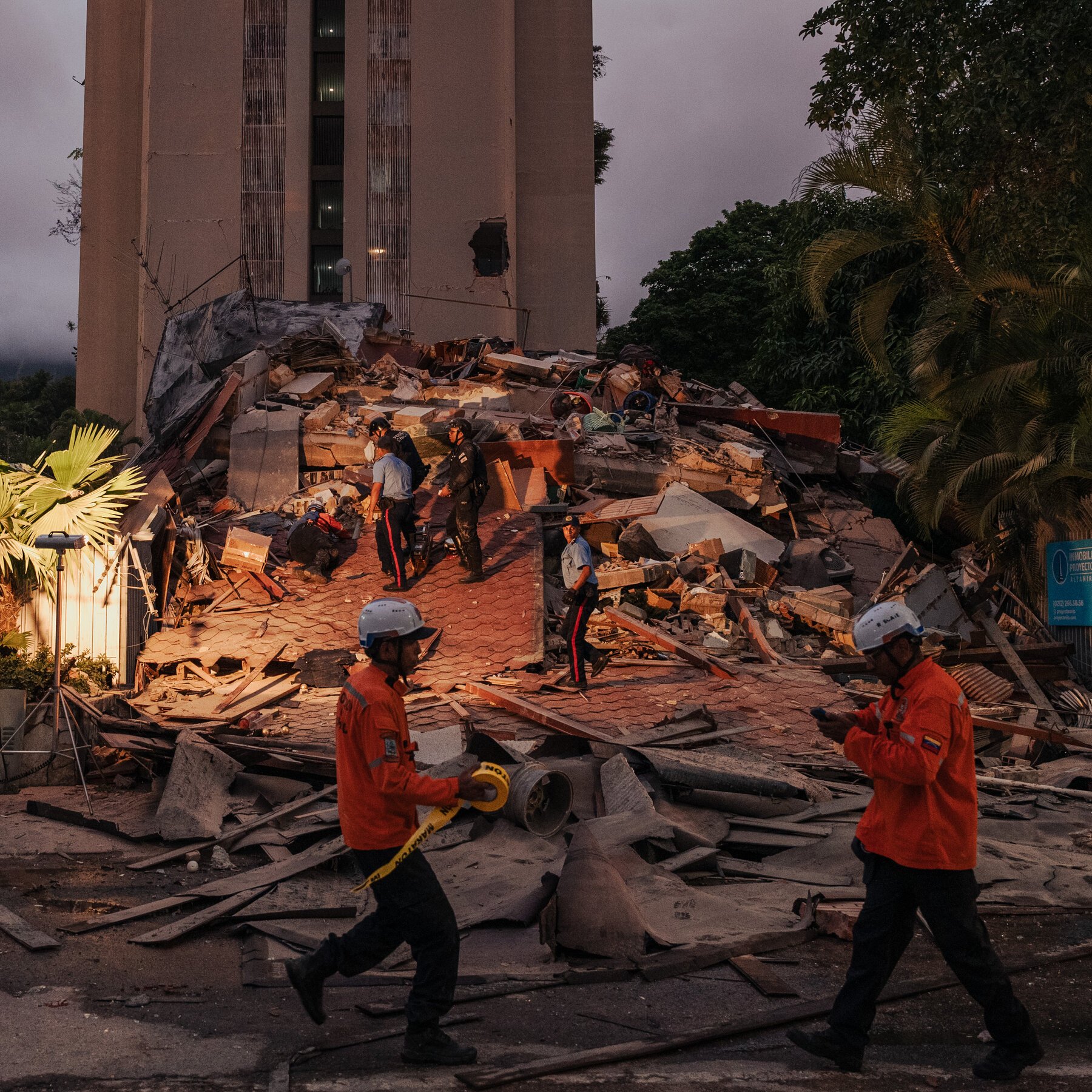
Three alerts landed inside ninety minutes on Tuesday afternoon. At 16:15 UTC the US Supreme Court closed the door on a human-rights case against Cisco. At 17:02 UTC France confirmed its first Ebola case linked to an African outbreak. At 17:15 UTC a magnitude 5.6 earthquake struck Mendocino County in Northern California. None of these stories is, on its own, extraordinary. Read together, they sketch the texture of a world in which the systems meant to absorb shocks are doing so under load, and the seams are showing in different places at once.
Each story sits inside a familiar frame. The Cisco ruling is about corporate liability in supply chains that run through authoritarian jurisdictions. The Ebola case is about porous borders and the speed of pathogen mobility in an interconnected world. The Mendocino quake is about geology — about the Pacific Northwest sitting on a plate boundary that does not care who is in office. Read one, and you get a story. Read all three in the order they arrived, and you get something closer to a condition.
The court and the corporation
The Supreme Court sided with Cisco on Tuesday, ending a US citizen's attempt to hold the company liable for alleged human-rights abuses in its overseas supply chain, according to a Tuesday afternoon alert carried by The Epoch Times. The dissenting justice warned that the majority had "slammed the door completely shut" on US citizens seeking such liability. The case turned on whether domestic corporations can be sued in US courts for conduct tied to operations abroad — the kind of question that sits at the intersection of corporate law, extraterritoriality, and the legal status of human-rights claims in a globalised economy. The court's answer, per the alert, was narrow: not here, not on these facts.
The ruling does not abolish human-rights litigation against US firms. It clarifies, in the manner of the current court, that the doctrinal pathways are narrower than plaintiffs had hoped. Whether that narrowing is a defensible reading of the statute or a quiet realignment of corporate liability doctrine is a fight that will play out in law reviews and in the next round of litigation. For now, the practical effect is that the burden of proving a US venue has shifted further toward the plaintiff.
The pathogen and the border
Roughly forty-seven minutes after the Cisco ruling, French authorities confirmed the country's first Ebola case connected to an ongoing African outbreak. The patient, according to the Tuesday alert, is reported stable. The detail that matters is the word "connected." It signals that the case is not isolated viral emergence but a documented line of transmission from a known outbreak zone to a European hospital. That is a different epidemiological object than a spontaneous case. It means the surveillance chain worked in one direction — the patient was identified and isolated — and it also means the chain existed.
Public-health professionals have spent fifteen years building the muscle memory to handle exactly this kind of import. The French case, on the reporting available, fits that muscle memory: identification, isolation, contact tracing initiated, the patient stable. The bigger question — how an outbreak in one part of the world produced a confirmed case several thousand kilometres away — is the question that the alert does not answer and probably cannot in the first forty-eight hours. Travel history, exposure window, the specific outbreak referenced: those are the granular details that will tell us whether this is a one-off or the leading edge of a wider pattern.
The plate boundary and the politics
The Mendocino County earthquake struck thirteen minutes after the Ebola confirmation. At magnitude 5.6 it is a moderate event, not a catastrophe. It is also a useful reminder that the Pacific coast of North America sits on a junction of tectonic plates that produces earthquakes on a schedule that no electoral cycle, trade negotiation, or court ruling can alter. The Mendocino triple junction, where the Pacific, North American, and Gorda plates meet offshore, is one of the most seismically active stretches of the contiguous United States.
The political reading of a quake is always slightly absurd — there is no one to negotiate with, no leverage to apply, no sanctions to threaten. The point of including it in a roundup of Tuesday's news is precisely that absurdity. Two of the three stories are about human systems under strain. The third is about a system that simply does not respond to the levers the human systems are built around. The juxtaposition is not a metaphor. It is a calibration.
The connective tissue
What these three stories share is not a common cause but a common exposure: the exposure of systems that were designed for one operating environment and are now operating in another. The court doctrine was designed for a world of mostly domestic supply chains; it is now adjudicating cases about supply chains that wrap the planet. The European public-health apparatus was designed for the diseases of the mid-twentieth century; it is now processing pathogens whose travel time is faster than the incubation period. The seismic hazard map of Northern California has not changed; the housing stock, the water infrastructure, and the emergency-management budgets sitting on top of it have.
The through-line is not "everything is connected." It is closer to: the systems that absorb shocks are absorbing several at once, and the question of whether they hold is less interesting than the question of where they fail first. Tuesday's three alerts do not answer that question. They sharpen it.
What remains uncertain
Three caveats. The Supreme Court ruling, as reported in a wire alert, does not yet come with the full opinion text that a careful legal analysis would require — the doctrinal specifics, the joining of concurrences, the precise scope of the holding. The French Ebola case is hours old; the travel history, the specific outbreak referenced, and the contact-tracing perimeter will only become clear over days. The Mendocino quake is a moderate event, and the absence of reported damage at this stage is not the same as the absence of damage. The picture on Wednesday morning will be sharper than the picture on Tuesday afternoon, and that is the point. The news cycle does not wait for the picture to settle. Monexus notes that this desk treats wire alerts as the opening move in a story, not the closing one — a habit that the current pace of events makes more valuable each week.
This desk paired the Cisco ruling with the French Ebola case and the Mendocino quake not to argue they are causally linked but to show what a single Tuesday afternoon's wire looks like when the systems behind three different stories are all working at the edges of their design.
Wire provenance
This editorial synthesis draws on the following public wire/social posts:
- https://t.me/epochtimes