Quinnipiac survey finds 60% of US voters see Iran strike as a strategic loss, not a win
A Quinnipiac University poll released this week shows 60% of US voters consider recent American military action against Iran a net negative for Washington's global position.
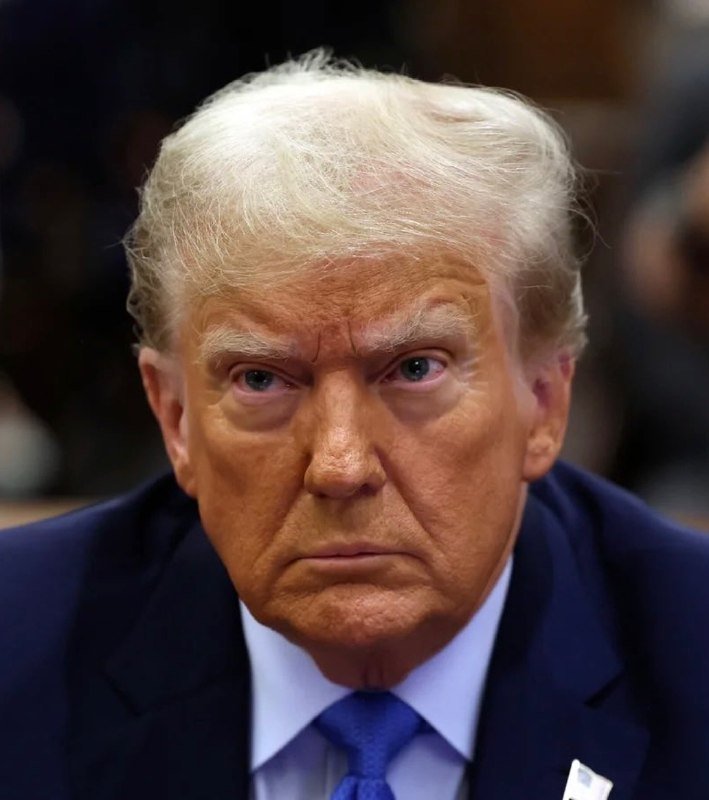
A new Quinnipiac University poll, picked up by Iranian state-affiliated media on 24 June 2026, finds that six in ten American voters regard the recent US military action against Iran as a net negative for Washington's standing abroad. The figure — 60% saying the operation "was not worth it" — was reported by three Tasnim-linked channels on the same day, including the English-language service and the Farsi aggregator Jahan Tasnim, and represents one of the more pointed rebukes of an active US overseas operation in recent polling cycles.
The headline number is less interesting than what sits behind it. American voters, the data suggests, are not retreating from intervention in principle; they are increasingly willing to judge specific operations against a strategic ledger. Strikes that appear to consolidate an already-favourable position read as wise. Strikes that end with the targeted state intact, the regional balance unchanged, and the United States absorbing the diplomatic and economic costs alone read, to a clear majority, as a cost without a return.
What the poll actually says
The Quinnipiac survey, as summarised by Tasnim's English wire at 19:22 UTC on 24 June 2026, frames the question in blunt terms: was the US military action against Iran worth it? Sixty per cent of respondents said no. The polling is being cited by Iranian outlets as evidence that the American public, distinct from the Washington policy class, has reached a sceptical verdict on the operation's strategic value. Two further Tasnim-channel posts at 19:41 UTC and 18:09 UTC on the same day carry the same headline framing: that the strike has weakened, rather than strengthened, the United States' position in the world.
That framing should be handled with care. The poll is real, and the 60% figure is real. The interpretive gloss — that the strike has measurably weakened American global standing — is the wire's own argument layered on top of the data, and it benefits the Iranian state communications apparatus. Quinnipiac's own release, were it to be cross-checked, would more likely frame the result as a confidence question about this particular operation rather than a verdict on US power writ large. The distinction matters.
The strategic ledger
What a reader in Washington, Tehran, or any Gulf capital is trying to read off this poll is the price-tag of the operation. The arithmetic that an interventionist administration sells to its domestic audience runs roughly as follows: a short, sharp use of force alters the calculus of a regional adversary, deters follow-on behaviour, reassures allies, and imposes limited costs on the United States. When that arithmetic lands — as it arguably did in the 1986 Libya operation, or in the initial phases of the 2003 Iraq campaign, before the occupation — public support is durable even among voters who started sceptical.
Where the arithmetic fails, public opinion tends to move quickly. Sixty per cent is not a soft "unsure" reading. It is the kind of number that closes down appetite for a follow-on operation, that emboldens congressional critics, and that gives cover to allies who would rather not be seen climbing on board. The same number, in a different operational context, could be cited by the administration as evidence that the public lacks strategic patience; the poll alone cannot tell us which reading the White House intends to put on it.
The deeper question — whether the United States' position in the Gulf and wider Middle East has in fact been strengthened or weakened — is one the polling instrument is not equipped to answer. That is a question for force posture reviews, oil-market analysts, and the intelligence community's red-team reports. The poll tells us only that voters perceive the ledger as unfavourable, which is itself a fact of consequence, but a different category of fact from the underlying balance sheet.
Why Iranian media is amplifying this number
It is worth being explicit about who is doing the framing. Tasnim, the outlet carrying the story in three separate Telegram posts on 24 June, is an Iranian state-affiliated news agency with a long track record of amplifying material that supports Tehran's preferred narrative of US decline. That is not a disqualification — the data is real, and the framing is a legitimate one — but a reader should be aware that the choice to lead with this poll, on this day, in this language, is a deliberate editorial decision by outlets working in the Iranian interest.
Counter-frames exist and should be visible. The administration, were it to respond to the poll on the record, would likely argue that public patience with a single operation should not be confused with strategic weakness, and that the operation's value will only become legible months or years downstream. Gulf partners, depending on which Gulf capital, will read the same number through their own threat-perception lens. Israeli commentators, who have their own stake in the regional balance, are likely to read it as a warning about American follow-through. None of these readings is wrong. The poll is a single data point sitting on top of a much larger, more contested set of questions about the United States' role in the Middle East.
What the number does and does not tell us
The 60% figure is meaningful because it cuts through the usual caveats. It is not a "would you support military action in principle" question, which is the sort of query that produces a permanently hawkish American majority. It is a retrospective judgement on a specific, identifiable operation. That kind of judgement, expressed at this magnitude, is a more reliable signal of where the public will sit if the administration proposes a follow-on strike, asks for a supplemental appropriation, or seeks to widen the coalition.
What it does not tell us is whether voters are right. The strategic effect of a strike can diverge sharply from the public's immediate read of it, in either direction. The 1986 Libya strikes polled badly at the time and are now widely judged a success. The 1998 Iraq Liberation Act polled well in principle and produced a decade of drift. A single Quinnipiac survey at a single moment tells us where the public mood is, not where the operation's long-tail consequences will land.
For now, the operative fact is that three Iranian state-linked channels chose to lead their 24 June 2026 coverage with this number, and that the number itself is a striking one. The administration, Congress, and allied capitals will all be reading the same data point through their own prisms. The honest summary is that American voters, by a margin of three to two, are saying that this particular operation has cost more than it has delivered. The interpretation of what that means is, as always, the political fight that follows the polling release.
This article is built on three Telegram posts from Iranian state-affiliated outlets — Tasnim English, Tasnim Plus, and Jahan Tasnim — circulated on 24 June 2026. The 60% figure and the wording of the poll summary are drawn from those posts; the strategic interpretation is Monexus's own reading of what the number plausibly does and does not establish.
Wire provenance
This editorial synthesis draws on the following public wire/social posts:
- https://t.me/tasnimnews_en
- https://t.me/tasnimplus
- https://t.me/JahanTasnim