Rubio's Gulf reassurance lands as US-Iran technical track heads back to Switzerland
Marco Rubio told Gulf counterparts on 24 June 2026 that Washington would not act against their security as a US-Iran technical committee prepares to reconvene in Switzerland on 29 June.
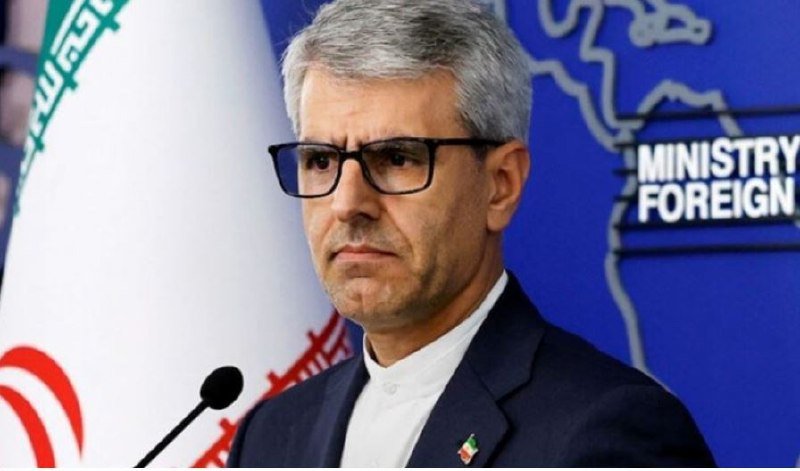
US Secretary of State Marco Rubio told Gulf partners on Wednesday, 24 June 2026, that Washington has "no intention" of doing anything that would undermine regional security, language calibrated for leaders who have watched previous US-Iran detentes unravel into strikes and proxy escalation. Reuters reported the assurance at 17:01 UTC; Arabic-language coverage from Al Alam and Iran's Tasnim carried the same remarks within the hour, suggesting the messaging was deliberately broadcast across the Gulf and Iranian information ecosystems in parallel.
The reassurance lands at a delicate moment. Rubio also confirmed that a US-Iran technical committee will return to Switzerland on 29 June to resume talks. For capitals from Riyadh to Abu Dhabi, the choreography is familiar: a senior envoy soothes Gulf anxieties about a nuclear deal, while a working-level track grinds forward in the background. The credibility of that sequence is now the operative question for the next five days.
What Rubio actually said, and to whom
Rubio's two operative statements, as carried by Al Alam at 16:30 UTC and 16:32 UTC on 24 June, were that the United States "has strong relations with the Gulf countries," thanks them for their support, and "informs them of everything related to the negotiations with Iran" — and that the technical committee will resume talks in Switzerland on the 29th of the month. ClashReport, monitoring the same remarks, summarised the regional reassurance as: "We are not going to do anything that undermines the security of our long-standing allies in the region."
The combined picture is a dual-track message. To Gulf foreign ministers and crown princes, Rubio offered consultation and a security floor under any eventual arrangement. To Tehran, signalled via Tasnim's 16:08 UTC report that "we will include the Arab countries of the Persian Gulf in negotiations with Iran," the message is that any deal will be a regional deal, not a bilateral carve-out. That is a substantive constraint on what the technical committee can agree to — and a meaningful concession to Riyadh and Abu Dhabi, who have long complained that previous negotiations excluded them from decisions taken in their neighbourhood.
The Gulf audience, and why the reassurance matters
The reassurance is aimed less at Manama, Doha or Muscat — broadly aligned with Washington — than at the kingdom that has historically been most willing to undercut a US-Iran process: Saudi Arabia. Gulf states have lived through three rounds of negotiations since 2015, each producing agreement language that did not survive contact with mutual suspicion or a single provocation. Iran's deep investment in proxy networks that operate across the Gulf's southern rim, from Houthi missile arsenals to Iraqi militias, has ensured that every "deal" is read in Riyadh as a deferred threat rather than a closed file.
By publicly committing to Gulf inclusion, Rubio is trying to convert that anxiety into a process constraint — making it harder for any future agreement to be sold as a US-Iran arrangement that leaves Gulf security a footnote. Whether that works depends on whether the Gulf is brought in as a substantive party to the technical track or merely briefed on its margins. The line between the two is where previous negotiations broke down.
The structural frame: a constrained bilateral
What is unfolding in Switzerland is not the open-ended bilateralism of the 2015 Joint Plan of Action or even the narrower JCPOA follow-on talks. It is a constrained bilateral, in which Iran's negotiating space is bounded by the Gulf's veto and by an American domestic politics that has grown reflexively hostile to Tehran. Rubio's confirmation of the 29 June session is a procedural event, not a strategic one. The question is what the technical committee can produce inside those constraints.
Two structural features are worth flagging. First, the technical-committee format itself, by design, narrows the agenda to verifiable deliverables — enrichment caps, monitoring access, sequencing — and away from the political architecture that has historically defined the relationship. That is a feature if you believe the trust deficit is technical, and a bug if you believe it is political. Second, Gulf inclusion, if it is real, raises the cost of Iranian cheating: any breakout would now be read not as a US-Iran problem but as a Gulf-Iran problem, which materially changes the coalition that would respond.
Stakes and what to watch before 29 June
The five-day window between Rubio's announcement and the Swiss reconvening is where the deal will be made or unmade. Watch three signals.
First, whether Gulf foreign ministers are seen in Bern or Geneva in the days around 29 June, or whether they are confined to video briefings from Riyadh. The former signals inclusion; the latter signals consultation.
Second, whether Iranian state media beyond Tasnim — particularly IRNA and PressTV — adopt the "Gulf inclusion" frame or push back against it. Tehran's willingness to accept Gulf participation is the operative variable; Rubio has put it on the table, but Iran has not yet confirmed it.
Third, whether any sanctions relief materialises as a confidence-building measure before the committee meets. The technical track has historically been paired with micro-relief — release of frozen funds, oil-export waivers — to keep the process solvent. The absence of any such gesture before 29 June would suggest one side is using the gap to harden its position.
The Reuters and Al Alam dispatches make clear that Rubio is offering process, not substance. The Gulf is buying process because the alternative — a US-Iran arrangement concluded over its head — is worse. Whether process becomes a result is the question the next five days will answer, and it remains genuinely open.
How Monexus framed this: the wire reportage emphasised Rubio's Gulf reassurance; this piece treats the reassurance and the 29 June technical track as a single diplomatic event and asks the inclusion question the wires left hanging.
Wire provenance
This editorial synthesis draws on the following public wire/social posts:
- http://reut.rs/4f2FzPy
- https://t.me/alalamarabic
- https://t.me/alalamarabic
- https://t.me/ClashReport
- https://t.me/JahanTasnim
Follow the event.
These dated source records provide context. They do not retrospectively verify this archive article.
Separate what the nuclear watchdog reported from what it could not determine after the June 2025 strikes.