Rutte's Loose Talk on Italian Bases Tests the NATO Consensus He Claims to Defend
NATO's secretary general told Fox News the alliance was helping degrade Iran's nuclear capability. Italy is not amused — and his candour exposes a faultline the alliance cannot afford.
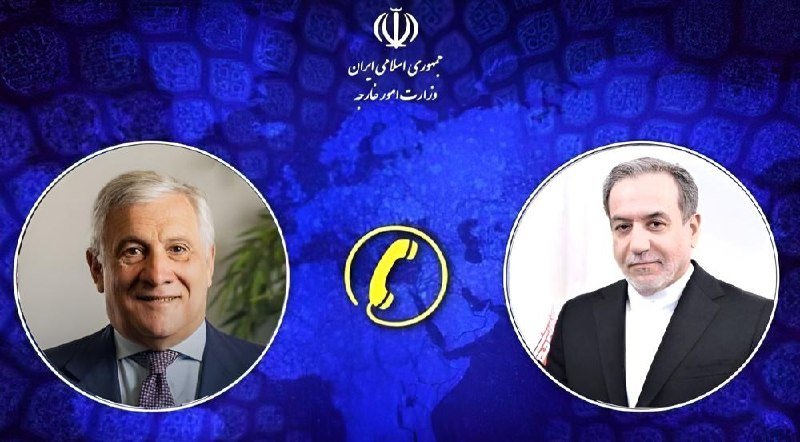
NATO Secretary General Mark Rutte told Fox News on 24 June 2026 that US President Donald Trump is "doing exactly what is needed" by degrading Iran's nuclear capability, asking the interviewer to imagine the alternative of a nuclear-armed Tehran. Within hours, Italy — the host of several US air bases on its soil — had publicly rebuked him for the comments, the Reuters wire reported at 14:05 UTC. The episode is more than a diplomatic stumble. It is a stress test of the very alliance unity Rutte claims to be defending.
The episode crystallises a question the Atlantic alliance has so far managed to avoid asking out loud: when Washington strikes Iran from European bases, is NATO a coalition, a shield, or a vending machine? Rutte's answer, in the Fox interview cited by the Clash Report wire at 14:30 UTC, was unambiguous. Italy's answer, delivered through formal rebuke the same day, was equally unambiguous in the opposite direction.
The two statements, side by side
Rutte's framing was bullish and undiplomatic in the older sense of the word. He endorsed Trump's degrading campaign, name-checked the strategic stakes — a nuclear-armed Iran as "an exporter of chaos" — and presented allied airspace, ports and runways as a settled contribution to that effort. There was no hedging language about host-nation consent, no reference to the political processes by which a NATO member authorises the use of its infrastructure for operations outside the alliance's treaty area.
Italy's objection, as Reuters reported, was procedural and substantive. Rome does not accept that NATO — and certainly not its secretary general — speaks for member states on the use of sovereign bases in a third-party war. Italy is not neutral on Iran; it has backed sanctions and non-proliferation policy for years. But the distinction between endorsing US policy in Brussels and treating Italian military infrastructure as an automatic extension of US Central Command is the distinction Italy insists on preserving.
Why this row matters beyond the soundbite
The structural pattern is familiar. The United States runs a global force posture that depends on allied host nations for the right to launch, refuel and stage. That bargain has always been uncomfortable for the hosts, and it has always worked because the political cost of complaining publicly was higher than the political cost of quiet acquiescence. What changed in the last 24 hours is that the cost equation flipped. A NATO secretary general publicly confirmed, on American television, that allied infrastructure is being used to project power against Iran. That confirmation is news to domestic audiences in Italy whose parliaments have not voted on the matter in this form.
The counter-narrative, and it has weight, is that Rutte was merely restating a reality that everyone inside the alliance bubble already understood. Bases in Aviano, Sigonella and elsewhere in southern Italy have hosted US air assets across multiple Middle East operations. Italian governments of both centre-left and centre-right stripes have accommodated those deployments with varying degrees of public discretion. If the politics are settled in practice, what is the harm in saying so plainly?
The harm is legitimacy. NATO operates on consensus. A secretary general who converts a sovereign-bases arrangement into a television talking point on behalf of a third-party war is not enforcing consensus; he is assuming it. The Italians are not objecting to the policy substance so much as to the forum in which it was announced and the forum in which they were not consulted.
What the wire did and didn't say
The two source items here are thin by design. The Clash Report extract delivers Rutte's quotes without context on the full Fox News segment. Reuters confirms the Italian rebuke and references Rutte's earlier remarks but does not, in the visible wire copy, quote an Italian official by name or specify which bases are in dispute. That matters for the reader: the story is real, but the contours are still being negotiated in the diplomatic back-channel. Anyone who tells you they already know which Italian installations are in play, or which Italian minister phoned which NATO counterpart, is ahead of the sourcing.
Stakes
If the row festers, three things follow. First, the political space for European governments to accommodate US force posture in the Mediterranean narrows — and with it the operational depth the US relies on for any Iran contingency. Second, Rutte's standing as a consensus-builder, the asset he was hired to bring to the job after a turbulent predecessor era, takes a hit precisely when NATO faces its most demanding stretch in two decades. Third, the precedent travels: every NATO host nation with US infrastructure will now want its own clarification on what its silence is being read to mean.
The most plausible alternative read is that this is a manageable dust-up — a secretary general who spoke too freely on a US platform, a host nation that needed to be seen pushing back, and a quiet resolution within the week. That reading has the benefit of fitting the routine choreography of allied disagreement. It has the drawback of assuming that the underlying issue — sovereign consent over the use of national infrastructure for strikes on Iran — goes away once the headlines do. It does not. The Reuters wire item is short precisely because the argument is just beginning.
Desk note: Monexus is treating the Rutte remarks and the Italian rebuke as the primary wire items they are — one Fox interview transcript surfaced by Clash Report, one Reuters confirmation of Rome's pushback — and resisting the temptation to extrapolate to specific bases or named officials not present in the sourcing.
Wire provenance
This editorial synthesis draws on the following public wire/social posts:
- https://t.me/ClashReport
- http://reut.rs/4eFbMem
- https://en.wikipedia.org/wiki/Mark_Rutte
Follow the event.
These dated source records provide context. They do not retrospectively verify this archive article.
Separate what the nuclear watchdog reported from what it could not determine after the June 2025 strikes.