Rutte's Italy-Iran slip scrambles NATO's southern flank
NATO's secretary general told Fox News that 500 US aircraft flew from Italian bases against Iran. Rome is not amused, and the dispute exposes how thin the alliance's southern consensus really is.
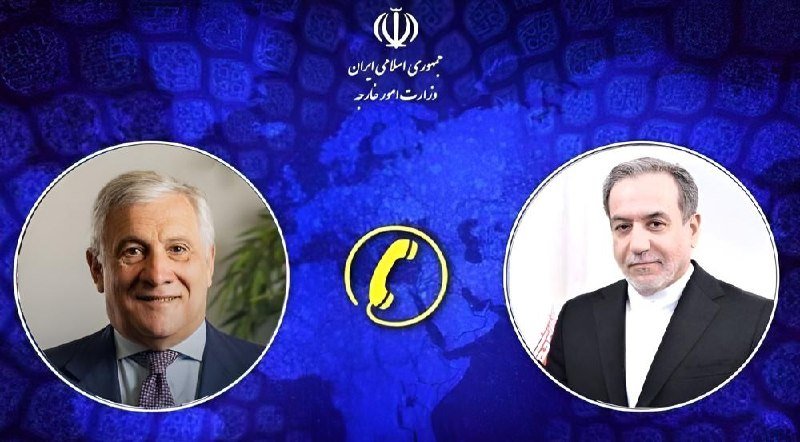
NATO Secretary General Mark Rutte told Fox News on 24 June 2026 that roughly 500 US aircraft had taken off from American bases on Italian soil to support "Operation Epic Fury," the air campaign against the Islamic Republic of Iran. The disclosure, made in an interview carried by Telegram channels including Clash Report and the wfwitness feed at 14:35 UTC and 15:02 UTC, detonated within the hour in Rome. Italian Defence Minister Guido Crosetto publicly rejected the characterisation, and the Italian government is now pushing back against the alliance's most senior civilian official over what Rome considers an unauthorised airing of operational detail that should never have left the room.
The spat looks like a press-cycle hiccup. It is not. It is the first serious public fracture inside the Atlantic alliance over the Iran war, and it has surfaced exactly where the war's political exposure is thinnest — the southern European hosts whose airspace and bases have done much of the lifting while their parliaments have issued no authorising vote.
What Rutte actually said, and what Rome heard
The Fox News exchange, captured and recirculated by channels including megatron_ron at 14:57 UTC, framed Italy's role as a co-belligerent in the air campaign: 500 US sorties staged from Italian territory, a logistical footprint that cannot be plausibly described as a routine overflight. Italy is a NATO founding member; it hosts several US airbases, including Aviano and Sigonella, that have long supported US power projection in the Mediterranean and the Levant. Italian public opinion, however, has been notably cool on entanglement in a Middle East war that began without a UN Security Council mandate and with Iran's nuclear programme as the stated trigger.
Crosetto's response, picked up by the OSINT Live feed at 14:56 UTC, treated the Rutte remarks not as a slip but as an overreach. Italy authorised use of its bases for defensive and transit purposes within a coalition framework, the Italian line goes, not for the kind of strike package the secretary general described on a US cable-news set. Rome is now asking, in effect, whether the alliance's political leadership can be trusted to calibrate what it says about host-nation contributions on foreign television.
The clash of registers matters. For Washington, the sortie count is a boast — proof that the air campaign is multinational in spirit even if coalition flags have not been formally unfurled. For Rome, the same number is a fait accompli dressed up in friendly language.
Why this is more than a base-access story
The southern NATO flank has carried the operational weight of the Iran campaign almost from the outset. Cyprus, Greece, Italy, and the Balkan hosts have absorbed tanker trajectories, strike packages, and intelligence-surveillance flights that would otherwise have to stage from the Gulf or from carrier decks in the Eastern Mediterranean. The political cover for that posture has rested on a fiction of convenience: the war is an American operation with allied facilitation, not an allied operation requiring allied votes.
Rutte's Fox News appearance punctured that fiction on the record. Once a NATO secretary general puts a number on a member state's contribution in prime time, the host state loses the ability to tell its public that the role is logistical, marginal, or technical. The number — 500 aircraft — is large enough that it cannot be folded back into routine basing arrangements. Iranian state-aligned outlet Fars News International, recirculating the exchange at 14:35 UTC, framed the disclosure as evidence of "secret cooperation" with the United States, a framing the Italian government now has to rebut without contradicting the secretary general of the alliance it still depends on for its eastern security.
This is the structural problem. NATO has spent two decades refining a doctrine of "out-of-area" operations that depends on host governments retaining plausible deniability about the scope of allied use of their territory. The doctrine works when capitals coordinate their lines and when the secretary general stays on script. It frays when the alliance's spokesperson decides that selling the war in a US interview is more important than preserving the diplomatic posture of the member states actually hosting the aircraft.
The Iran frame: a coalition that refuses to call itself one
"Operation Epic Fury" is a US naming convention. There is no equivalent NATO flag, no equivalent EU joint action, no equivalent parliamentary endorsement from the principal basing states. The war against Iran has therefore been prosecuted as an American campaign with allied hospitality, and the allied hospitality has been calibrated so as not to require allied votes. That is a sustainable arrangement only as long as no senior allied official names what is actually happening on the ground.
Rutte named it. The 500-sortie figure makes it impossible for Rome, Athens, or Nicosia to continue reading from the script that the war is someone else's. The Italian pushback, sharpened within twenty minutes of the Fox segment airing, is the first indication that at least one of those capitals intends to renegotiate the terms of its hospitality in public rather than absorb the political cost in private.
There is a wider pattern here. The air campaign has run for weeks on a coalition-of-the-willing basis that included British, French, and Gulf-state participation, but the bulk of strike aviation has been American and the bulk of basing has been southern European. The political architecture was always going to crack at the European end first, because that is where parliamentary systems, free press, and a tradition of contested alliance commitments make denial hardest to maintain. The Rutte–Crosetto exchange is the crack.
Stakes, and what to watch next
Three trajectories follow from this exchange. In the optimistic read, Rome and NATO repair the script over the weekend — a clarifying statement from Rutte, a quiet Italian acceptance, and a return to the fiction that the basing is technical. In the realistic read, Italy's parliament opens a debate on the scope of host-nation consent, which forces the British, Greek, and Cypriot hosts to clarify their own exposure and complicates the staging picture for the next wave of strikes. In the worst case for Washington, the dispute metastasises into a broader southern-flank revolt that constrains sortie generation from Mediterranean bases at exactly the moment the air campaign needs to sustain tempo.
The Iranian counter-narrative, distributed through Fars News International and parallel channels, will treat the Rutte remarks not as a gaffe but as confirmation: European capitals are co-belligerents, not hosts, and any future escalation that strikes European soil will be read through the lens of that revealed posture. Tehran does not need the disclosure to be true to act on it; it only needs the disclosure to have been made on the record.
What remains genuinely uncertain is whether Rutte's remark was a coordinated messaging decision that has yet to be backed up by allied coordination, or the kind of off-the-cuff disclosure that the secretary general will spend the next week walking back. The sources available on 24 June do not settle that question. What they do settle is that the alliance's southern consensus, taken for granted since the start of the air campaign, is now a working assumption under pressure rather than a settled fact. The next 72 hours will tell whether NATO treats the pressure as a communication problem or as a coalition problem.
Desk note: The wire services have led on Rutte's Fox remarks as a NATO talking-point moment. Monexus treats it instead as the first public stress fracture of the southern basing coalition — and reads the Fars News distribution of the same exchange as part of the story, not adjacent to it.
Wire provenance
This editorial synthesis draws on the following public wire/social posts:
- https://t.me/wfwitness
- https://t.me/megatron_ron
- https://t.me/osintlive
- https://t.me/ClashReport
- https://t.me/FarsNewsInt