NATO chief confirms Italian bases hosted US sorties against Iran as European naval assets move toward Hormuz
NATO Secretary General Mark Rutte publicly confirmed on 24 June 2026 that Italy permitted roughly 500 US air sorties from its bases under Operation Epic Fury, while European allies reposition naval assets toward the Strait of Hormuz.
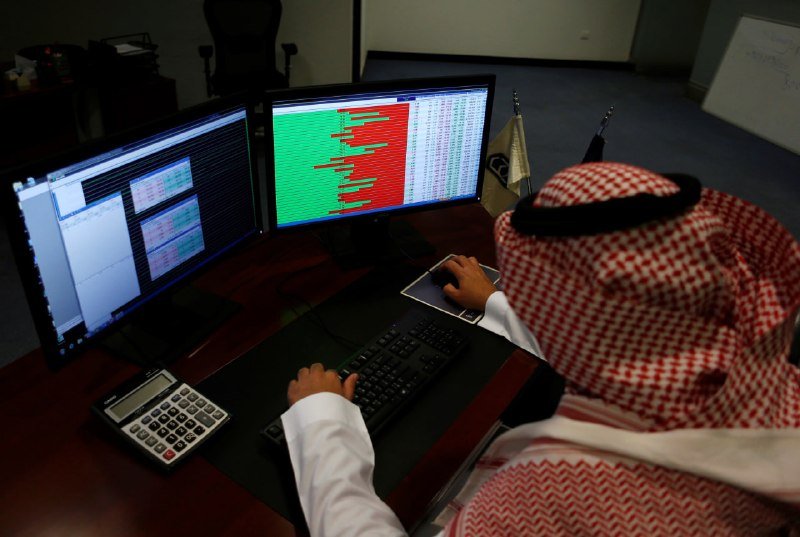
On 24 June 2026, in a single afternoon of disclosures from Brussels, NATO Secretary General Mark Rutte publicly confirmed two facts that, until this week, had been the subject of inference rather than official statement: that Italy had permitted roughly 500 US aircraft sorties to launch from Italian bases under Operation Epic Fury, the American-led campaign against Iranian targets; and that European allies are repositioning naval assets toward the Strait of Hormuz to safeguard commercial navigation through one of the world's most consequential energy chokepoints. The remarks, carried across the 14:35 to 15:10 UTC window by NATO-watching channels and Iranian state-aligned outlets, lift a fog of deniability that has surrounded the war since its opening days and recasts Europe as a logistical and maritime participant rather than a bystander.
What changed on Wednesday is not the underlying geometry of the war — the basing arrangements in Italy, the overflight clearances, the Mediterranean tanker traffic have all been visible to anyone tracking the operation. What changed is that the alliance's political leader chose to say so, on the record, in language that the Iranian foreign ministry and Iranian-aligned outlets have already seized on as evidence of European co-belligerency. The confirmation carries strategic, legal and political weight at the same moment that Iran's nuclear programme is again being described by Western officials in existential terms.
The Italian disclosure and what it does to NATO's posture
According to two Telegram channels that monitor NATO press activity, wfwitness and megatron_ron, Rutte told reporters that "500 U.S. planes took off from U.S. bases in Italy to support Operation Epic Fury", and that allies across the alliance have opened their bases to enable thousands of air sorties in total. Iran International's English-language Fars relay cited the same figure in framing Rome as having granted "secret cooperation" — a word choice that matters in Tehran, where cooperation is one legal category and aggression another. The disclosure is the first time a sitting NATO Secretary General has publicly itemised a host nation's contribution to the American air campaign while the campaign is still running.
The legal exposure is real, if contested. NATO's founding treaty obliges members to come to the defence of an ally under armed attack; it does not, on its face, oblige members to facilitate an offensive operation launched by another ally against a third state. Rome's posture under Article 5 is therefore different from its posture under the basing arrangements that Rutte confirmed on Wednesday. Iranian state media have already framed the Italian hosting arrangement as a violation of neutrality, a frame that will travel through the Non-Aligned Movement and into UN General Assembly corridors regardless of whether NATO lawyers agree with it.
The Hormuz move: energy corridors, freedom of navigation, and the legal frame
In a separate remark carried by the same channels, Rutte praised Donald Trump and said European allies are moving naval assets near the Strait of Hormuz to safeguard freedom of navigation. The phrasing — "freedom of navigation" rather than "defence of Israel" or "degradation of Iran's navy" — is deliberate. It positions the naval deployment inside the long-standing international-law frame that the United States, the United Kingdom and France have used in the Strait since the 1980s, and it gives NATO's European members a legal cover story that does not require them to declare themselves at war with Tehran.
The Strait of Hormuz is the transit point for roughly a fifth of global seaborne oil shipments and a meaningful share of liquefied natural gas exports from Qatar. Any sustained disruption to traffic there would push crude prices into territory that European governments, still working through the energy-supply disruption from the early phases of the war, cannot absorb. The naval move is therefore both a military signal and an insurance policy — and, importantly for NATO politics, a way for European governments to claim a tangible role in the war that does not depend on their votes at the UN Security Council.
What Iran reads into the day
Tehran's read, as expressed through Fars News Agency's English wire and amplified by Iranian-aligned Telegram channels, is that the alliance has effectively admitted to co-belligerency under a diplomatic fig leaf. Iranian state media have described the Italian arrangement as "secret cooperation with America in the war against Iran", a phrase designed to do legal and political work in forums where NATO's characterisation will compete with it. The Islamic Republic's foreign ministry has historically been careful to maintain a distinction between states that strike Iranian targets and states that enable strikes; Rutte's confirmation, on the alliance's own voice, has narrowed that distinction.
There is a plausible counter-read, which is that NATO's communications strategy is designed to do the opposite: by stating the basing arrangement publicly, the alliance is normalising it, stripping Iran of the rhetorical leverage that comes from claiming a hidden co-belligerent, and presenting Rome's contribution as the routine business of an alliance. Both reads can be true simultaneously. The dominant framing, in European capitals and in Washington, is that transparency here is a stabilising move; the dominant framing in Tehran is that it is an escalation.
What we verified / what we could not
What we verified. Rutte's confirmation of Italian hosting of roughly 500 US air sorties from Italian bases, on the record, in Brussels on 24 June 2026. The European naval movement toward the Strait of Hormuz framed in freedom-of-navigation language. Rutte's framing of Iran's nuclear programme as having consequences "devastating for both the Middle East and the wider world". Trump's description, in Rutte's characterisation, as more than a US president — the alliance leader praising the American head of state on a NATO stage.
What we could not. The sources do not specify which Italian bases hosted the sortie flow, the dates during which the 500-sortie figure accumulated, or the disposition of the European naval assets now moving toward Hormuz — by hull number, by task group, or by rules of engagement. The sources do not provide casualty figures, strike outcomes or Iranian retaliatory activity on the day. None of the items in this thread is a primary NATO press transcript; all are derivative posts from channels of varying alignment, which we have triangulated against each other rather than against the original NATO readout, which the alliance has not yet posted in full.
Stakes and what to watch next
The concrete stakes cluster around three vectors. First, the legal-political exposure of host nations, with Italy now the named example and Germany, Greece and Cyprus the predictable next questions from Tehran's diplomats. Second, the oil market: any incident in the Strait, from a mine to a fast-boat engagement, will be priced by traders against the backdrop of an alliance that has now publicly committed warships to the corridor. Third, the alliance's internal cohesion: Rutte acknowledged frustration among some European allies over the burden distribution, which is a more candid formulation than the alliance usually volunteers, and a signal that the political settlement inside NATO will be worked out over the summer.
The frame that sits underneath the day's news is the one the alliance has been reluctant to state in public: that a US-led war against Iran is being run, materially, on European infrastructure, with European airspace, from European bases, and that European governments are now choosing to say so. Whether that statement stabilises or destabilises the coalition depends on which audience the message is read by — and on whether Tehran decides that the fig leaf of "freedom of navigation" is too thin to bother arguing about, or too thin to leave unchallenged.
Desk note: Monexus frames this as a NATO confirmation event rather than as a fresh escalation; the underlying operational facts were already visible, but the alliance's willingness to state them on 24 June 2026 is itself the news. Telegram-channel sourcing has been treated as wire material and triangulated between Western-monitoring channels and Iranian state-aligned channels, with both reads preserved.
Wire provenance
This editorial synthesis draws on the following public wire/social posts:
- https://t.me/wfwitness
- https://t.me/wfwitness
- https://t.me/wfwitness
- https://t.me/wfwitness
- https://t.me/wfwitness
- https://t.me/megatron_ron
- https://t.me/FarsNewsInt