NATO's Mark Rutte Lands in Washington With an Awkward Sales Pitch
The NATO secretary-general's White House visit comes as the alliance tries to rewrite the script on who helped whom in the recent war with Iran — and as a $1.4 billion Ebola request from the same administration exposes how Washington is paying its bills.
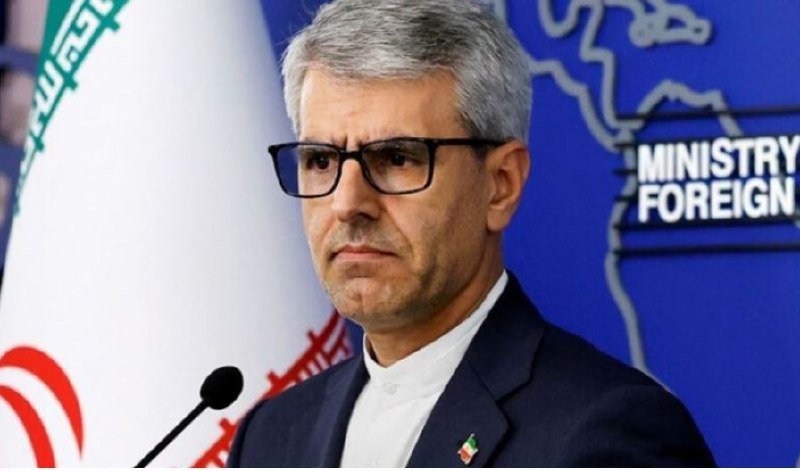
Mark Rutte walked into the West Wing on Tuesday afternoon with the kind of assignment NATO secretaries-general used to be able to avoid: convincing an American president, on the record, that Europe had actually been useful in a war. The meeting, which the Telegram channel Clash Report flagged at 20:17 UTC on 24 June 2026, was framed around a single, slightly defensive thesis — that European allies materially helped the United States during the recent conflict with Iran. Twenty minutes earlier, the same channel had relayed a softer preview: Trump describing Rutte as "respected all over the world." The compliment landed like an opening bid at an auction nobody wants to host.
The subtext is the headline. Washington and the European Union fought the same war, but the question of who carried what share of the load is now the load-bearing pillar of the transatlantic relationship. Rutte's job in the Oval Office was to retrofit the narrative before Congress and the cable-news audience rewrite it for him.
A war, then a bill
The Iran conflict is recent enough that the political argument is still being assembled in real time. European navies escorted tankers through the Strait of Hormuz; European airbases hosted the rotation; French and British combat aircraft flew strike packages. None of that is in dispute inside NATO headquarters. The dispute is whether any of it counts as "helping" in the way the Trump administration defines the word — which, in the second term, has narrowed considerably. Help, in this White House's bookkeeping, means cash transferred, bases opened unconditionally, or political cover delivered in public. Anything that requires explanation at a press conference is, by definition, insufficient.
Rutte's pitch, by all available evidence, is that the alliance functioned as designed: members pooled capabilities, shared intelligence, absorbed basing costs, and refrained from the kind of freelancing that turns coalitions into lawsuits. Whether that registers in a Mar-a-Lago-adjacent White House is the actual question of the day.
The compliment problem
Trump's line on Rutte — "respected all over the world" — is the diplomatic equivalent of a head-pat. It is warm, vague, and structurally unserious. For a secretary-general trying to move money, basing rights, or burden-sharing percentages, it is the worst possible valence of praise. It signals that the principal views you as scenery rather than as a counterparty. The deeper problem is that "respected" is the kind of word that ends up in a Capitol Hill op-ed two weeks later, written by a senator explaining why NATO needs another haircut.
The asymmetry is real. The NATO secretary-general arrives with a coalition of 32 members behind him; the American president arrives with the power of the purse, the power of the press briefing, and a Republican conference that has been voting on alliance scepticism as a loyalty test since at least the first term. Those are not equal instruments.
What "helped" actually costs
Help, in dollar terms, is documented elsewhere on the same White House beat. At 19:38 UTC on 24 June 2026, Reuters reported that the Trump administration is preparing to ask Congress for more than $1.4 billion in new funds to respond to a widening Ebola virus outbreak. The number is jarring for a reason that has nothing to do with virology. The same executive branch that wants allies to underwrite the Iran war is also telling the domestic taxpayer that global health crises require emergency supplemental appropriations. The implied theory of the case is that the United States fights the wars and the congresses fund the aftermath, while the allies — who are already paying for their own defence, their own refits, and their own intelligence feeds — are expected to do so again, this time with a thank-you note attached.
That is the position Rutte is pushing back against, gently, in a meeting the cameras will not be allowed to see. He cannot say, in the Roosevelt Room, that European taxpayers have already absorbed the cost of the war they were told was everyone's war. He can, however, lay out the ledger and hope someone in the room reads it.
The structural frame
The deeper pattern here is not NATO dysfunction. NATO has always argued about who paid for what; that argument is, at this point, load-bearing masonry of the alliance. What is newer is the framing: the United States is increasingly willing to treat allied contributions as a discretionary favour, rather than as the cost of an order the United States itself built and continues to benefit from disproportionately. When the world's reserve-currency issuer, the world's dominant naval power, and the world's largest weapons exporter describes its allies' help as a debit item, it is doing something more interesting than complaining about the cheque. It is repricing the alliance in real time, in front of the counterparty, and expecting the counterparty to nod.
Europe's leverage, in turn, is no longer theoretical. The Eurodollar system, the SWIFT architecture, the second-largest defence-industrial base on the planet, and a diplomatic corps that still carries weight in places Washington cannot reach — none of this is on the agenda for Tuesday's meeting, but all of it sits in the room.
What remains uncertain
The sources do not specify what concrete deliverables Rutte is asking for — a joint communique, a funding commitment, a basing agreement, a public statement. The Reuters reporting on the Ebola request is also incomplete: it does not name which congressional appropriations vehicles the administration intends to use, nor whether any of the $1.4 billion is intended to flow through allies or through U.S. agencies exclusively. The two threads are connected in the analysis, but the connection is editorial; the cables do not, on the available record, draw the line between them. A reader looking for an explicit White House statement linking Iran war costs to European burden-sharing will not find one in the materials at hand — only the shape of the argument, which is enough to work with and not enough to declare resolved.
Rutte leaves Washington the way he arrived: with the alliance intact, the bill unpaid, and the compliment still on the record.
— Monexus framed this as a burden-of-proof story, not a crisis story. The wire coverage on 24 June 2026 is thin; the analysis above reads the meeting through the only verifiable frame the day's reporting actually supplies — what the administration is saying about allies versus what it is asking its own Congress to fund.
Wire provenance
This editorial synthesis draws on the following public wire/social posts:
- https://t.me/ClashReport
- https://t.me/ClashReport
Follow the event.
These dated source records provide context. They do not retrospectively verify this archive article.
Separate what the nuclear watchdog reported from what it could not determine after the June 2025 strikes.