Southern Lebanon's next border: a quiet pilot project, or the first move of a longer redesign
Negotiators in Washington are sketching a US-backed pilot to hand parts of southern Lebanon from Israeli troops to the Lebanese army — a small, technical-sounding arrangement that would redraw the meaning of the Blue Line.
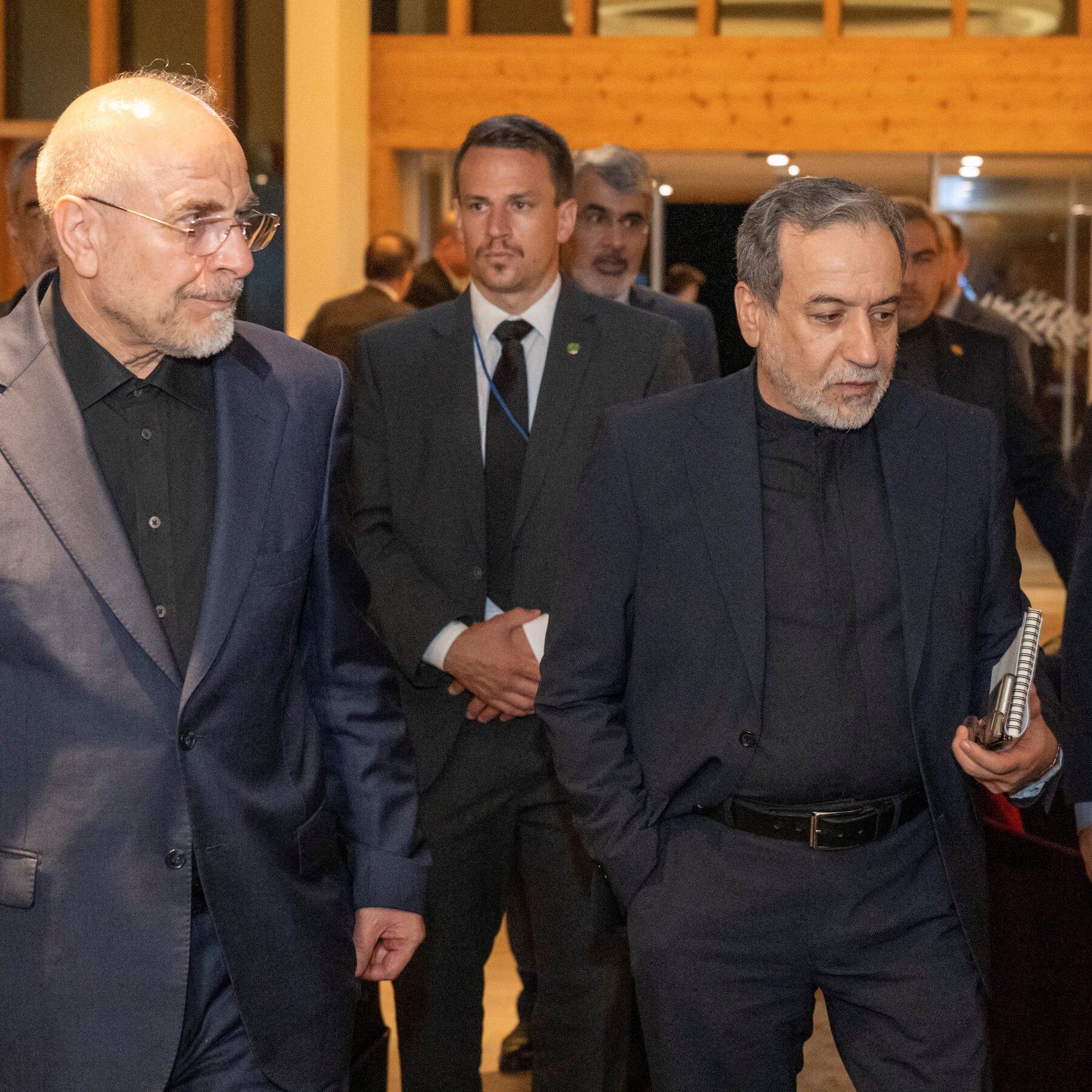
On 24 June 2026, Israeli and Lebanese delegations sat down in Washington to sketch what officials are calling a pilot project: a US-backed arrangement under which the Israeli military would hand back control over selected pockets of southern Lebanon to the Lebanese Armed Forces. The talks, reported by FRANCE 24 and relayed by the Telegram channels France 24 English and Clash Report on 24 June 2026 at 08:20 UTC and 08:12 UTC respectively, are narrow in scope and large in implication. Even a partial, reversible handover would do something the post-2006 settlement architecture never quite managed: put a sovereign Lebanese uniform back on territory Israel has held, in one form or another, for the better part of two years.
The pilot is a test, not a treaty. Whether it is read as a confidence-building measure or as the opening move of a longer redesign of the Blue Line depends on questions the framework itself does not answer.
What the proposal actually is
The text on the table is, by design, modest. Israeli forces would withdraw from a defined set of positions in southern Lebanon and transfer responsibility to the Lebanese Armed Forces, with the United States acting as broker and guarantor of the sequencing. FRANCE 24's 24 June 2026 reporting describes the mechanism as a pilot, which in diplomatic shorthand means reversible, monitored, and limited in geography. The Lebanon Armed Forces, not any other security actor, is the named recipient of authority. That distinction is the political heart of the project, and it is also the part most exposed to disagreement.
Why the framing matters
The Blue Line has been a ceasefire line, not a border, for most of its existence. Each previous attempt to convert it into something more durable — UN Security Council Resolution 1701 in 2006, the 2024 arrangement that followed the cross-border escalation — has run into the same obstacle: the gap on the ground between who is supposed to hold the south and who actually does. A pilot that visibly closes that gap in even a few square kilometres changes the meaning of the line, not just the map. It tells every actor watching from Beirut, the northern Israeli districts, and Tehran that the international system is willing to underwrite a Lebanese-state presence in the south — and that the test of that presence is operational, not rhetorical.
The counter-read
The case for scepticism is not hard to construct. A pilot, by definition, can be suspended. Past arrangements have been, often within months. The proposal's success depends entirely on the Lebanese Armed Forces being willing and able to operate against any non-state actor that moves into vacated positions, and on a US role that survives a change of administration or a domestic political shock in Washington. Critics in Beirut have long argued that the LAF has been used as diplomatic furniture for arrangements its commanders do not control. Critics in Israel have argued the opposite: that the LAF is a useful nameplate for a political reality in which armed groups operate with impunity in the south. Both critiques can be true at once, and the pilot does not, on the evidence available, resolve them.
What is not in the framework
Three omissions stand out. The reporting does not name a defined geographic perimeter for the handover, only that it would cover "some territory" in the south. It does not specify a timeline beyond the implicit sequencing of a pilot. And it does not address the political question of whether armed non-state actors — the group whose 2023 attack triggered the broader conflict — accept the arrangement or simply wait it out. A pilot that holds for six months in two villages is not the same policy as a pilot that becomes the template for the rest of the border. The framework does not say which one it wants to be.
The stakes
If the arrangement holds, it gives Lebanon a state presence in the south it has not had in practice for the better part of two years, gives Israel a managed drawdown on a difficult front, and gives the United States a tangible, monitorable deliverable in a region where deliverables have been scarce. If it fails — or, more likely, is allowed to drift — it confirms the standing suspicion on all sides that the Blue Line is a line on a map and nothing more. The pilot's real test will not be the signing in Washington. It will be what happens, a few months in, on a Tuesday afternoon in a village the framework does not name.
This publication framed the 24 June 2026 reporting as a narrow, reversible pilot rather than a settlement, on the ground that FRANCE 24's own language describes it that way. The structural question — whether a partial handover is a confidence-building step or the seed of a longer redesign of the Blue Line — is left open for the framework itself to settle.
Wire provenance
This editorial synthesis draws on the following public wire/social posts:
- https://t.me/france24_en
- https://t.me/ClashReport