Washington is finally saying out loud what the battlefield has been showing for months
A senior State Department official has publicly framed Kyiv as the side turning the war — a notable rhetorical shift from a department that, until recently, hedged its assessments in bureaucratic caution.
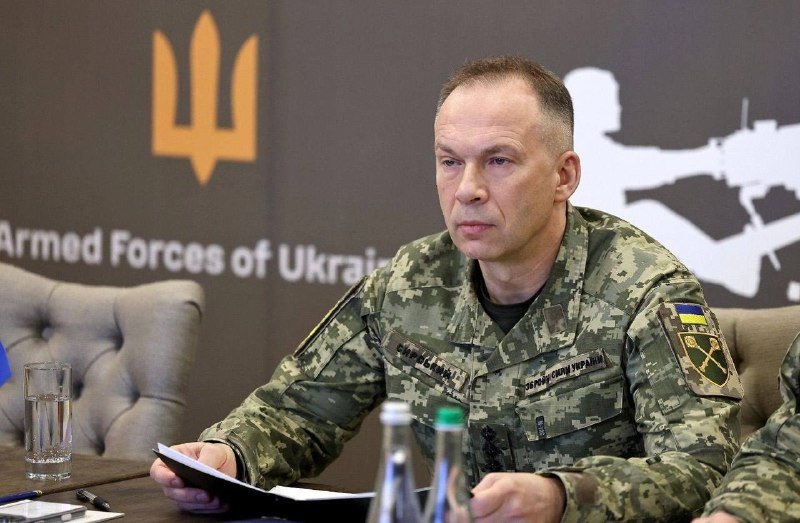
On Tuesday, 24 June 2026, a senior United States State Department official said, in terms the institution has rarely used in public, that Ukraine is currently winning the war against Russia. The official, identified by Ukrainian and independent outlets as deputy-level State Department figure Jeremy Levin, argued that Kyiv has entered a new phase of the conflict and has successfully changed the battlefield dynamic, in remarks relayed first by Ukrainska Pravda's Telegram channel and by independent OSINT analyst Noel Reports on the same afternoon (2026-06-24T18:54 UTC, Noel Reports; 2026-06-24T20:06 UTC, Ukrainska Pravda).
The remark matters less for the substance of any single battlefield event and more for what it signals about the US posture: Washington is now willing to attach a winner's label to a war it has, for more than three years, described almost exclusively in defensive and conditional terms. That is a rhetorical shift, and rhetorical shifts at Foggy Bottom tend to travel ahead of policy.
From 'supporting Ukraine' to 'Ukraine is winning'
For most of the full-scale invasion, the US State Department's stock phrases have been variants of "standing with Ukraine for as long as it takes" — language designed to be durable rather than declarative. Officials have generally avoided forecasting outcomes, in part because the political risk of being wrong is high and in part because the bureaucratic instinct of the State Department is to defer to the intelligence community's classified assessments rather than offer their own.
Tuesday's intervention breaks that habit. Levin's framing — that the situation has already been turned around and that Ukrainian forces are doing a great deal to press the advantage — is the kind of public assessment Washington has usually reserved for closed-door briefings. Its appearance in the open, via two independent channels within roughly an hour of each other, suggests it was not a slip. It was a coordinated line, the sort of thing a department puts out when it has decided that silence is no longer serving its interests.
The counter-narrative, and why it still has purchase
The dominant Russian framing — that Ukraine is being ground down by attrition, that Western aid is insufficient, and that any Western rhetoric of "winning" is a propaganda cover for a collapsing frontline — does not appear in the source items relayed on Tuesday. It is, however, the backdrop against which Levin's remarks landed. Russian state-aligned channels have spent months describing the same battlefield as a slow Russian advance, and a domestic Russian audience is being told the opposite of what the State Department said today.
The reason this counter-narrative still has purchase is structural. Wars of this length are won and lost in increments that a single official's remark cannot adjudicate. The most one can say, on the available evidence, is that the State Department has become willing to publicly align itself with a particular reading of the trend lines — likely the same trend lines that Ukrainian General Staff briefings have been describing for weeks, and that the Russian milblogger ecosystem has been describing in opposite terms.
What a public winner-label actually does
Reading a senior official's statement in plain political terms: a winner-label is a procurement signal, an aid-allocation signal, and a coalition-management signal, all at once. Procurement departments and allied governments take their cues from the public posture of the lead donor. When the State Department says Ukraine is winning, capitals that have been quietly waiting to see which way the wind is blowing in Washington — in Europe, in the Indo-Pacific, in the Gulf — are being told that the US intends to keep backing the current Ukrainian operational approach.
It is also, more usefully, a counter to domestic war-weariness framing. For months, the loudest Western commentary on the war has been about fatigue, about the cost of aid packages, about the political appetite for continued support. A public winner-label pushes back against that frame by reframing the question: not "can we afford to keep going?" but "we are already past the worst of it." Whether that reframe survives contact with the next month's battlefield is a separate question.
Stakes, and what remains genuinely uncertain
The most plausible read of Tuesday's remark is that the State Department has decided to align its public line with the optimistic end of internal assessments — likely in coordination with Kyiv and with the intelligence community, and probably with an eye on upcoming aid votes and on the messaging environment around them. That does not mean the war is won. It means the United States, as a matter of communication strategy, is now invested in the proposition that the war can be won on roughly current terms of effort.
What remains genuinely uncertain is whether the assessment will hold. The source items do not specify which battlefield indicators Levin was citing, nor do they provide a definition of "winning" precise enough to be falsified. Ukrainian and Russian sources continue to disagree, in public, about who is gaining ground where. A State Department public posture, in other words, is now out in front of any specific operational claim — and the next weeks of fighting will determine whether the rhetoric gets quietly walked back, or whether it hardens into a longer-term policy of public backing for a Ukrainian counter-offensive phase.
The honest version of the situation, on the evidence available on 24 June 2026, is that the United States has decided to talk about this war as one that is turning. Whether it stays turned is a question the battlefield, not the State Department podium, will answer.
Desk note: Monexus is leading on the rhetorical shift in the US posture — a story about Washington communication strategy, not about a single battlefield event — and is sourcing the official's remarks through two independent channels (Ukrainska Pravda and Noel Reports) rather than a single wire, to reduce the risk of a single-source read on an unscripted US line.
Wire provenance
This editorial synthesis draws on the following public wire/social posts:
- https://t.me/ukrpravda_news
- https://t.me/noel_reports
Follow the event.
These dated source records provide context. They do not retrospectively verify this archive article.
A dated voting record is evidence of one decision. Use the original UN record before turning it into an alignment label.
Visual explainer · historical vote of 2022-03-02 →