Strait Talk: Reading Rubio's "Open the Straits" Line Against Trump's "Winning by a Lot"
Two senior US officials gave two different readings of the same war in the same afternoon. The gap between them is the story.
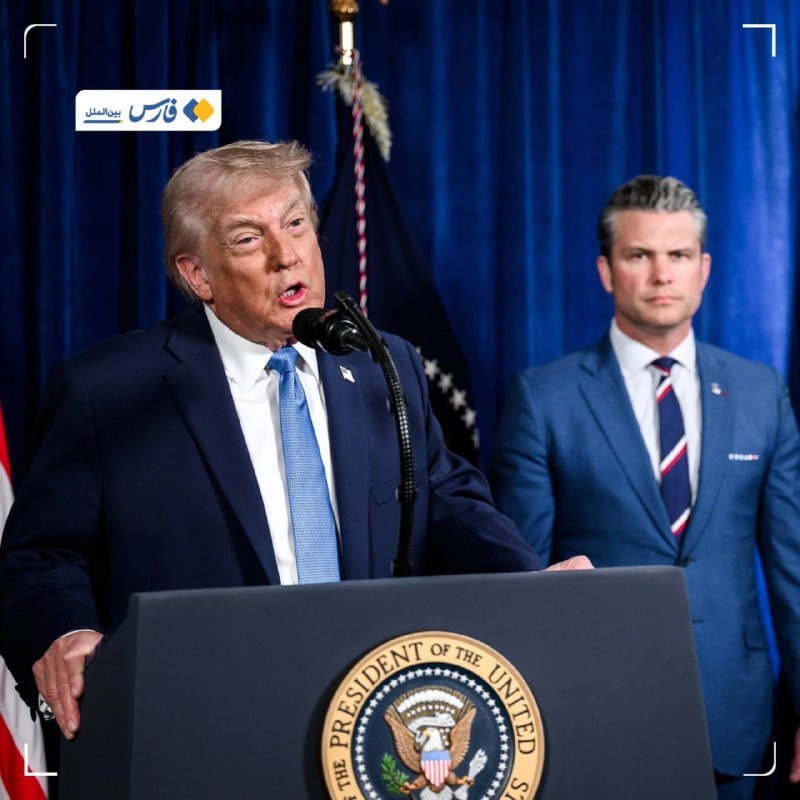
At 16:27 UTC on 24 June 2026, US Secretary of State Marco Rubio sat before cameras and delivered the most lawyerly line of an unusually lawyerly week: "When we say open the straits, we mean open the straits free. They are international waterways. No country on the planet would support tolling in the straits." Sixty-four minutes later, at 17:29 UTC, President Donald Trump took a different lectern and shortened the argument to a slogan: "The war is going very well. As you know, we are winning by a lot. Iran is making very big concessions. We will see what happens, but it's been very powerful. It's going very, very well." Both quotes, taken from the same afternoon's open-source wire traffic, are now the working text of American Iran policy. They are not the same text.
That gap — between a secretary of state spelling out the legal architecture of a reopened waterway and a president selling a victory narrative to a domestic crowd — is the story. It is also the structural tell. Wars that are won do not need their lead diplomat to define what "open" means. Wars that are being negotiated do not get described as "very, very well" by the man who would have to sign whatever is signed. The administration is, charitably, doing two things at once. Uncharitably, it is doing one thing in English and another in plain American.
The legal line, taken seriously
Rubio's framing is the one to anchor on, because it is the one that creates obligations. The Strait of Hormuz is, in international maritime law, a strait used for international navigation between two states — Iran and Oman — and the customary-law and UNCLOS-based right of transit passage is not a favour the littoral state can suspend on receipt of a bill. Rubio's "no country on the planet would support tolling in the straits" is the diplomatic way of saying: a payment-for-passage regime, of the kind Iranian-linked actors have at various points threatened or partially implemented during the current crisis, would be treated as a breach of the legal regime the United States and its Gulf allies have policed for half a century. That is a real position, and it has a real audience: the Gulf monarchies, the LNG shippers hedging July cargoes, the Indian and Japanese ministries trying to write a reserve policy without naming names. It also has a price — if the United States is going to enforce "free" against Tehran, it is implicitly promising Gulf states that it will underwrite the security of a chokepoint through which a meaningful slice of seaborne energy still transits. That is a long, expensive promise, and the Rubio line is a long, expensive way of making it.
The victory line, taken less seriously
Trump's 17:29 UTC remarks — repeated in near-identical form across two Telegram wires within minutes — sit uneasily on top of the Rubio doctrine. "Winning by a lot" is a sentence that wants to end a discussion, not start one. "Iran is making very big concessions" is an assertion of fact about an adversary's internal deliberations that no external source can independently corroborate from the open material available on 24 June. The most that can be said, from the wires in front of this publication, is that staff-level technical talks are scheduled to reconvene on 30 June 2026, per Rubio's own statement at 16:28 UTC, and that the Israeli prime minister has publicly framed his June 2025 operation as a notification to, rather than a request from, the US president. That is the architecture of a negotiation in progress, not of a surrender being received. A deal in which both sides are still scheduling follow-up meetings is, by definition, a deal in which neither side has yet conceded enough to call itself the winner.
What the two sentences are actually for
The likeliest reading is that each line is doing domestic work, and the audience differs. Rubio's "open the straits free" line is calibrated for the energy ministries, shipping underwriters, and Gulf security partners who need a defensible public doctrine to plan around. Trump's "winning by a lot" line is calibrated for the same domestic audience that has, over the past eighteen months, rewarded presidential rhetoric that compresses complicated military situations into morale-friendly sentences. The two registers can coexist for a while. They cannot coexist forever, because the moment a tanker is stopped, or a price benchmark moves, or a Quds Force commander gives a press conference, one of the two sentences will be the one that the world cites back to the administration, and the other will be the one that the administration has to walk back. Officials who have watched the past three US-Iran episodes will recognise the pattern: a long, careful legal posture from the State Department, a short, triumphant posture from the White House, and then a market event that forces a choice between them.
The unstated thing, and the stakes
What neither the Rubio line nor the Trump line addresses, at least in the open material of 24 June, is what happens if the staff-level talks on 30 June produce a framework that does not include the word "concession" anywhere in it. A negotiated outcome that lets Iran continue enriching at some threshold, that unfreezes a defined quantum of assets, and that includes a verified but limited monitoring regime, would be — by the standard of past US-Iran deals — a real agreement. It would also be a sentence that the "winning by a lot" framing cannot absorb. The 30 June meeting is therefore the next real deadline, and it is the one that the administration will be obliged, by its own words, to reconcile. The structural stakes are not abstract: insurance markets in the Gulf, the JODI oil database, the next OPEC+ ministerial, the re-routing decisions that Asian refiners are quietly making on Q3 cargoes — all of it waits on which of the two sentences of 24 June turns out to be the operative one. The US-Iran file does not need a third sentence from the lectern. It needs someone in the room to decide which of the first two is the policy, before the oil market decides for them.
This publication's reading of the 24 June messaging is that the two wire quotes are best understood not as a contradiction but as a分工 — a division of labour between a legal posture for foreign ministries and a political posture for the home crowd. The structural risk is that the labour division holds only until the next price move; thereafter, one of the two lines will be the one the world acts on.
Wire provenance
This editorial synthesis draws on the following public wire/social posts:
- https://t.me/ClashReport
- https://t.me/osintlive
- https://t.me/osintlive
- https://t.me/osintlive
- https://t.me/osintlive
- https://t.me/osintlive