Tehran's Unity Theater After the Twelve-Day War
Two weeks after the ceasefire, Iran's leadership is performing cohesion. The script is improvised, and the audience is the street.
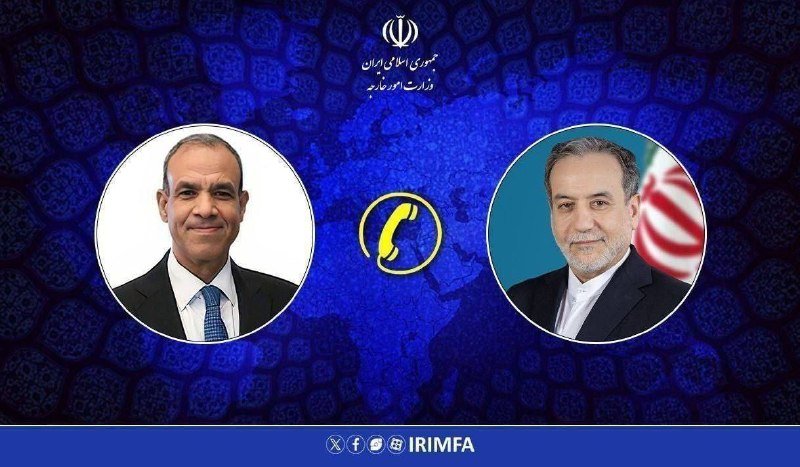
Two weeks after the ceasefire that ended the twelve-day war, Iran's leaders took to the podiums and the pulpits on Wednesday 24 June 2026 with a single, coordinated message: the system is whole. President Masoud Pezeshkian, speaking at the shrine of Imam Khomeini south of Tehran, told reporters that a recent message from Supreme Leader Ayatollah Ali Khamenei had "conveyed unity and cohesion to us" across the heads of the armed forces, the Supreme National Security Council, and the broader governing apparatus. State-aligned channels carried the line within minutes, and by evening it had become the day's official narrative.
The claim is striking less for what it says than for how insistently it has to be said. Wars expose fault lines; they do not heal them. A leadership that feels secure does not need to stage-manage a vocabulary of unity in front of the cameras. What we are watching, instead, is the choreography of a system trying to convince itself — and the country — that the fractures opened by twelve days of Israeli and American strikes have been closed by edict.
What Pezeshkian actually said
Reporting from Tasnim and Fars on 24 June 2026 frames the president's remarks in identical terms: a "common language and vision" has emerged "among the heads of forces, in the Supreme National Security Council and in the entire system," credited to "the achievement of the dear leader, people." The repetition is the point. Pezeshkian did not announce a new policy, a cabinet reshuffle, or a security doctrine. He announced a mood. In a system where political legitimacy flows downward from the Supreme Leader's office, a presidential statement that the leader has "conveyed unity" functions as a broadcast that the chain of command is intact.
The location matters. The shrine of Imam Khomeini is the symbolic heart of the Islamic Republic — the burial place of its founder, where presidents go to perform continuity rather than announce change. Pezeshkian's visit, covered by both Fars and Tasnim within minutes of each other, was a deliberate visual: the moderate-pragmatist president, often read as a rival pole to the security establishment, standing on the founder's marble and reading from the leader's script.
The choreography of unanimity
Iranian political theatre has a familiar grammar. When the principal institutions are aligned, no one has to say so. When they are not, everyone does. The 24 June messaging belongs firmly in the second category. The Supreme National Security Council — the formal body that decides on war and peace, on nuclear posture, on relations with the United States — has been the site of reported friction between the Islamic Revolutionary Guard Corps, the regular army (Artesh), the foreign ministry, and the president's office since the war ended. Pezeshkian's claim that the council now speaks with one voice is, in effect, a denial that the dispute was ever public.
There is a defensible read of this as straightforward post-war rally effects. Wars produce spikes in national cohesion even in polities with deep internal divisions; the American unity after Pearl Harbor or the British unity after the Blitz are textbook cases. Iran's case is different in degree, not in kind: a state that was attacked, that absorbed strikes on military and nuclear infrastructure, that lost senior commanders, and that emerged with its leadership intact has a legitimate story to tell about resilience.
There is also a less comfortable read. The same propaganda architecture that broadcasts unity is the one that decides who counts as Iranian, who counts as loyal, and who counts as a foreign agent. A leadership that performs cohesion this publicly is also signalling, to internal audiences, the cost of breaking ranks. The "common language" line is inclusive in form; in a system without free press, free party competition, or independent judiciary, it functions as a perimeter.
What the framing leaves out
The 24 June coverage from Fars and Tasnim is exhaustive on message and silent on substance. No figures are given for war casualties, infrastructure damage, or reconstruction timelines. No reference is made to the nuclear-program status that triggered the war in the first place — the dossier of strikes, the residual enrichment capacity, the negotiations that were suspended and may resume. No opposition voice is quoted, no economist is asked about rial stabilisation, no civil-society figure is invited onto the platforms that carried the unity messaging.
This absence is itself the story. In a healthy information ecosystem, the announcement of a unified security posture would be accompanied by a budget briefing, a casualty disclosure, an opposition response. In Tehran's ecosystem, the announcement is the policy. The street is meant to absorb the mood and reproduce it; the street is not meant to interrogate the script.
The stakes, in plain terms
If the unity narrative holds, Iran enters the next phase of its confrontation with Washington and Tel Aviv from a position of consolidated internal authority — better able to absorb pressure on the nuclear file, more credible at any negotiating table, more resistant to the kind of street pressure that shaped 2022 and earlier episodes. If it does not hold — if the IRGC and the foreign ministry resume their public divergence, if the Artesh complains about command decisions, if the bazaar registers the rial's trajectory more loudly than the president's podium — the same choreography will simply repeat, in higher resolution, until either the script changes or the stage does.
The honest reading is that we cannot yet tell which way the line breaks. What we can say is that a leadership confident in its cohesion does not have to announce it twice in one news cycle. The 24 June messaging, with its echoes across Tasnim and Fars within minutes, suggests a leadership still performing the case rather than resting on it. The audience is watching. The actors know they are being watched. The next act has not yet been written.
— Monexus staff coverage; this piece is filed from the state-aligned wires noted in the source ledger and should be read alongside independent Iranian and regional outlets for balance.
Wire provenance
This editorial synthesis draws on the following public wire/social posts:
- https://t.me/farsna
- https://t.me/tasnimnews_en
- https://t.me/farsna
Follow the event.
These dated source records provide context. They do not retrospectively verify this archive article.
Separate what the nuclear watchdog reported from what it could not determine after the June 2025 strikes.