The $500 Million Carrot: What Trump's Iran Relief Proposal Reveals About the New Oil Order
A proposed $500 million release of Iranian funds, tied to American goods, lands the same week US crude futures slip below $70 — and exposes the financial architecture of a deal whose terms are still being negotiated in public.
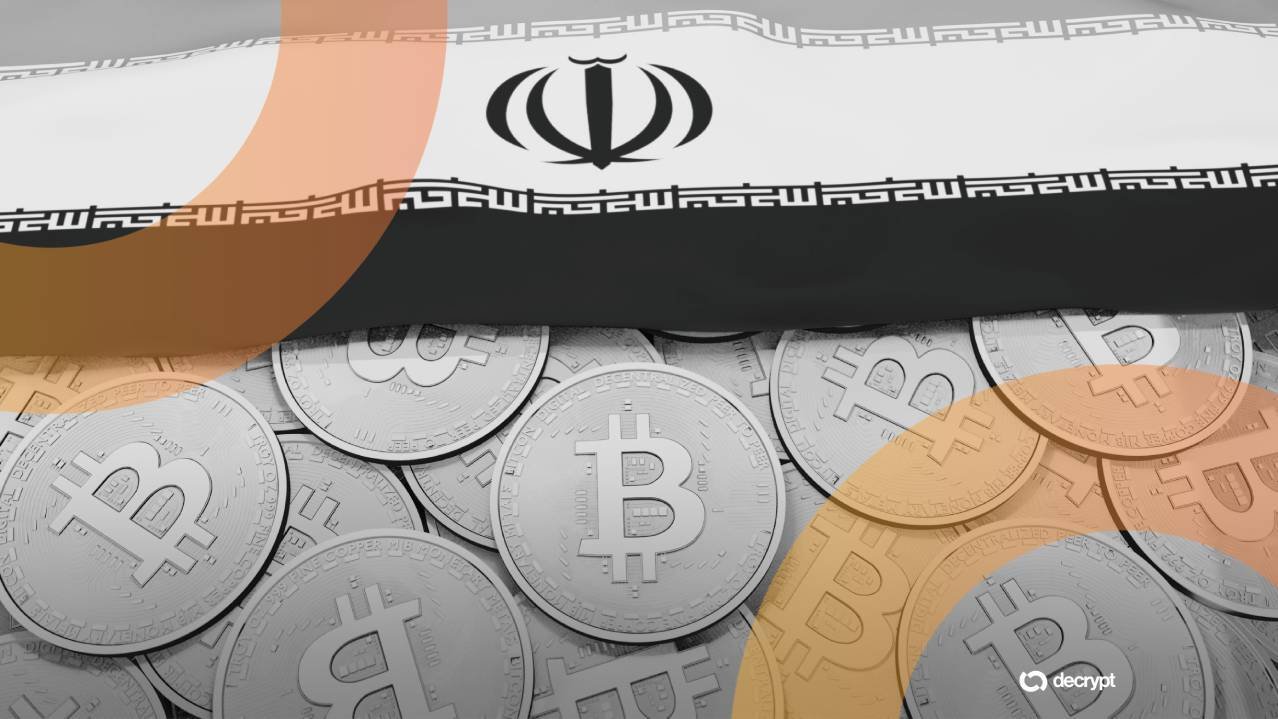
On 24 June 2026, two facts arrived within hours of each other and refused to behave as separate stories. The first: Donald Trump announced that initial financial relief for Iran under a negotiated framework would take the form of roughly $500 million in American goods, drawn from released Iranian funds. The second: US crude futures slipped below $70 a barrel, a level Donald Trump Jr. credited to his father's Iran peace deal on a Telegram channel that tracks the family's messaging.
The pairing is not coincidence. The Trump administration is trying to convert a regional confrontation into a domestic economic narrative, and the architecture of that conversion — frozen Iranian assets, escrow accounts, vetted-goods channels — is now the most consequential policy story of the week. The trouble is that the architecture is being described piecemeal, in social-media posts and at the pump, before any of the counterparties have put the deal on paper.
What the announcement actually contains
The headline figure — approximately $500 million in American goods — is a small number against the scale of what was previously frozen. It is, however, a deliberately chosen one. By framing the first tranche as American exports rather than dollars, the administration has built a political argument it can repeat at rallies: American workers, not the Iranian state, are the immediate beneficiaries. The same logic dictates the announcement's counterpart, the release of Iranian funds themselves, which the Trump statement described as occurring under the negotiated framework without specifying which accounts or which jurisdictions would handle the transfer.
The mechanism resembles the limited humanitarian carve-outs that have appeared and disappeared through four decades of sanctions enforcement — a narrow channel, an export licence at one end, an escrow or letter-of-credit at the other. Two things distinguish this episode. First, it is being presented as the opening of a sequence rather than a one-off; the $500 million is positioned as a down-payment. Second, it is being narrated by the principals in real time, on platforms that do not require an embassy press officer to clear the language. The unusual-whales account that carried the $500 million figure is the same kind of outlet that hours earlier transmitted the line, "I have Iran on the ropes" — Trump's own framing of the negotiation's state of play.
Oil's role as both prize and proof
The price of crude is doing political work the announcement cannot. Trump Jr.'s Telegram posts on 24 June pointed to US crude futures below $70 as evidence that the peace deal was already delivering for American drivers. The political economy of that claim is straightforward: a sitting administration wants cheap petrol ahead of an election year, and it wants credit for it.
The same logic is visible on the consumer-protection side. On the same day, Trump said the United States would probe petrol price-gouging claims — language that BBC News carried in its morning cycle — even as global oil prices have fallen but remain higher than before the Iran war. The probe is a domestic answer to a domestic question: if crude is down, why is the pump not down further? The implicit accusation is that the relief at the wellhead is being captured by refiners and retailers before it reaches the consumer. That is a real economic question — refinery margins have been a recurring flashpoint — but it is also a useful one for an administration that wants to share the credit for falling crude while assigning blame for sticky retail prices.
The financial plumbing, and what is still missing
The architecture matters more than the announcement's atmospherics. The deal-as-described rests on three load-bearing pieces: the release of Iranian funds currently held in restricted accounts; the conversion of those funds into a permissible-goods list dominated by American exports; and a monitoring regime that satisfies domestic US political requirements that no money reach the Islamic Republic's security services. None of the publicly available descriptions specify the banks involved, the currency of settlement, or the escrow agent. They do not specify whether the goods include agricultural commodities, which have been the historical backbone of US-Iran humanitarian trade, or whether the channel extends to manufactured goods, aircraft parts, or medical equipment.
This is where the counter-narrative sits. Sceptics — including sanctions-compliance specialists who have watched previous carve-outs operate — point out that any goods-only channel creates an arbitrage: a market in third-country re-export of permitted American goods into adjacent Iranian industries. The administration has not, in the public material available on 24 June, addressed how that arbitrage will be policed. Iranian counterparts, for their part, have an interest in describing the channel as broader than it is, because the political value of the deal at home depends on its visible generosity. The truth is almost certainly narrower than Iran's framing and more conditional than America's.
Stakes, and what to watch next
The honest read is that the $500 million is best understood as a deposit on a deal whose final size has not been disclosed, executed through a financial plumbing that has not been disclosed, and credited with an oil-price effect whose causal chain is contested. The price move below $70 is real; whether it is principally a function of the Iran negotiation, of broader supply discipline, or of demand-side weakness is not something the public material can resolve.
What can be tracked are three concrete markers. The first is the publication of an OFAC general licence or specific licence naming the eligible goods and the eligible Iranian counter-parties — without it, the $500 million remains a talking point. The second is the named escrow agent or correspondent bank; the appearance of a European or Gulf institution would signal that the channel is meant to outlast the current administration. The third is the retail price response at American pumps; the BBC-reported price-gouging probe is, in effect, a test of whether the political architecture the White House is building matches the economic one.
If the framework holds, the precedent is significant: a US president has demonstrated a path to relief that runs through American exports rather than direct cash, and that has been accepted by an Iranian counterpart under economic duress. If it does not hold — if the goods channel proves unworkable, or if a sanctions-compliance scandal surfaces inside the first tranche — the political damage will accrue not to the negotiation but to the broader architecture of conditional relief that the United States has run with North Korea, Cuba, and Venezuela in earlier decades. The Iran file is, in this sense, less about Tehran than about Washington testing which versions of economic statecraft still work in 2026.
What remains genuinely uncertain is whether the principals on both sides see the same deal. The American account emphasises American jobs and cheap petrol. The Iranian account, by the standard logic of comparable negotiations, will emphasise sovereignty and the unfreezing of national wealth. The $500 million sits at the intersection; whether it grows depends on whether that intersection holds.
Desk note: Monexus treated the $500 million figure and the oil-price move as a single story rather than two, on the grounds that the political architecture of the relief is the story. Where wire reporting emphasised the price-gouging probe in isolation, this piece reads the probe as the consumer-facing side of the same announcement.
Wire provenance
This editorial synthesis draws on the following public wire/social posts:
- https://t.me/wfwitness/
- https://x.com/unusual_whales/status/
- https://x.com/unusual_whales/status/