Trump's Iran deal: $500M, no rush on inspectors, and the questions still hanging
Donald Trump told Fox News on 24 June 2026 that American inspectors will enter Iran alongside IAEA teams, that there is "no urgency," and that Tehran will purchase $500M in US goods as an opening tranche. The gaps in that picture are bigger than the headline.
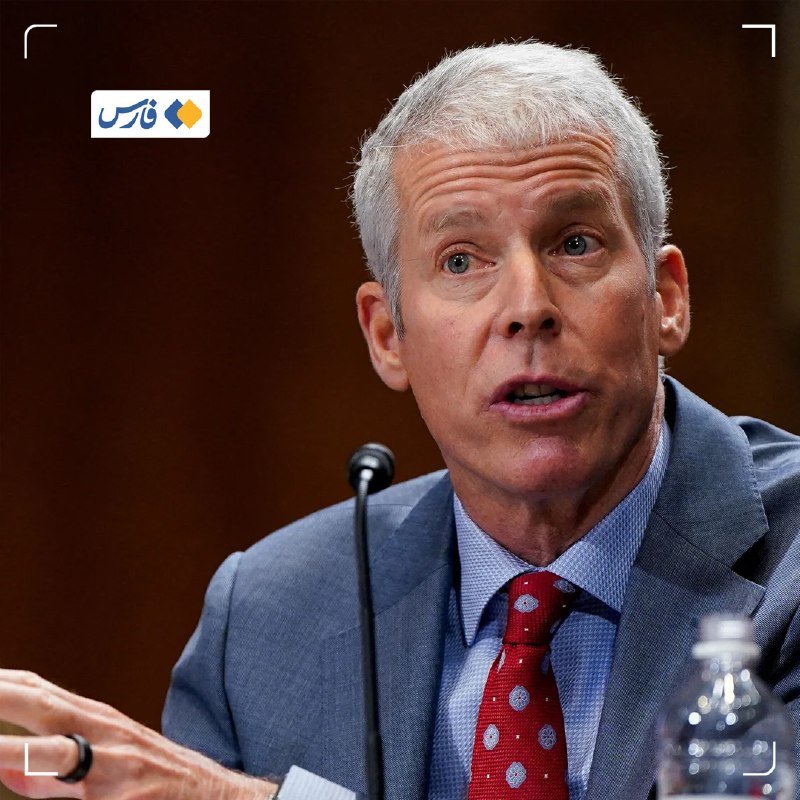
In a series of statements to Fox News on the afternoon of 24 June 2026, US President Donald Trump outlined what he described as the opening terms of a new arrangement with Tehran. The headline numbers were striking in their modesty: $500 million in Iranian purchases of US goods as an initial tranche, and a joint inspection regime under which American inspectors will enter the country alongside IAEA teams to locate enriched uranium. The headline posture was equally striking in its calm. There is, Trump said, "no urgency" about bringing inspectors in.
That posture — patient, transactional, deliberately unhurried — is now the working frame for a deal that, six months ago, looked like a countdown to escalation. The change is real, and the financial figure is the smallest of the surprises. The bigger question is what, exactly, Washington is buying with its patience, and what Tehran is selling.
What Trump actually said
Three separate Trump statements to Fox News circulated on 24 June 2026. First, that inspectors would be "given access where Iran's uranium is." Second, that there is "no urgency" in bringing inspectors in, and that American inspectors would travel alongside IAEA inspectors to locate the enriched uranium stockpile. Third, that Iran will purchase $500 million in US goods as "an initial part of the deal."
Each of these statements is a load-bearing piece of a larger architecture. The access commitment is the precondition for any sanctions relief, domestic or international. The $500 million figure is the opening commercial signal — small enough to be a gesture, large enough to be a precedent. And the pace-setting line, "no urgency," is the most politically consequential of the three: it tells Tehran, and the IAEA, and the Gulf states, and the Israeli and Saudi intelligence services watching this file, that Washington is not preparing a snap inspection crisis as a pretext.
The framing matters because the previous two years of Iran diplomacy ran on the opposite tempo. Snap inspections, snap sanctions, snap accusations of non-compliance — that was the rhythm. A White House that publicly removes the snap from the playbook is doing something specific: it is signalling that the next move is Iran's, and that the cost of non-movement will be measured in months, not hours.
What the $500 million actually means
The figure is doing more work than its size suggests. Five hundred million dollars is a rounding error in the bilateral trade relationship the United States had with Iran before 2018, when the first tranche of maximum-pressure sanctions took effect. Pre-sanctions, Iran's export book to the US was dominated by pistachios, carpets and crude-derived products, with a much larger reverse flow of wheat, aircraft parts and medical goods.
A $500 million "initial part" is therefore not a re-opening of trade. It is a political gesture priced like a contract. The number is small enough to clear Treasury's licensing machinery without a fresh sanctions architecture, and large enough to give Iranian negotiators something they can show a domestic audience as proof of thaw. The dollar politics are obvious: any Iranian purchase denominated in US dollars, cleared through US banks, is a transaction the Treasury Department gets to look at line by line. The financial-monitoring dividend for Washington is, on its own, worth the political capital.
The counter-narrative is that $500 million is also small enough to mean nothing of substance has been conceded. Iranian crude exports continue to flow, primarily to Chinese refineries, at discounted prices that have largely evaded US secondary sanctions enforcement. Hardliners in Tehran can argue that the regime gave up the rhetorical high ground of "no negotiation under pressure" in exchange for a number that would not cover two weeks of Iranian fuel subsidies. That argument is not yet on the front pages, but it is being made in the Majles.
What "American inspectors alongside IAEA" really changes
The joint-inspection language is the most consequential — and the most underspecified — element of the three Trump statements. For two decades, the IAEA has been the only international body with a mandate to inspect Iranian nuclear facilities, and even that mandate has been contested at multiple junctures: the 2015 JCPOA framework, the 2018 US withdrawal, the 2021 curtailment of IAEA access under the Safeguards Agreement, and the post-2023 standoff over undeclared sites.
A second inspectorate — American, not IAEA — sitting inside Iranian facilities is not the same thing as a renegotiated safeguards regime. It is, in practice, a parallel track. The legal authority under which American inspectors would enter Iran is not specified in the statements released on 24 June; neither is the chain of command, the reporting relationship to the IAEA, the question of access to sites Iran has previously declared off-limits to Western personnel, or the consequences if a joint inspection team is denied entry to a specific location. The omission list is longer than the specification list.
The strongest sceptical read is that the joint-inspection commitment is the diplomatic equivalent of the $500 million commercial figure: a gesture large enough to declare, small enough to be unfalsifiable on day one, and structured to be expanded only on Washington's terms. The strongest pro-deal read is the opposite: that an American inspector standing next to an IAEA inspector at Fordow or Natanz is, in itself, a structural change to the verification regime that Iran cannot easily walk back, because the political cost of ejecting a US team in front of cameras is higher than the political cost of admitting them.
Stakes, and what remains uncertain
The concrete stakes over the next 90 days are threefold. For Tehran, the deal architecture is a path back into dollar-cleared trade and a partial restoration of the export economy, conditional on inspections that will be visible to Israeli, Saudi and French intelligence services in real time. For Washington, the architecture is a way to convert maximum pressure into maximum visibility without re-fighting the 2015 political battle over the JCPOA. For the Gulf states and Israel, the architecture is something to be tested: if the joint-inspection regime is genuinely intrusive, the file stays in the diplomatic lane; if it is performative, the alternative instruments — sabotage, sanctions snap-back, kinetic option — move back up the shelf.
What the public reporting does not yet establish is the counterpart. The Trump statements name what the United States expects to receive; they do not name what the United States has conceded. The sanctions architecture predating the deal, the snap-back clauses attached to non-compliance, the fate of the Iranian funds held in restricted accounts abroad, and the question of which Iranian entities are delisted as part of the arrangement are all still unspecified in the material available on 24 June. The sources also do not specify whether the joint-inspection regime has been agreed by Tehran or only offered by Washington — a distinction that will define the next news cycle.
The honest reading of 24 June 2026 is that the diplomatic piano has been moved several feet across the room, and the cover has been lifted on a small number of keys. The shape of the instrument is still indistinct. What is no longer in doubt is that the players have agreed to keep playing on it.
Desk note: Monexus is reporting this from the Trump statements and the surrounding thread traffic alone; the wire packages from Reuters, the AP and the regional outlets will set the granular terms — access lists, sanctions delistings, IAEA sequence — in the 48 hours after publication. We will update when those land.
Wire provenance
This editorial synthesis draws on the following public wire/social posts:
- https://t.me/s/osintlive
- https://t.me/s/osintlive
- https://t.me/s/osintlive
Follow the event.
These dated source records provide context. They do not retrospectively verify this archive article.
Separate what the nuclear watchdog reported from what it could not determine after the June 2025 strikes.