Trump claims credit for neutralising Iran's nuclear programme as oil-price row with US refiners opens a second front
Speaking in Pennsylvania on 23 June, the US president said he had neutralised the Iranian nuclear threat — a claim Tehran rejects — and opened a domestic front against oil refiners over pump prices.
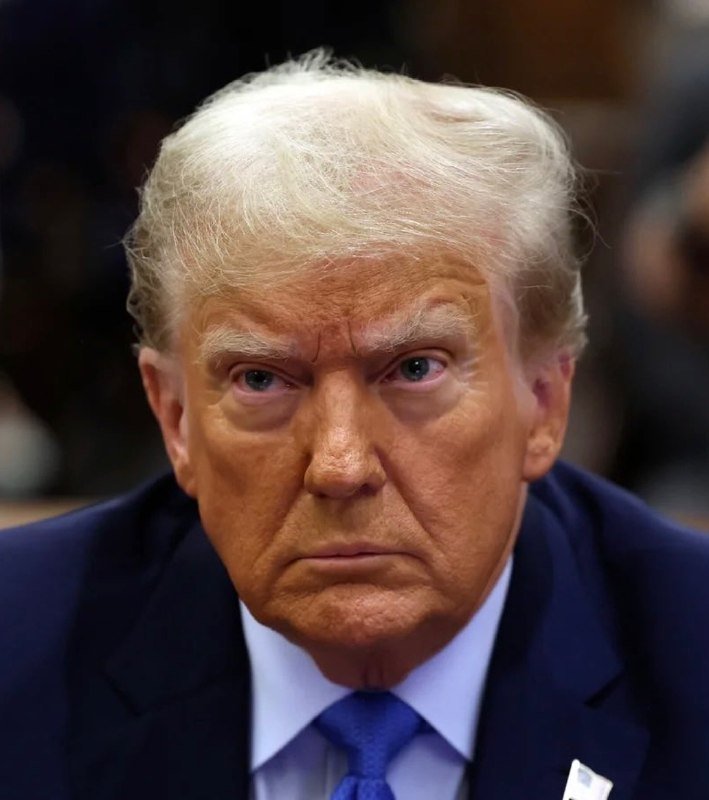
At a truck-manufacturing plant in Pennsylvania on 23 June 2026, US President Donald Trump told a factory audience that he had "neutralised the Iranian nuclear threat" — and thanked himself for it. The remarks, carried by Iranian-aligned channels the following morning, sit at the intersection of two distinct political fights: a long-running claim of diplomatic victory in a non-proliferation crisis that Western inspectors and Iranian officials both describe very differently, and a freshly-launched domestic offensive against US oil refiners who, Trump argues, are shorting American motorists at the pump.
The argument this piece advances is narrow. The same White House that has spent the first half of 2026 selling a Middle East de-escalation narrative is now running an internal energy-blame narrative that depends on the same basic premise — that the US president is the principal mover of both geopolitical and microeconomic outcomes. Read together, the two announcements reveal a familiar feature of second-term populist governance: the compression of foreign-policy and household-economics grievances into a single presidential credit-claim.
A claim of victory, repackaged
The self-congratulation, as relayed by the Iranian-aligned Telegram channel "englishabuali" on 24 June 2026, restates a line the administration has been refining since the strikes on Iranian nuclear-linked facilities in 2025. Trump told a Pennsylvania audience that he had personally instructed the action and that it had succeeded. Iranian state media has consistently rejected the framing. The channel "IRIran_Military", also posting on 24 June 2026, used the day to publish a more cultural message — public support for the Iranian national football team — a reminder that the regime's information operations around the nuclear question now compete with softer content for domestic attention.
The diplomatic record remains contested. Tehran denies that its programme was ever close to producing a weapon. The International Atomic Energy Agency's most recent quarterly report, which would normally be the source of record, is not in the items this article draws on; the verifiable content of the dispute is therefore limited to the political claim and the political counter-claim. What is verifiable is that the US side has spent the last twelve months describing the file in the language of closure — "neutralised" — while Iranian state outlets continue to assert that the programme's civilian character has been preserved.
The second front: refiners under the DOJ spotlight
A second message, posted to X by Reuters at 07:20 UTC on 24 June 2026, shows the president extending the same logic of personal credit-claiming to the US energy market. Trump said he had instructed the Department of Justice to examine whether US oil companies had failed to pass falling crude costs through to retail gasoline prices, and accused them of "gouging". The order targets a politically salient pressure point: with midterm-season polling consistently showing fuel costs near the top of voter concerns, the framing of a greedy refiner is electorally useful regardless of whether the underlying price dynamic reflects retail margin compression, regional distribution bottlenecks, or the layered effects of federal and state fuel taxes.
The structural backdrop is plain. US refining capacity has been roughly flat for the better part of a decade. Crude benchmarks have been softer than at the 2022 peak. Wholesale-to-retail spreads do not move one-for-one with crude. Whether a DOJ referral produces a formal action, a settlement, or a politically useful statement will depend on facts that the public posts do not disclose. What the posts do establish is that the president has chosen to put refiners in the crosshairs on a Tuesday, at the same moment he is collecting plaudits for foreign-policy decisiveness.
Plain-language frame: who is being told what
Read together, the two messages form a coherent political communication. The international line tells voters that the most dangerous file the United States faces has been resolved, by one person, on one decision. The domestic line tells the same voters that the most irritating file in their weekly budget has a villain, and that the same person is pursuing it. This is the structural pattern of populism, expressed in plain words: the president as the principal agent of both the geopolitical and the microeconomic; the opponent — whether a foreign government or a domestic corporation — as the obstacle to be overcome by the same exercise of will.
It is not necessary to invoke academic frameworks to describe the pattern. Political coverage that defers to the language of official spokespeople tends to reproduce their framings; political coverage that surfaces the counter-claim, the operational detail, and the contested empirical record tends to test them. This article attempts the second. The Pennsylvania speech is on the public record; whether it accurately describes the state of Iran's nuclear programme is a separate, and open, question.
Stakes, and what remains uncertain
The international stakes are familiar. If the US framing of "neutralisation" is taken at face value by investors, defence planners, and regional allies, the political premium attached to further US military action in the file falls. If it is taken at face value by Tehran's leadership, the incentive to demonstrate latent capability in ways that are publicly visible — even if technically modest — rises. The domestic stakes turn on whether refiners become a durable political target and whether the DOJ referral is followed by a visible enforcement action. Either path carries commercial consequences: a constrained US refining sector, priced on tight capacity and policy risk, responds to political targeting.
Several points remain genuinely uncertain on the record available. The contents of the most recent IAEA assessment of Iran's programme are not in the materials this article draws on, so the empirical status of the "neutralised" claim cannot be verified or refuted here. The legal scope of the DOJ referral — whether it covers specific named refiners, or the industry as a whole, or a market-wide practice — is also not in the public posts. And the question of whether the refining margins the president pointed to are unusually wide by historical standards is the kind of question that requires a specific dataset, not a rally line. This article makes the inferences the public record permits and labels the rest as open.
What the day establishes is that the administration is comfortable making maximalist claims in both domains at once — and that the political benefit of the claims does not depend on them being true in the strong sense. For readers, the practical test is straightforward: which parts of the president's framing can be checked against an inspector's report, a court filing, or a quarterly margin study, and which parts can only be checked against the next rally.
This article framed the two announcements as a single political-communication strategy, drawing the foreign-policy and the fuel-price lines from the same source — the president's own remarks — and labelling as open the empirical questions that the public posts do not resolve.
Wire provenance
This editorial synthesis draws on the following public wire/social posts:
- https://t.me/englishabuali
- https://t.me/abualiexpress
- https://t.me/englishabuali
- https://t.me/IRIran_Military
Follow the event.
These dated source records provide context. They do not retrospectively verify this archive article.
Separate what the nuclear watchdog reported from what it could not determine after the June 2025 strikes.