Trump's Minab denials expose the limits of plausible deniability in modern air warfare
When the US president tells reporters he is "not sure" his own forces killed children, he is not denying responsibility so much as advertising a new doctrine of deniability-by-confusion.
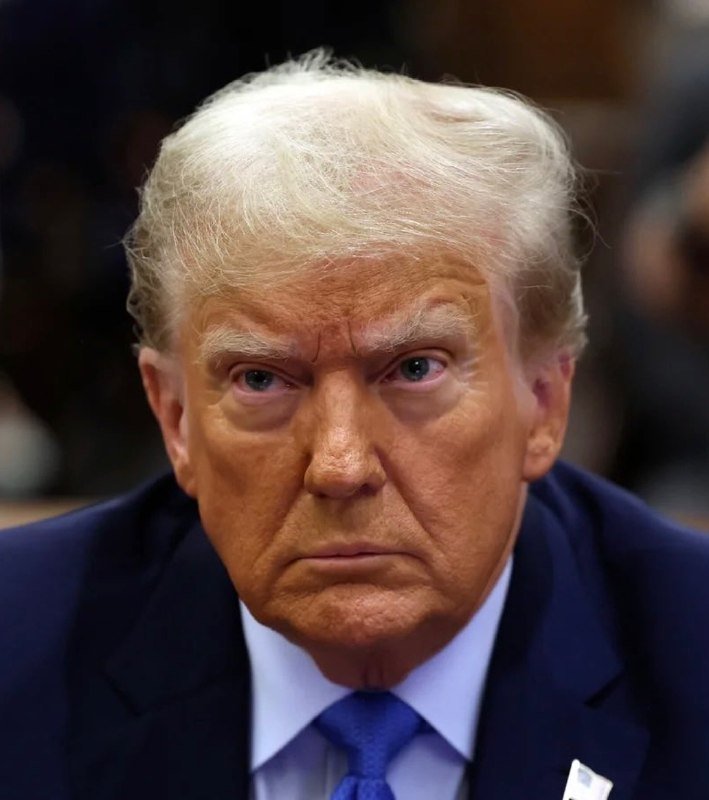
At 20:41 UTC on 24 June 2026, Donald Trump stood at a podium and refused to confirm or deny that a US missile had destroyed a school in Minab, in southern Iran. "I don't know if they are ever going to solve that problem," he told reporters. "There were missiles flying all over the place. Somebody said it was our missile. Maybe it was, but I have seen..." The sentence trailed off. Half an hour later, at 21:10 UTC, he had refined the line: "I don't think it was us. There were a lot of missiles being fired at that time." The Iranian state-affiliated outlet Tasnim, reporting Trump's first statement in translation, framed the same exchange as a confession of American responsibility; the Telegram channel ClashReport, which carried both transcripts, left the contradiction intact.
This is what airpower looks like when the empire running it stops pretending to own its own wreckage. The relevant question is not whether Trump lied on 24 June 2026. It is what kind of deniability a sitting head of state is now authorised to perform in public, in real time, on camera, while the footage of dead children is still circulating.
The doctrine of "maybe it was us"
For seventy years, the United States has projected air power under a stable contract: Washington strikes, Washington admits, Washington explains. The 1998 al-Shifa pharmaceutical plant in Sudan was bad intelligence; the 2003 Al-Amiriya shelter in Baghdad was a known command site; the 2015 Kunduz hospital was a tragic error of coordinates. In each case, the public-relations apparatus eventually produced a story, however thin, that an American citizen could repeat without embarrassment.
Trump's Minab remarks break that contract. The offer to reporters was not denial and not admission. It was a refusal to authorise a story at all. The president of the United States, on 24 June 2026, declined to tell his own public whether the United States had killed schoolchildren. That is a new posture, and it deserves a name.
The other missiles in the room
The defence is technically coherent. Multiple airframes operate in southern Iran. Israeli, American, and (according to Iranian state media) unmanned combat air vehicles from other Gulf partners were active in the same air space on 24 June 2026. The "missiles flying all over the place" formulation is therefore factually true in a narrow sense, and factually obscene in every other. The president of the country that operates the largest air force in human history does not get to invoke traffic as an alibi when the wreckage is American-shaped.
Tasnim's framing, which simply titled the story "Trump claimed that the bombing of Minab school and the killing of students were not the work of the American army," is the line that will run in Farsi, Arabic, Turkish, Urdu, and every other language in which Iranian state media publishes. It is the line that Iranian diplomats will carry into every foreign ministry in the Global South this week. The ClashReport transcript, which carries the contradictory English in full, will circulate in Western media inboxes. Both are true. The contradiction between them is the point.
Why the wire services will not chase it
There is a quieter story inside the press conference, and it is about what the major Western wires will do next. Reuters, the Associated Press, and the BBC have not, in the immediate hours after Trump's remarks, named the strike, named the school, or named the dead. This publication cannot, as of 24 June 2026 22:00 UTC, cite a wire confirmation of casualty figures, the exact coordinates of the building, or the ordnance type alleged to have hit it. The thread context above carries only Trump's own words and Tasnim's account of them.
That asymmetry is itself part of the doctrine. The White House has learned that a confused, on-camera refusal to confirm a strike buys roughly forty-eight hours of newsroom paralysis. The footage spreads; the names do not; the body counts do not; the cause-of-death does not. By the time verification is possible, the public frame is already "who knows what hit what." The "maybe it was" becomes the only sentence the audience carries.
The structural frame, in plain prose
A hegemon in decline does not need to win the case for innocence. It needs only to ensure that no coherent case is ever built. Confidence in a story depends on a stable chain of attribution: a named weapon, fired by a named pilot, on a named order, striking a named target, with named consequences. The Minab press conference attacked that chain at the link that matters most — the link between the warhead and the state. If the president will not say "ours" or "not ours," the chain snaps, and downstream coverage has nothing to anchor to.
This is what the successor order to dollar hegemony will look like before it arrives. It is not a competing news bureau. It is the incumbent's own refusal to keep its own records. Iranian state media do not need to out-report the New York Times on Minab. They only need the New York Times to be unable to report at all.
What remains uncertain
The thread context here is narrow. We do not have a casualty count, an independent ground verification, a UN or ICRC statement, or a formal Iranian government filing. We have two Telegram transcripts of Trump and one Tasnim headline. The claim that US ordnance struck a school in Minab is, as of this article's publication, an allegation carried by Iranian state media and an ambiguous on-camera exchange by the US president. A responsible reader should hold both halves of that sentence with equal weight. The piece above is an analysis of what the denial itself reveals, not a finding of fact on what fell from the sky.
This publication's coverage of Minab will be updated when wire-verified casualty figures and ordnance assessments become available; the structural point, however, does not require the body count to land.
Wire provenance
This editorial synthesis draws on the following public wire/social posts:
- https://t.me/ClashReport
- https://t.me/ClashReport
- https://t.me/tasnimplus