Schumer, the Senate, and the Silken Handshake: Reading Trump Through Three Mid-June Provocations
Three short remarks in one evening — aimed at Schumer, the Senate, and Erdogan — reveal a White House that treats public deliberation as an obstacle to be performed past, not a constraint to be respected.
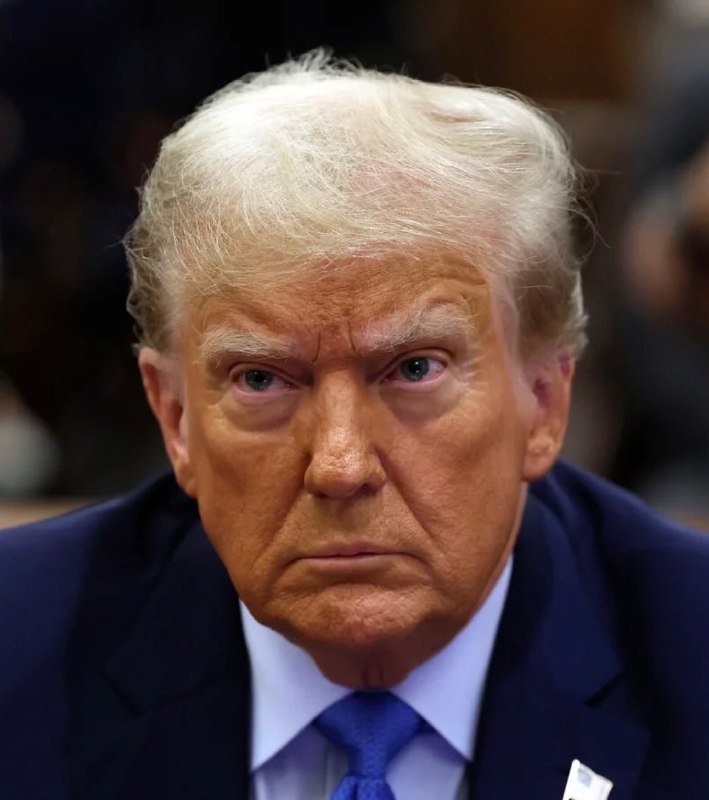
On the evening of 24 June 2026, in remarks captured by the Open Source Intel feed and amplified by Clash Report, President Donald Trump did three things in quick succession. He taunted Senate Minority Leader Chuck Schumer over his stance on Israel-Palestine with a quip about a "beautiful, beautiful silk outfit" in the "Palestinian tradition." He dismissed as "meaningless" a Senate resolution requiring congressional approval before any further US military operations against Iran. And he offered a public thank-you to Turkish President Recep Tayyip Erdogan for "staying out of the war," musing openly that Erdogan had been "a prime candidate to go into the war with Iran, maybe on the Iran's side." None of it, on its own, is policy. Taken together, it is the clearest indication yet of how this White House reads the separation of powers — as an inconvenience to be parodied rather than a structure to be honoured.
The pattern is not new. It is, however, sharpening. The three remarks share a single operating logic: the public forum exists for the president to perform past, not for the other branches to act within. Schumer is mocked into silence. The Senate's war-powers prerogative is declared null in advance. A foreign head of state is publicly graded for his obedience. Each line is calibrated for a camera. None concedes that the institution on the receiving end has a legitimate claim on the room.
The Schumer line and the racialisation of dissent
The "silk outfit" line is, charitably, a costume joke. Less charitably, it is a deliberate signal to pro-Israel donors and to a domestic audience that opposition to the administration's Middle East posture can be marked as ethnic otherness. Schumer, who has spent decades as one of the Senate's most reliable votes for Israeli governments, has not in fact broken with the centre of gravity in his caucus on the underlying conflict — he has, in the framing of recent weeks, merely been deemed insufficiently enthusiastic. The punishment is to be dressed, rhetorically, in a stereotype.
This is the move worth naming plainly. Disagreement with the executive's regional posture is being converted, on camera, into a question of identity and loyalty. The press corps laughs it off; the donor class notes it; the next senator up for a primary recalibrates. The cost of the joke is borne by the target, not the teller. Coverage that treats the line as a "viral moment" rather than a deliberate technique is reporting the temperature, not the weather.
The war-powers vote and the pre-empted Congress
The second line is the substantively dangerous one. The US Senate has voted to require congressional approval before further military operations against Iran. The president has declared that vote "meaningless." In constitutional terms, the resolution sits inside a long, contested, often bitter history of Congress asserting its Article I war-powers prerogative against an executive claiming latitude under Article II. The War Powers Resolution of 1973, passed over a presidential veto, was built for precisely this moment — and it has been honoured, more often than not, in the breach ever since.
The dispute now is not abstract. US forces are engaged in a shooting war with Iran. The scale of that engagement is contested in the public record; the administration has been reluctant to describe operations in terms that would formally trigger the 1973 statute's reporting clock. A bipartisan vote asserting Congress's seat at the table is the kind of check the system was designed to produce. To call it "meaningless" in advance is to tell the other branch that its participation in the most consequential decision a state can make will be tolerated as a curiosity, not honoured as a co-equal act. The structural question — whether a sitting commander-in-chief can simply reclassify active operations to keep the legislature out — is exactly the kind of question courts are slowest to answer, and exactly the kind of question this White House is betting they will never have to.
The Erdogan remark and the transactional ledger
The third line is the most revealing precisely because it is delivered as gratitude. Trump told reporters that Erdogan is "a friend of mine" and "stayed out of the war," noting that the Turkish president had been "a prime candidate to go into the war with Iran, maybe on the Iran's side." The public framing of a NATO ally's behaviour as a discretionary gift to Washington — earned, accounted, and expected to be reciprocated — collapses the distinction between alliance and clientele.
The structural frame matters. Turkey is the second-largest military in NATO, hosts US nuclear weapons under bilateral arrangement, controls the Bosphorus and Dardanelles, and sits on the southern flank of a war whose supply lines and sanctions regimes run through its territory. Ankara's non-participation is not a favour. It is, in any honest accounting, a fact of NATO's geography. To treat it as a personal credit on the president's ledger is either a negotiating tactic, a domestic applause line, or a genuine expression of how the administration conceives of allied sovereignty: a resource to be tapped, traded, and at times publicly praised for not being used against you.
The serious read: each of the three remarks is doing the same work. They shrink the space in which other institutions — a Senate minority, a Senate majority, a foreign government — can act without the White House's permission, and they do so in a register that makes any objection look stuffy or slow. The risk is not that any single line breaks the system. It is that, in aggregate, they establish a baseline in which the system is treated as scenery.
The counter-read is straightforward and deserves its air. A transactional reading of allies is not the same as an aggressive one. The Erdogan line may be diplomacy-by-clippable-quote, intended to keep Ankara in a cooperative posture while saying something different in private. The war-powers resolution is, after all, only a resolution — non-binding, easily circumvented, and voted on in a chamber that is itself an uneven check on a unified executive. The Schumer line, meanwhile, is the kind of remark that has been a feature of American political oratory for as long as cable has existed. None of this is unprecedented; all of it is normalised too quickly.
The honest answer is that the unprecedented and the normalised are not mutually exclusive. The pattern, taken across one evening's worth of remarks, is a White House that has concluded the public square is its instrument, the Senate is a courtesy, and allied governments are entries in a ledger. The question for the months ahead is not whether the next provocation will come — it will — but whether the institutional cost of treating these remarks as background noise compounds into something the structure cannot absorb.
Monexus frames this as a study in executive-branch rhetoric under conditions of an active, ill-defined war, rather than as a personality story. The relevant facts are the institution named on the receiving end of each remark, and the constitutional posture being pre-empted.
Wire provenance
This editorial synthesis draws on the following public wire/social posts:
- https://t.me/s/osintlive
- https://t.me/s/ClashReport
Follow the event.
These dated source records provide context. They do not retrospectively verify this archive article.
Separate what the nuclear watchdog reported from what it could not determine after the June 2025 strikes.